
Discover how insurance distribution is evolving with digital platforms, AI, and embedded insurance. Explore future strategies and innovations shaping the next generation of insurance sales.
The insurance industry is undergoing a fundamental transformation, driven by digital disruption, changing consumer behavior, and regulatory reforms. Traditionally, insurers relied heavily on agents, brokers, and bancassurance partnerships to distribute products. But as digitalization accelerates and customer expectations evolve, the future of insurance distribution channels is moving toward a multi-channel, hybrid, and technology-driven ecosystem.
Corporations, startups, and insurers alike are investing in digital platforms, AI-driven advisory tools, embedded insurance models, and data-powered personalization. This shift is not only reshaping how policies are sold but also redefining the customer journey—from discovery to purchase to claims servicing.
This article explores in depth how insurance distribution channels are evolving, the forces shaping this transformation, and the strategies insurers must adopt to thrive in a competitive and digitally connected marketplace.
What Are Insurance Distribution Channels?
Insurance distribution channels are the pathways through which insurers deliver products to customers. Historically, these included:
- Direct sales (company-owned offices and agents)
- Intermediaries (independent brokers, agencies, consultants)
- Bancassurance (partnerships with banks and financial institutions)
Today, however, these channels are being supplemented—or in some cases disrupted—by digital marketplaces, mobile apps, comparison websites, insurtech platforms, and embedded insurance models. The future is clearly moving toward a blended distribution ecosystem that integrates physical presence, digital touchpoints, and third-party collaborations.
Why Insurance Distribution Is Changing
Several structural and technological shifts are driving the evolution of distribution:
- Digital Transformation
The rise of online platforms, mobile banking, and fintech ecosystems has made digital distribution the norm rather than the exception. - Changing Consumer Behavior
Customers now expect seamless, personalized, and on-demand experiences. Traditional face-to-face sales are losing ground to digital-first engagement. - Cost Efficiency Pressures
Insurers need to optimize costs while expanding reach. Digital and automated distribution reduces operational expenses compared to traditional models. - Regulatory Changes
Regulators are pushing for greater transparency, disclosure, and fairness, requiring new distribution frameworks that leverage technology for compliance. - Emerging Risks
With climate change, cyber threats, and global supply chain vulnerabilities, new products need flexible, innovative distribution models.
Traditional Insurance Distribution Channels
Despite disruption, traditional channels still play a key role:
- Agents and Brokers – Still dominate in complex commercial lines, life insurance, and health coverage where advice is crucial.
- Bancassurance – Remains strong in Europe and Asia, giving insurers access to massive customer bases via banks.
- Direct Offices – Used by legacy insurers to maintain trust and brand presence, though declining in relevance.
The challenge lies in modernizing these channels without losing their trust advantage.
The Rise of Digital Insurance Distribution
The last decade has seen explosive growth in digital-first distribution models:
- Comparison Websites – Allow customers to easily compare premiums, coverage, and reviews.
- Mobile Applications – Provide instant quotes, policy purchases, and claims submissions.
- Digital-Only Insurers (Insurtechs) – Companies like Lemonade or ZhongAn deliver policies exclusively online.
- AI-Powered Chatbots – Used for lead generation, underwriting support, and 24/7 customer service.
The digital revolution has made insurance more accessible, transparent, and convenient—but it has also intensified competition.
Future Trends in Insurance Distribution Channels
Here are the major trends defining the future landscape:
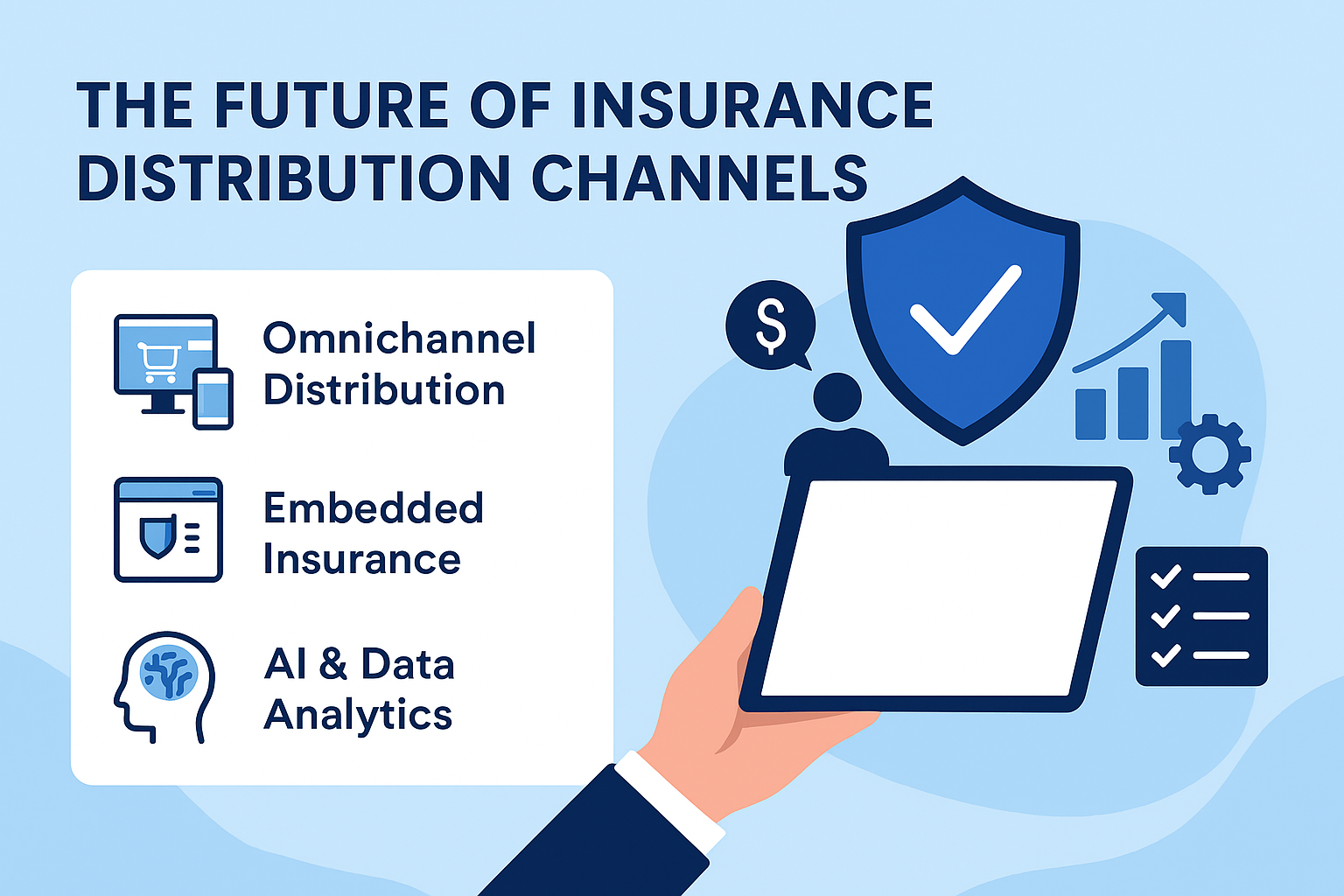
1. Omnichannel Distribution Models
Customers want flexibility: some prefer self-service digital platforms, while others still seek human advisors. The future lies in hybrid models combining digital and personal interactions.
2. Embedded Insurance
Products integrated seamlessly into non-insurance ecosystems (e.g., buying travel insurance directly on an airline’s booking platform). Embedded insurance is expected to grow into a multi-trillion-dollar market by 2030.
3. AI and Data Analytics in Distribution
Advanced algorithms will power:
- Hyper-personalized policy recommendations
- Risk-based pricing in real-time
- Automated fraud detection
4. Blockchain-Powered Smart Contracts
Decentralized systems will streamline policy issuance, verification, and claims, reducing intermediaries and boosting trust.
5. Insurtech Partnerships
Collaboration between traditional insurers and agile startups will drive innovation. Instead of competing, incumbents will integrate insurtech platforms into their distribution networks.
6. Voice and Conversational Interfaces
Virtual assistants like Alexa, Google Assistant, or specialized insurance bots will become customer acquisition tools.
7. Sustainability and ESG Integration
Future distribution will incorporate ESG-focused insurance products, aligning with consumer demand for responsible finance.
Key Components of the Future Insurance Distribution Strategy
For insurers to stay ahead, the following strategic pillars are essential:
- Customer-Centric Design
- Personalization based on data insights
- Simplified onboarding and claims journeys
- Technology Integration
- AI, blockchain, IoT, and big data as distribution enablers
- Partnership Ecosystems
- Collaborations with fintechs, banks, and non-traditional partners
- Regulatory Alignment
- Proactive compliance to build trust and avoid disruptions
- Talent and Training
- Upskilling agents and brokers to operate in digital-first environments
Case Studies: Innovators in Distribution
Lemonade (USA)
A digital-only insurer using AI-driven underwriting and instant claims settlement. Distribution is fully online, appealing to millennials.
Ping An (China)
Leveraging its super app ecosystem, Ping An integrates insurance into healthcare, banking, and lifestyle platforms, making distribution seamless.
Allianz (Europe)
Adopted a multi-channel strategy, combining traditional agents with digital marketplaces and insurtech partnerships.
Challenges in the Evolution of Distribution
- Trust Deficit in Digital Channels – Some customers still prefer human advisors for complex policies.
- Cybersecurity Risks – Increased reliance on digital tools exposes insurers to data breaches.
- Channel Conflicts – Balancing commissions between agents and digital platforms.
- Regulatory Uncertainty – Different regions impose varying compliance burdens.
The Future Roadmap for Insurers
- Invest in Digital Infrastructure – Cloud-native systems, APIs, and real-time analytics.
- Adopt an Ecosystem Mindset – Collaborate beyond insurance, embedding products in retail, mobility, travel, and fintech ecosystems.
- Empower Advisors with Tech – Use AI tools to enhance advisory capacity, not replace it.
- Focus on Customer Education – Use digital platforms to improve financial literacy and trust.
- Experiment with Emerging Models – Subscription-based insurance, peer-to-peer risk-sharing, and blockchain-enabled policies.
Conclusion
The future of insurance distribution channels is not about replacing traditional pathways but about creating a synergized, digital-first, customer-focused ecosystem. Insurers that embrace omnichannel strategies, embedded models, and AI-driven personalization will not only reduce costs but also win customer loyalty in a highly competitive landscape.
From embedded insurance in e-commerce checkouts to AI-powered virtual advisors, the transformation of distribution channels represents one of the biggest opportunities for insurers in the next decade.
In short, the winners will be those who integrate innovation with trust, ensuring customers receive relevant, affordable, and easily accessible insurance solutions—anytime, anywhere.