
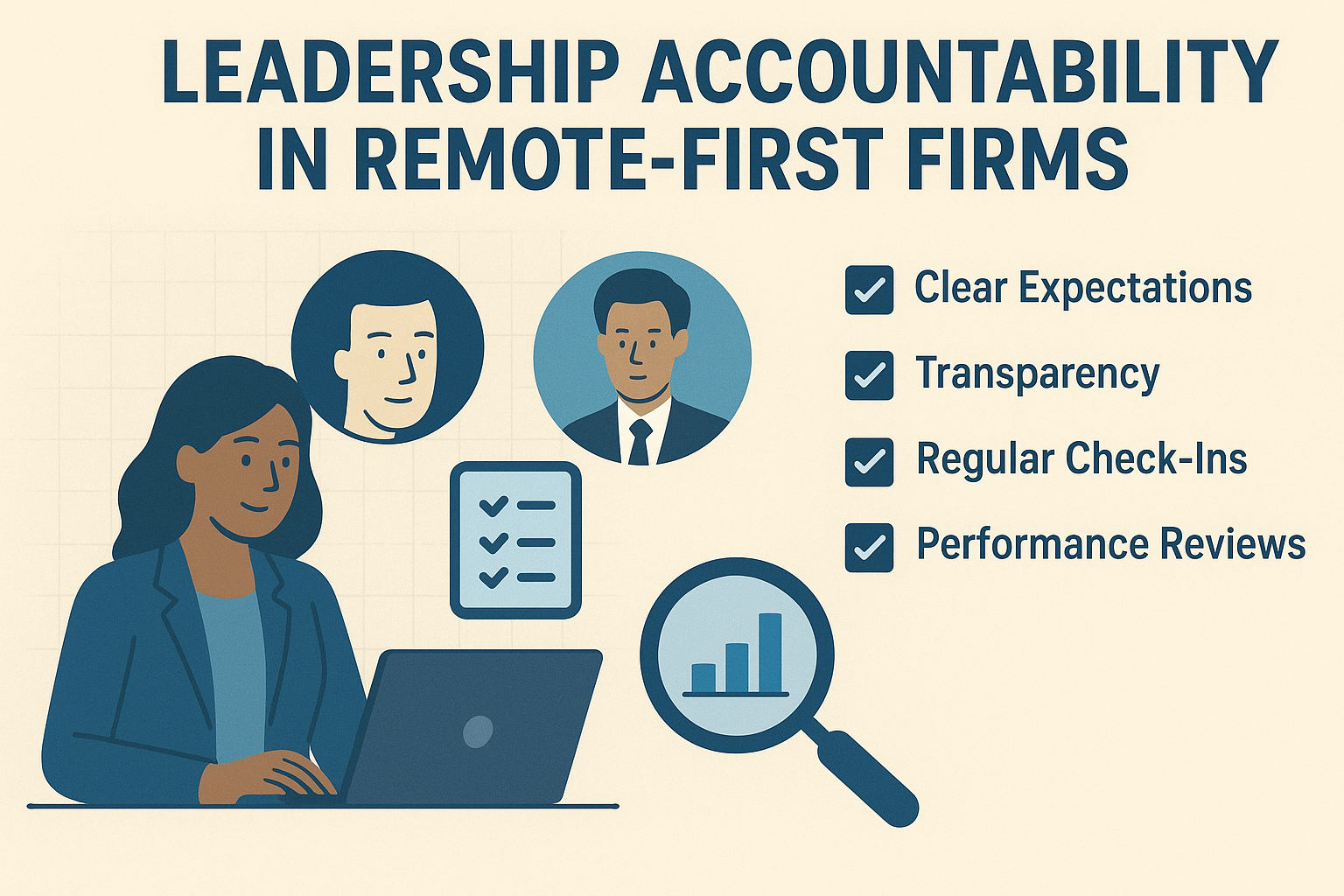
Discover why leadership accountability is the critical success factor for remote-first companies. This guide covers transparent goal-setting, modeling behaviors, feedback systems, and building trust in a distributed environment.
The Accountability Vacuum in the Digital Workplace
The transition to a remote-first operational model represents more than a shift in location; it is a fundamental re-architecting of organizational DNA. While much attention is paid to the tools, policies, and benefits for individual contributors, a more profound and often overlooked challenge emerges at the leadership level. In the absence of shared physical space and the informal visibility it provides, the very nature of executive responsibility is put to the test.
In traditional offices, leadership presence was often conflated with leadership effectiveness. In a remote-first world, that illusion is shattered. Accountability can no longer be performative—it must be tangible, measurable, and woven into the fabric of daily operations. When leaders fail to embody the principles of a distributed workforce, the entire organization feels the ripple effects: eroding trust, misaligned priorities, and a culture of ambiguity that stifles innovation.
This article delves into the critical imperative of leadership accountability in remote-first firms. We will explore a robust framework for ensuring that those at the helm are not merely managing from a distance but are actively demonstrating the behaviors, transparency, and commitment required to build a thriving, cohesive, and high-performing distributed company. This is not about monitoring leaders, but about equipping them to become the ultimate enablers of remote work success.
Section 1: Deconstructing Accountability – Beyond Responsibility in a Distributed Context
Before we can build systems of accountability, we must understand its evolved meaning in a remote-first context.
1.1 From Obligation to Demonstration: A New Leadership Mandate
In a co-located setting, accountability often meant being responsible for outcomes and being present to oversee them. Remote-first accountability is more nuanced and proactive. It is the demonstrable commitment of leaders to:
- Modeling Company Values: Embodying the organization’s core principles in every digital interaction, from a Slack message to a company-wide announcement.
- Creating Clarity: Ensuring that strategic goals, decision-making frameworks, and role expectations are transparent and accessible to all, regardless of location or time zone.
- Fostering Psychological Safety: Cultivating an environment where team members feel safe to voice concerns, challenge ideas, and admit mistakes without fear of reprisal.
- Being Answerable for Outcomes: Taking public ownership for both successes and failures, and creating clear lines of sight between leadership decisions and their organizational impact.
1.2 The High Stakes: The Cost of Unaccountable Leadership
When leadership accountability falters in a distributed environment, the consequences are severe and multifaceted:
- Erosion of Trust: The foundation of remote work is trust. When leaders are perceived as disconnected or unresponsive, trust evaporates, leading to disengagement and cynicism.
- Strategic Drift: Without clear, accountable leadership, teams in different locations can begin pursuing conflicting priorities, leading to wasted resources and internal competition.
- Toxic Culture Proliferation: Unaddressed issues and a lack of visible leadership can allow negative behaviors to fester and become ingrained in the company culture.
- Attrition of Top Talent: High-performing individuals are disproportionately affected by leadership ambiguity and are often the first to leave in search of more coherent and accountable environments.
Section 2: The Four-Pillar Framework for Remote-First Leadership Accountability
A sustainable system of accountability is built on four interconnected pillars that transform abstract principles into concrete practices.
Pillar 1: Radical Transparency and Communication Fidelity
In a remote setting, information is the lifeblood of the organization. Leaders must be the primary architects of its flow.
- Default to Openness: Make strategic documents, meeting notes, and key decisions accessible to everyone in the company. Use tools like Notion or Confluence as a single source of truth.
- Over-Communicate Context: Don’t just announce a decision; explain the “why” behind it. Host regular, candid AMA (Ask Me Anything) sessions where no topic is off-limits.
- Document and Disseminate: Ensure that communication is asynchronous-first. Record important announcements and discussions so they can be consumed by team members in all time zones.
Pillar 2: Outcome-Oriented Goal Setting and Measurement
Accountability is meaningless without clear, measurable targets. Leaders must define what success looks like and hold themselves to the same standard.
- Public Commitment to OKRs: Leaders should publish their own Objectives and Key Results (OKRs) and provide regular, honest updates on progress, including setbacks.
- Transparent Performance Metrics: Share company-wide performance data (e.g., revenue, customer satisfaction, product metrics) regularly. Connect this data back to strategic decisions made by the leadership team.
- Accountability for System Health: Leaders are accountable not just for financial results, but for the health of the systems they oversee—team morale (eNPS), retention rates, and diversity metrics.
Pillar 3: Intentional Presence and Relationship Building
“Out of sight, out of mind” is the antithesis of remote-first leadership. Presence must be deliberately cultivated.
- Structured Vulnerability: Leaders should openly share their challenges and what they are learning. This humanizes them and gives others permission to do the same.
- Proactive Connection: Instead of waiting for issues to arise, leaders should schedule regular, one-on-one “connect” sessions with team members across the organization, not just their direct reports.
- Creating Ceremonies of Interaction: Establish recurring virtual events (e.g., virtual coffee chats, team retrospectives, all-hands meetings) that are sacrosanct and led with consistent energy and engagement by the leadership team.
Pillar 4: A Culture of Feedback and Reciprocal Accountability
Accountability must flow upwards and sideways, not just downwards. Leaders must actively solicit and act on feedback.
- Upward Feedback Mechanisms: Implement anonymous pulse surveys (e.g., via Culture Amp or Lattice) that specifically ask about leadership effectiveness and transparency.
- The “Leader Readme”: Encourage leaders to create a document that outlines their working style, communication preferences, and how they prefer to receive feedback, making it easier for others to hold them accountable.
- Public Acknowledgment of Mistakes: When a leader makes a error in judgment, they should acknowledge it publicly, outline the learnings, and describe the changes they will make. This is the ultimate act of accountable leadership.
Section 3: Implementing the Framework – A Strategic Blueprint
Transforming leadership accountability is a cultural shift that requires a structured approach.
- Assessment and Baseline: Start by conducting an anonymous survey to gauge the current state of trust and perceived leadership accountability within the organization.
- Define and Socialize the Framework: Introduce the Four-Pillar Framework to the entire leadership team. Co-create specific, observable behaviors for each pillar.
- Lead by Example (The Ripple Effect): The most senior leader (CEO/Founder) must go first, embodying these principles publicly and consistently.
- Embed in Rituals and Rhythms: Integrate accountability check-ins into existing leadership meetings. Dedicate time to review progress on public OKRs and discuss upward feedback.
- Iterate and Evolve: Treat this as a living system. Regularly solicit feedback on the accountability framework itself and be willing to adapt it.
Section 4: The Tools of Transparent Leadership
Technology can either hinder or enable accountability. The right tools create a platform for demonstration.
- OKR & Goal-Setting Software (e.g., Gtmhub, Perdoo): Provides a public dashboard for leadership and company goals.
- Engagement & Feedback Platforms (e.g., Culture Amp, Lattice): Offers structured, anonymous channels for upward feedback.
- Collaboration Hubs (e.g., Slack, Microsoft Teams): Used with discipline, these can be platforms for leaders to share progress, celebrate wins, and acknowledge failures in real-time.
- Asynchronous Video Tools (e.g., Loom, Yac): Allows leaders to communicate nuanced messages with tone and facial expression, building connection at scale.
Section 5: The Future – Sustainable Leadership for the Distributed Age
The future of remote-first leadership is one of deepened accountability and human-centricity.
- The Rise of the “Coach-Leader”: The command-and-control model is obsolete. The future leader is a coach who empowers and enables, and is accountable for the growth and success of their team.
- Data-Driven Leadership Development: Accountability will be measured with greater precision, using people analytics to link leadership behaviors to team performance and well-being outcomes.
- Global and Cultural Intelligence: Leaders will be held accountable for building inclusive cultures that respect and leverage diverse perspectives from a global workforce.
Conclusion: The Accountability Dividend
In a remote-first organization, leadership accountability is not a soft skill; it is the fundamental operating system. It is the force that aligns distributed effort, builds unwavering trust, and turns the potential chaos of a borderless workforce into a powerful, sustainable competitive advantage.
Investing in the architecture of leadership accountability is the single most impactful thing an organization can do to ensure its long-term success in the distributed era. It signals a commitment to a workplace where everyone, from the intern to the CEO, is empowered, connected, and answerable for building a better future, together.