
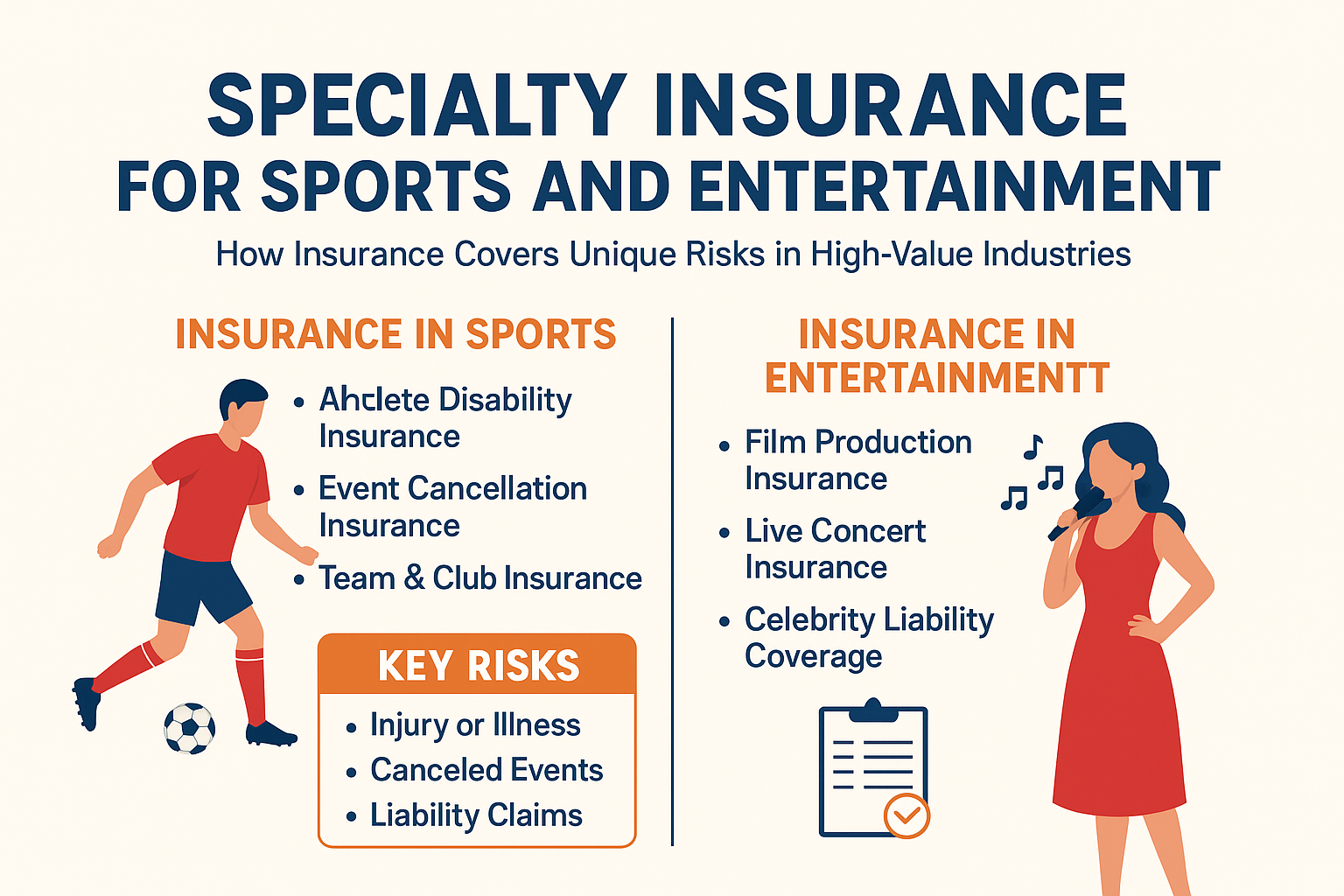
Discover how specialty insurance protects athletes, entertainers, and events. Learn about unique risks, coverage options, and future trends in high-value industries.
Why Niche Insurance Matters in High-Risk Industries
Sports and entertainment are more than just global passions—they are billion-dollar industries that thrive on unpredictability. Athletes, entertainers, production companies, and event organizers face risks that standard insurance policies rarely cover. From a soccer player’s career-ending injury to a global concert tour canceled by unforeseen circumstances, the stakes are enormous.
This is where specialty insurance for sports and entertainment comes into play. These policies are designed to protect high-value assets, unique risks, and fragile reputations in industries where uncertainty is the only constant.
In this article, we explore how specialty insurance works, why it is indispensable, and what the future holds for coverage in sports and entertainment.
1. Understanding Specialty Insurance in Sports and Entertainment
1.1 What Is Specialty Insurance?
Specialty insurance refers to customized policies designed to cover risks that general insurance does not address. In sports and entertainment, these risks include:
- Career-threatening injuries.
- Event cancellations or postponements.
- Equipment or property damage.
- Liability arising from public performances.
- Reputation and brand protection.
1.2 Why Standard Insurance Isn’t Enough
Unlike traditional industries, sports and entertainment depend heavily on individual talent, public perception, and live events. This means a single incident—such as an injury to a star athlete or a canceled festival—can cause multimillion-dollar losses.
2. Specialty Insurance in the World of Sports
2.1 Athlete Insurance
Athletes are not only competitors—they are also major financial assets for clubs, sponsors, and leagues. Specialty policies include:
- Disability Insurance: Protects athletes against career-ending injuries.
- Contractual Bonus Insurance: Covers bonuses tied to performance milestones.
- Health and Medical Coverage: Goes beyond standard healthcare to include physiotherapy and rehabilitation.
- Loss of Value Insurance: Protects athletes if their market value drops due to injuries.
2.2 Team and Club Insurance
Sports teams invest millions in players. Specialty coverage ensures protection from:
- Player Transfer Risks: Covering financial losses in case a new signing gets injured.
- Stadium Liability: Protecting against accidents during matches.
- Sponsorship Protection: Safeguarding revenue if star players cannot perform.
2.3 Event and Tournament Coverage
Major tournaments like the FIFA World Cup or the Olympics require event cancellation and liability insurance. Risks include:
- Natural disasters.
- Political unrest.
- Terrorism or cyberattacks.
- Pandemic-related cancellations.
Case Example: Wimbledon famously had a pandemic insurance policy before COVID-19, which paid out over $100 million when the 2020 event was canceled.
3. Specialty Insurance in the Entertainment Industry
3.1 Film and TV Production Insurance
Productions face significant risks such as:
- Actor illness or death.
- Equipment breakdown.
- Filming delays due to weather.
- Intellectual property disputes.
Coverage types include:
- Cast Insurance: Protects financial losses if a key actor is unable to continue.
- Negative Film Insurance: Covers damage or loss of recorded material.
- Errors and Omissions (E&O) Insurance: Protects against lawsuits involving copyright, defamation, or invasion of privacy.
3.2 Live Concerts and Festivals
Concerts and music festivals generate billions in revenue, but also carry immense risks. Specialty insurance addresses:
- Event Cancellation Insurance: Covers losses from weather, illness, or logistical issues.
- Non-Appearance Insurance: Protects promoters if an artist fails to perform.
- Liability Insurance: Covers injuries to fans and staff during events.
3.3 Celebrity Insurance
High-profile entertainers often insure specific body parts or personal attributes. Examples include:
- Singers insuring vocal cords.
- Models insuring facial features.
- Athletes insuring legs or hands.
These niche policies not only protect income but also act as marketing tools.
4. Comparing Sports vs. Entertainment Specialty Insurance
| Aspect | Sports Specialty Insurance | Entertainment Specialty Insurance |
|---|---|---|
| Primary Risk | Career-ending injuries, performance failure | Production delays, event cancellations, reputational harm |
| Beneficiaries | Athletes, teams, leagues, sponsors | Artists, production houses, promoters, studios |
| Coverage Value | Millions per player/contract | Millions per event/film |
| Market Demand | High in football, basketball, and global tournaments | High in Hollywood, Bollywood, streaming, and global tours |
5. Unique Challenges in Specialty Insurance
5.1 Unpredictability of Human Talent
Unlike insuring physical assets, the sports and entertainment industries depend on human performance, which is inherently volatile.
5.2 High Premiums
Coverage for elite athletes and A-list entertainers comes at significant cost due to the high-value risks.
5.3 Evolving Risks
Cybersecurity threats, pandemics, and reputational crises are newer risk categories that insurers must address.
5.4 Globalization of Sports and Entertainment
Cross-border tours, streaming rights, and international tournaments complicate jurisdiction and compliance.
6. Innovations in Specialty Insurance
6.1 Parametric Insurance
Policies that pay out based on triggers (e.g., number of canceled events or a player missing matches).
6.2 AI and Data Analytics
Insurers now analyze athlete health data, fan attendance forecasts, and streaming metrics to price risks more accurately.
6.3 Blockchain for Insurance Contracts
Smart contracts simplify claims processing for event cancellations and sponsorship disputes.
6.4 Mental Health and Reputation Coverage
Growing demand for coverage addressing psychological well-being and brand reputation management.
7. The Future of Specialty Insurance in Sports and Entertainment
The next decade will see exponential growth in this niche market. Factors shaping the future include:
- Expansion of eSports: Competitive gaming requires insurance for tournaments, players, and sponsorship deals.
- Streaming Era in Entertainment: Production houses require new types of insurance for digital-first projects.
- Climate Risks: Outdoor sports and festivals will need coverage for extreme weather.
- Increased Regulation: Governments will require stricter insurance standards for mass events.
8.FAQ Section
Q1: What is specialty insurance for sports and entertainment?
It is customized coverage designed to protect athletes, entertainers, events, and productions against unique financial risks.
Q2: Why do athletes need specialty insurance?
Because standard health insurance does not cover career-ending injuries, transfer value losses, or performance-based bonuses.
Q3: How does entertainment insurance work for films?
It covers cast illnesses, production delays, equipment loss, and legal risks such as copyright disputes.
Q4: What is event cancellation insurance?
A policy that reimburses financial losses when concerts, festivals, or tournaments are canceled due to unforeseen circumstances.
Q5: Will eSports need specialty insurance?
Yes, competitive gaming involves unique risks such as cyberattacks, player health issues, and large-scale event cancellations.
Conclusion: Protecting the Unpredictable
Sports and entertainment are industries built on passion, performance, and unpredictability. While fans see glamour and excitement, behind the scenes lies a complex web of risks that can make or break careers and businesses.
Specialty insurance provides the financial shield needed to sustain these industries. Whether it’s an injured football star, a canceled concert, or a delayed blockbuster film, insurance ensures resilience in the face of uncertainty.
As technology, globalization, and new risks reshape the future, specialty insurance will remain the unsung hero of sports and entertainment, safeguarding talent, creativity, and global spectacles.