
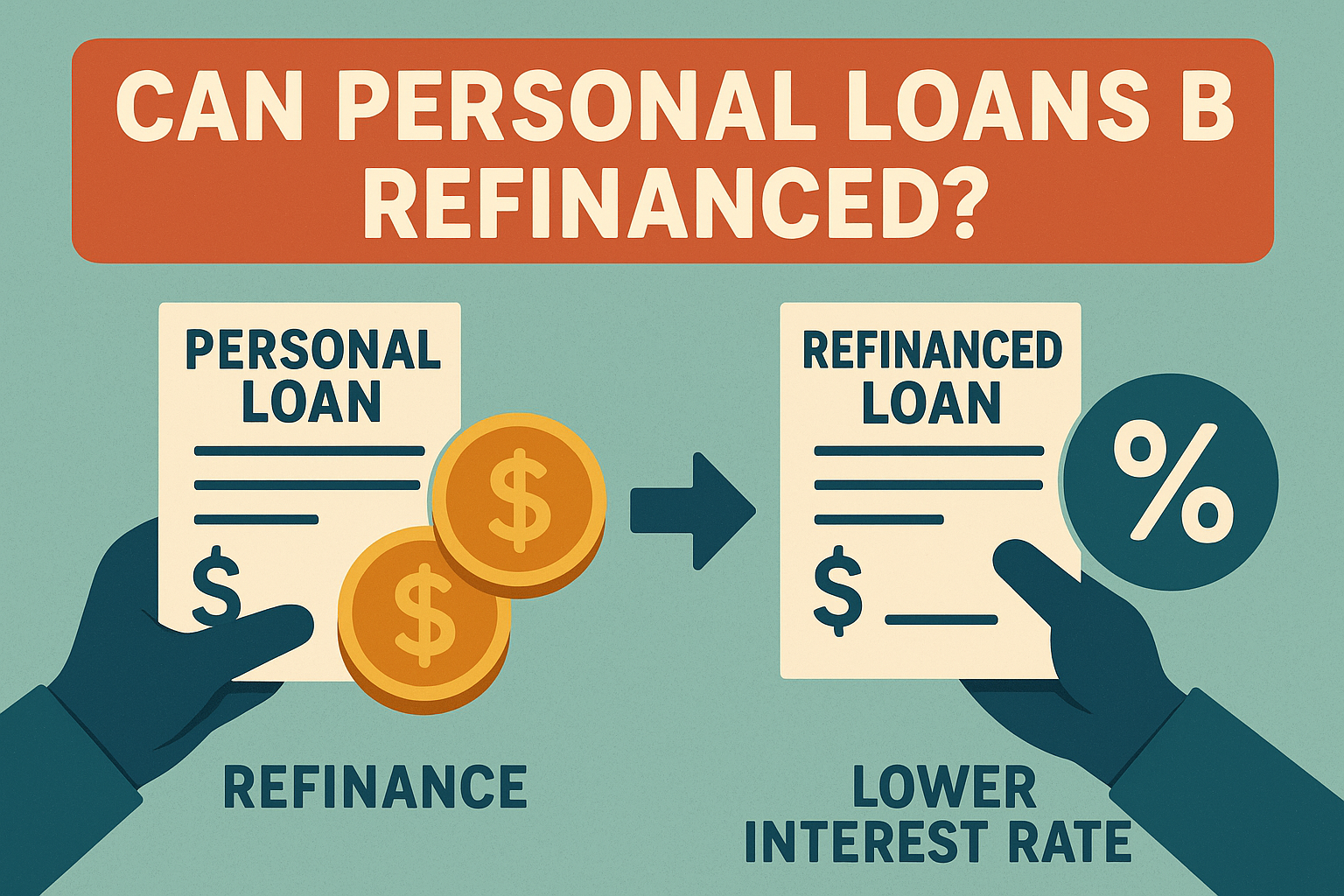
Yes! Refinance personal loans for lower rates & better terms. Learn proven strategies to cut payments by 40%+. Free guide with calculator & expert tips!
Unlocking the Power of Loan Restructuring
In today’s ever-evolving financial marketplace, borrowers increasingly seek ways to optimize their debt obligations and reduce borrowing costs. One powerful yet often overlooked strategy involves refinancing existing personal loans—a financial maneuver that can potentially save thousands of dollars while improving overall debt management. But is restructuring consumer loans actually possible, and more importantly, is it the right move for your financial situation?
The short answer is yes—personal loans can absolutely be refinanced, offering borrowers a second chance at better terms, lower interest rates, or more manageable payment structures. This comprehensive guide explores every aspect of loan refinancing, from basic concepts to advanced strategies, helping you navigate this potentially game-changing financial decision with confidence and clarity.
Whether you’re struggling with high interest rates, seeking to consolidate multiple debts, or simply wanting to take advantage of improved credit standing, understanding the refinancing process empowers you to make informed decisions that align with your long-term financial objectives. This detailed exploration will equip you with the knowledge, tools, and strategies necessary to successfully restructure your debt and potentially transform your financial future.
Understanding Personal Loan Refinancing Fundamentals
Defining Debt Restructuring
Refinancing a personal loan involves obtaining a new loan to pay off one or more existing obligations, ideally securing more favorable terms in the process. This financial strategy essentially replaces your current debt with a new agreement, potentially featuring lower interest rates, different repayment periods, or modified monthly payment amounts.
The mechanics of loan restructuring mirror the original borrowing process: you apply for a new loan, undergo credit evaluation, receive approval (hopefully with better terms), and use the proceeds to eliminate your existing debt. The key difference lies in your improved position—whether through enhanced creditworthiness, market changes, or increased financial knowledge—that enables access to superior lending terms.
How Refinancing Differs from Modification
While often confused, refinancing and loan modification represent distinct approaches to improving loan terms:
Refinancing creates an entirely new loan agreement with a different lender (or sometimes the same lender), completely replacing the original obligation. This process involves new underwriting, credit checks, and potentially different loan structures.
Loan modification involves negotiating changes to your existing loan agreement with your current lender. Modifications might include interest rate reductions, term extensions, or payment restructuring, but the fundamental loan agreement remains intact.
Understanding this distinction proves crucial when evaluating options, as each approach carries different implications for credit reports, costs, and long-term financial planning.
Reasons to Consider Loan Refinancing
Interest Rate Reduction Opportunities
The primary motivation for most refinancing decisions involves securing lower borrowing costs. Interest rate environments fluctuate continuously based on economic conditions, Federal Reserve policies, and market competition. If rates have declined since you obtained your original loan, or if your creditworthiness has improved substantially, refinancing could yield significant savings.
Consider this scenario: You obtained a $15,000 personal loan two years ago at 18% APR when your credit score was 650. After diligent credit improvement, your score now stands at 740. Refinancing to a 10% APR loan could save over $3,000 in interest charges over the remaining loan term—a substantial return on the refinancing effort.
Monthly Payment Adjustment
Life circumstances change, and what seemed like manageable monthly obligations might become burdensome—or conversely, you might find yourself capable of accelerating debt elimination. Refinancing enables payment adjustments through:
Term extension reduces monthly obligations by spreading remaining balance over a longer period, though this typically increases total interest costs.
Term reduction increases monthly payments but eliminates debt faster and reduces overall interest expenses.
Payment structure modification might involve switching from variable to fixed rates or adjusting payment frequency to better align with income patterns.
Debt Consolidation Benefits
Many borrowers use refinancing strategies to combine multiple personal loans into a single obligation. This consolidation approach offers several advantages:
- Simplified financial management with one payment instead of multiple obligations
- Potentially lower average interest rates across all debts
- Improved credit utilization ratios by eliminating multiple account balances
- Reduced risk of missed payments due to confusion or oversight
Escaping Unfavorable Terms
Some borrowers find themselves trapped in loans with problematic features: prepayment penalties, variable rates that have increased substantially, or terms that no longer align with financial goals. Refinancing provides an escape route from these unfavorable agreements, though careful cost-benefit analysis remains essential.
Eligibility Requirements and Qualification Factors
Credit Score Considerations
Your credit rating plays a pivotal role in refinancing eligibility and terms. While specific requirements vary among lenders, general guidelines include:
Excellent credit (740+) typically qualifies for the most competitive rates and terms, often 3-5 percentage points below average market rates.
Good credit (670-739) generally accesses favorable refinancing options, though not necessarily the absolute best rates available.
Fair credit (580-669) might still qualify for refinancing, but improvements over existing loans may be marginal unless original terms were particularly unfavorable.
Poor credit (below 580) faces significant challenges in refinancing, often requiring alternative strategies like secured loans or co-signers.
Income and Employment Stability
Lenders evaluate your capacity to repay the refinanced loan through comprehensive income assessment:
Stable employment history demonstrates reliability and reduces perceived lending risk. Most lenders prefer at least 12-24 months with your current employer.
Sufficient income levels ensure comfortable debt servicing. Debt-to-income ratios typically shouldn’t exceed 43%, though some lenders accept higher ratios with compensating factors.
Income documentation requirements vary but often include pay stubs, tax returns, and bank statements to verify earnings claims.
Existing Loan Status
Your current loan’s condition affects refinancing opportunities:
Payment history on the existing loan significantly impacts approval chances. Recent late payments or defaults make refinancing extremely difficult.
Remaining balance must justify refinancing costs. Very small balances might not provide sufficient savings to offset new loan origination expenses.
Time remaining on the original loan influences refinancing attractiveness. Loans near maturity might not benefit from restructuring due to limited remaining interest charges.
The Step-by-Step Refinancing Process
1. Comprehensive Financial Assessment
Before initiating refinancing applications, conduct thorough self-evaluation:
- Calculate exact remaining balances on existing loans
- Document current interest rates and monthly payments
- Review credit reports from all three bureaus for accuracy
- Determine realistic refinancing goals and acceptable terms
- Assess available funds for potential origination fees or closing costs
2. Market Research and Lender Comparison
The lending marketplace offers diverse refinancing options:
Traditional banks often provide competitive rates for existing customers with strong credit profiles.
Credit unions frequently offer member-favorable terms and personalized service.
Online lenders streamline application processes and might approve borrowers with varied credit profiles.
Peer-to-peer platforms connect borrowers with individual investors, potentially offering unique terms.
Compare multiple offers focusing on:
- Annual percentage rates (APR) including all fees
- Origination charges and closing costs
- Prepayment penalties or restrictions
- Customer service ratings and lender reputation
- Speed of funding and application convenience
3. Pre-qualification and Rate Shopping
Most reputable lenders offer pre-qualification processes using soft credit inquiries that don’t impact credit scores. This enables rate comparison without commitment or credit damage. During the pre-qualification stage:
- Submit basic information about income, debts, and refinancing goals
- Receive preliminary rate quotes and term options
- Compare multiple pre-qualification offers simultaneously
- Identify the most promising refinancing opportunities
Remember that pre-qualification doesn’t guarantee final approval or quoted rates, but it provides valuable insights into available options.
4. Formal Application Submission
Once you’ve identified optimal refinancing opportunities, proceed with formal applications:
Gather required documentation including:
- Government-issued identification
- Proof of income (pay stubs, tax returns, bank statements)
- Current loan statements and payoff quotes
- Proof of residence and contact information
- Employment verification letters if requested
Complete application accurately as errors or omissions delay processing and might affect approval decisions.
Respond promptly to lender requests for additional information or clarification.
5. Underwriting and Approval
During underwriting, lenders verify submitted information and assess lending risk:
Credit verification involves hard inquiries that temporarily impact credit scores.
Income validation confirms your capacity to repay the refinanced loan.
Debt analysis evaluates overall financial obligations and payment history.
This process typically takes 2-7 business days, though some online lenders offer same-day decisions.
6. Loan Closing and Fund Disbursement
Upon approval, review final terms carefully before accepting:
- Verify interest rates match quoted terms
- Understand all fees and charges
- Confirm loan amount covers existing debt payoff
- Review prepayment policies and restrictions
- Ensure payment schedules align with expectations
After accepting terms, funds typically disburse within 1-5 business days, either paid directly to existing lenders or deposited into your account for self-managed payoff.
Cost-Benefit Analysis: Calculating Refinancing Value
Identifying All Associated Costs
Refinancing involves various expenses that impact overall value:
Origination fees typically range from 1-8% of the loan amount, though some lenders offer no-fee options.
Application charges might include credit check fees, processing charges, or administrative costs.
Prepayment penalties on existing loans can substantially impact refinancing economics.
Indirect costs include time invested in research and applications, plus temporary credit score impacts from hard inquiries.
Calculating Break-Even Points
Determine when refinancing savings offset associated costs:
- Calculate total refinancing expenses including all fees and penalties
- Determine monthly payment savings between old and new loans
- Divide total costs by monthly savings to find break-even timeline
- Ensure you’ll maintain the loan beyond break-even to realize actual savings
For example, if refinancing costs $500 but saves $50 monthly, you’ll break even after 10 months. If you plan to maintain the loan for several years, refinancing likely makes financial sense.
Long-Term Financial Impact
Beyond immediate savings, consider broader implications:
Total interest savings over the loan term might justify short-term costs.
Credit score improvements from better payment management could enable future financial opportunities.
Cash flow optimization through lower payments might facilitate other investments or debt reduction strategies.
Psychological benefits from simplified debt management or faster payoff timelines carry real value despite being difficult to quantify.
Strategic Refinancing Approaches
Rate-and-Term Refinancing
The most straightforward strategy involves replacing existing loans with new ones offering better interest rates or more suitable repayment terms. This approach works best when:
- Market rates have declined significantly
- Your credit has improved substantially
- Original loan terms were suboptimal
- You seek predictable payment structures
Cash-Out Refinancing
Some borrowers refinance for amounts exceeding existing loan balances, extracting additional funds for other purposes. While potentially useful, this strategy requires careful consideration:
Advantages:
- Access to funds for investments or emergencies
- Potentially lower rates than new separate loans
- Single payment simplicity
Risks:
- Increased total debt burden
- Extended repayment periods
- Temptation for unnecessary spending
- Higher long-term interest costs
Debt Consolidation Refinancing
Combining multiple personal loans into one refinanced obligation can streamline finances:
Target high-rate debts first to maximize interest savings.
Consider total costs including all loans being consolidated.
Maintain payment discipline to avoid accumulating new debts alongside the consolidation loan.
Evaluate alternatives like balance transfer credit cards for smaller amounts or shorter-term needs.
Common Pitfalls and How to Avoid Them
Extending Terms Unnecessarily
While longer loan terms reduce monthly payments, they typically increase total interest costs substantially. A $10,000 loan at 10% APR costs approximately $1,600 in interest over three years but nearly $2,750 over five years. Only extend terms when absolutely necessary for payment affordability.
Ignoring Fine Print Details
Rushed refinancing decisions often overlook crucial contract details:
- Variable rate adjustment mechanisms
- Penalties for early repayment
- Automatic payment requirements
- Default acceleration clauses
- Arbitration agreements limiting legal recourse
Always review complete loan agreements before committing, seeking clarification on any unclear provisions.
Falling for Predatory Lending Practices
Desperate borrowers sometimes fall victim to unscrupulous lenders offering:
- Unrealistic promises of guaranteed approval
- Excessive fees disguised as various charges
- Bait-and-switch tactics with advertised rates
- Aggressive sales pressure preventing careful consideration
Research lenders thoroughly, checking Better Business Bureau ratings, Consumer Financial Protection Bureau complaints, and online reviews from verified borrowers.
Refinancing Too Frequently
Serial refinancing can damage credit through multiple hard inquiries and potentially increase overall costs through repeated origination fees. Unless substantial benefits exist, avoid refinancing more than once every 12-18 months.
Alternative Options to Traditional Refinancing
Balance Transfer Credit Cards
For smaller loan amounts, balance transfer cards offering promotional 0% APR periods provide interest-free refinancing alternatives:
Advantages:
- No interest during promotional periods (typically 12-21 months)
- Quick approval processes
- Flexibility in payment amounts
Disadvantages:
- Balance transfer fees (usually 3-5%)
- High rates after promotional periods
- Credit limit restrictions
- Temptation for additional card spending
Home Equity Financing
Homeowners might access better rates through home equity loans or lines of credit (HELOCs):
Benefits include:
- Lower interest rates due to secured nature
- Potential tax deductibility for qualified purposes
- Higher borrowing limits
Risks involve:
- Home foreclosure possibility if payments fail
- Closing costs and appraisal fees
- Longer processing times
- Market value fluctuation impacts
401(k) Loans
Borrowing from retirement accounts to refinance personal loans presents unique considerations:
Potential advantages:
- No credit check requirements
- Competitive interest rates paid to yourself
- Quick access to funds
Significant drawbacks:
- Reduced retirement growth potential
- Immediate repayment if employment ends
- Potential taxes and penalties for defaults
- Opportunity cost of investment returns
Peer-to-Peer Lending Platforms
Alternative lending marketplaces connect borrowers directly with investors:
Prosper, LendingClub, and similar platforms offer:
- Competitive rates for qualified borrowers
- Flexible underwriting criteria
- Quick online application processes
- Fixed-rate term loans
However, these platforms might charge substantial origination fees and lack the regulatory protections of traditional banking institutions.
Impact on Credit Scores and Reports
Short-Term Credit Effects
Refinancing temporarily impacts credit scores through several mechanisms:
Hard inquiries from loan applications typically reduce scores by 5-10 points, though shopping within focused timeframes minimizes impact.
New account opening decreases average account age, potentially lowering scores slightly.
Credit mix changes might occur if refinancing eliminates your only installment loan, though impact is usually minimal.
Utilization improvements from consolidating credit card debt into personal loans can substantially boost scores.
Long-Term Credit Benefits
Successfully refinanced loans can strengthen credit profiles over time:
Payment history improvements through more manageable obligations reduce default risk.
Debt reduction acceleration through lower rates enables faster payoff, improving debt-to-income ratios.
Account diversity from maintaining various credit types demonstrates financial sophistication.
Positive payment records accumulate faster with affordable, sustainable loan structures.
Special Circumstances and Considerations
Refinancing with Co-Signers
Adding co-signers can enable refinancing approval or better terms:
Benefits include:
- Access to co-signer’s creditworthiness
- Potentially lower interest rates
- Higher approval probability
Important considerations:
- Co-signers assume equal repayment responsibility
- Both parties’ credit affected by payment performance
- Relationship strains possible if payments struggle
- Some lenders offer co-signer release after consistent payments
Student Loan Refinancing Distinctions
While personal loans and student loans differ, understanding student loan refinancing provides useful context:
Federal student loans offer unique protections (income-driven repayment, forgiveness programs) lost through private refinancing.
Private student loans more closely resemble personal loans in refinancing considerations.
Mixed strategies might involve refinancing private loans while maintaining federal loans separately.
Business Purpose Loans
Personal loans used for business purposes present special refinancing considerations:
- Tax deduction implications for interest payments
- Business credit separation opportunities
- Alternative business financing comparison
- Documentation requirements for business use
Future Trends in Loan Refinancing
Technology-Driven Innovation
Digital transformation continues reshaping refinancing experiences:
Artificial intelligence streamlines underwriting and provides personalized recommendations.
Blockchain technology might reduce processing costs and increase transparency.
Open banking initiatives enable easier financial verification and faster approvals.
Mobile-first platforms allow complete refinancing processes from smartphones.
Regulatory Evolution
Changing regulations impact refinancing availability and terms:
Consumer protection enhancements might limit predatory practices and improve disclosure requirements.
Interest rate regulations could cap maximum rates or restrict certain fee structures.
Alternative credit scoring adoption might expand refinancing access for thin-file borrowers.
Market Competition Intensification
Increasing competition benefits borrowers through:
- More aggressive rate competition
- Reduced or eliminated fees
- Faster processing times
- Enhanced customer service
- Innovative product features
Making Informed Refinancing Decisions
Creating a Decision Framework
Develop systematic approaches to refinancing evaluation:
- Establish clear objectives – Define what you hope to achieve through refinancing
- Quantify current costs – Calculate total remaining interest and fees on existing loans
- Research comprehensively – Explore multiple lenders and refinancing alternatives
- Compare total costs – Evaluate all-in expenses, not just monthly payments
- Consider timing factors – Assess market conditions and personal circumstances
- Plan for contingencies – Ensure refinanced obligations remain manageable if circumstances change
Professional Guidance Considerations
Complex situations might benefit from professional advice:
Financial advisors provide holistic perspectives on refinancing within broader financial plans.
Credit counselors offer guidance on debt management and credit improvement strategies.
Tax professionals advise on potential tax implications of refinancing decisions.
Legal counsel might prove valuable for complex loan agreements or dispute situations.
Conclusion: Empowering Your Financial Future Through Strategic Refinancing
Personal loan refinancing absolutely remains possible and potentially profitable for millions of borrowers. This powerful financial tool offers opportunities to reduce borrowing costs, optimize payment structures, and accelerate debt elimination—but success requires careful planning, thorough research, and strategic execution.
The refinancing landscape continues evolving, with technological innovation and market competition creating increasingly borrower-friendly environments. Whether seeking lower interest rates, adjusted payment terms, or debt consolidation, today’s borrowers enjoy unprecedented access to refinancing options tailored to diverse financial situations and objectives.
However, refinancing isn’t universally beneficial. Success depends on individual circumstances, including credit profiles, existing loan terms, and broader financial goals. The key lies in conducting comprehensive cost-benefit analyses, understanding all associated fees and implications, and ensuring refinancing aligns with long-term financial strategies.
As you consider refinancing possibilities, remember that knowledge empowers better decisions. Understand your current loan terms completely, research multiple refinancing options thoroughly, and never rush into agreements without careful consideration. The effort invested in proper refinancing evaluation often yields returns far exceeding the time commitment.
The ability to refinance personal loans provides financial flexibility and optimization opportunities throughout your borrowing journey. Market conditions change, personal circumstances evolve, and creditworthiness improves—refinancing enables you to adapt loan obligations accordingly, potentially saving thousands while achieving financial goals faster.
Whether you ultimately choose to refinance depends on your unique situation, but understanding the option’s availability, process, and implications ensures you make informed decisions aligned with your financial wellbeing. In the dynamic world of personal finance, refinancing represents a valuable tool for those willing to invest effort in understanding and utilizing it effectively.
Your financial future remains within your control. By leveraging refinancing strategically, maintaining strong credit habits, and continuously educating yourself about financial options, you position yourself for success regardless of economic conditions or life changes. The question isn’t simply whether personal loans can be refinanced—it’s how you can use this powerful tool to build the financial future you deserve.