
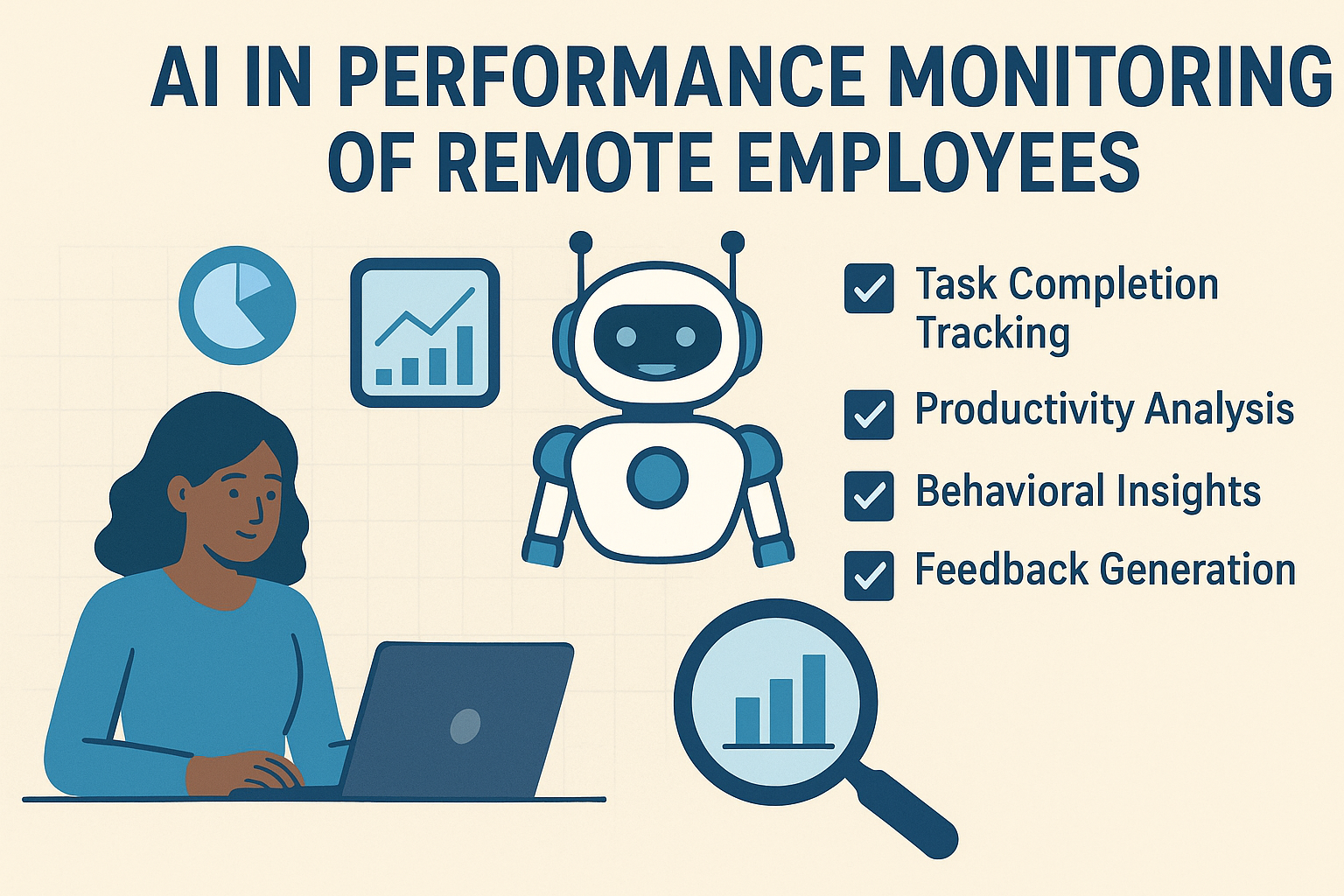
Explore the transformative role of Artificial Intelligence in monitoring remote workforce productivity. This guide delves into ethical AI implementation, moving beyond surveillance to foster trust, enhance feedback, and drive meaningful performance development.
The Double-Edged Sword of Digital Oversight
The mass shift to distributed work has created a management paradox. Leaders, stripped of the casual visibility afforded by a physical office, grapple with a fundamental question: How do we ensure productivity and support our teams when we can’t see them?
In this vacuum, Artificial Intelligence has emerged as a potent solution—and a source of significant controversy. On one hand, AI promises data-driven insights, personalized support, and the death of micromanagement. On the other, it evokes dystopian fears of constant surveillance, algorithmic bias, and the erosion of trust.
This article moves beyond the hype and the horror stories. It is a comprehensive exploration of how forward-thinking organizations are leveraging intelligent systems not as a digital whip, but as a tool for empowerment and growth. We will dissect the technologies, construct an ethical framework for their use, and provide a blueprint for implementing AI that enhances, rather than undermines, the human potential of your remote workforce.
Section 1: The Evolution of Productivity Measurement – From Timecards to Algorithms
Understanding the application of AI requires a look back at how we’ve historically measured work.
1.1 The Limitations of Legacy Monitoring in a Digital World
Traditional methods are ill-suited for the complexity of modern knowledge work, especially when remote:
- Input-Based Metrics (The “Time” Fallacy): Tracking hours logged or keyboard activity is a poor proxy for value creation. It rewards presenteeism over results and fails to capture deep, focused work.
- The Micromanagement Trap: Constant check-ins and status requests destroy autonomy, increase stress, and signal a fundamental lack of trust.
- Subjectivity and Recency Bias: Human-led reviews are inherently biased. Managers often overweight recent events or memorable interactions, failing to capture a holistic view of performance.
These methods crumble in a distributed environment, creating anxiety for employees and yielding unreliable data for leaders.
1.2 The Paradigm Shift: From Activity to Outcome
The foundation for ethical AI monitoring is a cultural shift towards Output-Based Performance. This means evaluating employees on:
- Goal Achievement: The completion of objectives (e.g., OKRs, KPIs).
- Project Deliverables: The quality and timeliness of work products.
- Impact and Value Created: The tangible contribution to business goals.
AI’s role is not to monitor the process, but to illuminate the progress toward these outcomes and identify the blockers hindering it.
Section 2: The AI Toolbox – Technologies Powering Modern Performance Insights
AI in performance management is not a single tool, but a suite of interoperating technologies.
2.1 Core Technologies and Their Applications
- Natural Language Processing (NLP):
- Application: Analyzing communication patterns in emails, chats, and collaboration tools (e.g., Slack, Teams) to gauge sentiment, identify collaboration bottlenecks, and ensure information is flowing effectively.
- Ethical Use: Aggregating and anonymizing data to assess team-level dynamics, not to spy on individual conversations.
- Workflow and Project Analytics:
- Application: Integrating with tools like Jira, Asana, or Salesforce to track project velocity, cycle times, and milestone completion. AI can predict project risks and identify high-performing patterns.
- Ethical Use: Focusing on system-level efficiency to provide teams with better resources, not to penalize individuals for systemic issues.
- Machine Learning for Predictive Analytics:
- Application: Identifying patterns that correlate with high performance, burnout risk, or potential attrition. This allows for proactive support and resource allocation.
- Ethical Use: Using predictions as a starting point for a supportive conversation, not as a verdict. Continuously auditing algorithms for bias.
2.2 What AI Should Not Do: The Surveillance Red Line
Ethical implementation requires clear boundaries. The following practices are widely considered counterproductive and corrosive to trust:
- Keystroke Logging and Screenshot Capture: These are invasive measures that quantify activity, not output.
- Real-Time Screen Monitoring: Creates a panopticon effect, fostering anxiety and discouraging necessary breaks.
- Webcam Activation Monitoring: A profound violation of privacy.
The litmus test is simple: Would you be comfortable if this same data was collected on you, in your leader’s office, and displayed on a dashboard?
Section 3: The Ethical Imperative – Building a Framework of Trust
Technology must be guided by principle. An ethical framework is non-negotiable.
The P.A.C.T. Framework for Ethical AI Monitoring:
- P – Purpose and Transparency: Be radically transparent. Clearly communicate what data is being collected, how it’s being used, and why. The purpose must be employee development and organizational support, not punishment.
- A – Anonymization and Aggregation: Where possible, aggregate data to the team or department level. This protects individual privacy while still providing valuable insights into workflow patterns and organizational health.
- C – Co-Creation and Consent: Involve employees and their representatives in the design and implementation of these systems. Their input is crucial for building buy-in and identifying potential pitfalls.
- T – Training and Human-in-the-Loop: Algorithms should inform, not replace, human judgment. Managers must be trained to interpret AI-generated insights within context and use them to start constructive dialogues.
Section 4: A Blueprint for Implementation – From Concept to Culture
Deploying AI-driven performance management is a change management process.
Phase 1: Foundation and Strategy (Months 1-2)
- Define Clear Objectives: What business problem are you solving? (e.g., reducing burnout, improving collaboration, accelerating onboarding).
- Form a Cross-Functional Team: Include HR, Legal, IT, and employee representatives.
- Select Technology Partners: Choose vendors who prioritize ethics, transparency, and data security.
Phase 2: Communication and Pilot (Months 3-5)
- Develop a Clear Communication Plan: Explain the “why,” the “what,” and the “how.” Address privacy concerns head-on.
- Run a Volunteer Pilot Program: Start with a small, willing team. Use their feedback to refine the process and demonstrate value.
- Provide Manager Training: Train leaders on how to discuss AI-generated insights with their teams constructively.
Phase 3: Full Rollout and Continuous Improvement (Month 6+)
- Launch with Ongoing Support: Make resources and channels for feedback readily available.
- Establish a Governance Committee: Continuously audit the system for bias, accuracy, and alignment with ethical principles.
- Iterate Based on Feedback: This is a living system that must evolve with your organization.
Section 5: The Future – AI as a Coaching Partner
The next evolution of this technology moves from monitoring to active enablement.
- Personalized Learning and Development: AI will analyze skill gaps and automatically curate personalized training content for each employee.
- Proactive Well-being Interventions: Systems will identify signs of burnout or disengagement and prompt managers to offer support, resources, or time off before a crisis occurs.
- Dynamic Team Formation: AI will analyze complementary skills and work styles to assemble optimal project teams for specific challenges.
Conclusion: Redefining Leadership in the Algorithmic Age
The integration of AI into remote performance management is not about replacing managers with robots. It is about augmenting human leadership with deep, objective insights. The goal is to create a more humane work environment: one where feedback is continuous and data-informed, where support is proactive, and where every employee has the tools and context to do their best work.
The successful leaders of tomorrow will not be those who watch their employees the closest, but those who use technology to understand, support, and empower them the most. By embracing an ethical, human-centric approach to AI, we can build distributed organizations that are not only more productive but also more equitable, resilient, and fulfilling.