
Discover the best insurance solutions for gig workers—from health and liability coverage to portable benefits—designed for freelancers and independent contractors.
The global workforce is experiencing a fundamental transformation. Traditional nine-to-five jobs are no longer the sole source of income for millions. Instead, a growing share of professionals are shifting toward freelance work, short-term contracts, and platform-based employment. This evolving labor force is commonly referred to as the gig economy. From delivery drivers and rideshare operators to freelance designers and software developers, gig workers are redefining how labor is performed, managed, and compensated.
Yet with this flexibility comes a major drawback—a lack of adequate insurance protection. Unlike employees in conventional corporate settings, gig economy workers often operate as independent contractors. This means they rarely enjoy employer-sponsored health coverage, retirement plans, workers’ compensation, or disability insurance. The absence of a safety net exposes them to significant risks.
This article explores the landscape of insurance solutions for gig economy workers, analyzes the gaps they face in existing systems, and provides a roadmap for innovative coverage models that align with the realities of flexible work. By the end, you’ll gain a comprehensive understanding of how the insurance sector can adapt to meet the needs of freelancers and platform-based workers.
Understanding the Gig Economy and Its Insurance Challenges
What is the Gig Economy?
The gig economy is a labor market characterized by short-term, project-based, or on-demand work arrangements. Instead of being tied to one employer, individuals earn income from multiple sources, often through digital platforms like Uber, Upwork, DoorDash, or Fiverr.
Key Characteristics of Gig Work:
- Flexibility: Workers choose when and how often they work.
- Autonomy: They function as self-employed contractors.
- Volatility: Income fluctuates with demand, seasons, or client availability.
- Responsibility: Workers must manage their own taxes, savings, and—importantly—insurance.
Insurance Gaps in the Gig Economy
Unlike traditional employees, gig workers usually lack:
- Health insurance – Limited access to employer-sponsored coverage.
- Disability protection – Few safeguards against income loss due to illness or injury.
- Liability insurance – Minimal protection if sued for damages during work.
- Retirement benefits – No employer contributions to pension or 401(k) plans.
- Workers’ compensation – No automatic coverage for workplace accidents.
This absence of risk mitigation frameworks leaves gig workers financially vulnerable, especially in high-risk jobs like delivery driving or construction freelancing.
Why Insurance for Gig Workers is Crucial
- Income Stability
Without salary-based security, gig workers rely on consistent gig availability. If illness or injury strikes, they lose income immediately unless they have tailored protection. - Healthcare Access
Healthcare costs continue to rise globally. Lack of medical coverage forces freelancers to either pay out-of-pocket or delay necessary treatment, risking long-term health. - Legal Liabilities
Gig workers—especially those in transportation, consulting, or creative services—can be sued for damages or copyright infringement. Liability insurance is therefore critical. - Economic Growth of the Gig Sector
The gig economy is projected to grow rapidly, with millions joining annually. The insurance industry must evolve to accommodate this new demographic of policyholders.
Types of Insurance Solutions for Gig Economy Workers
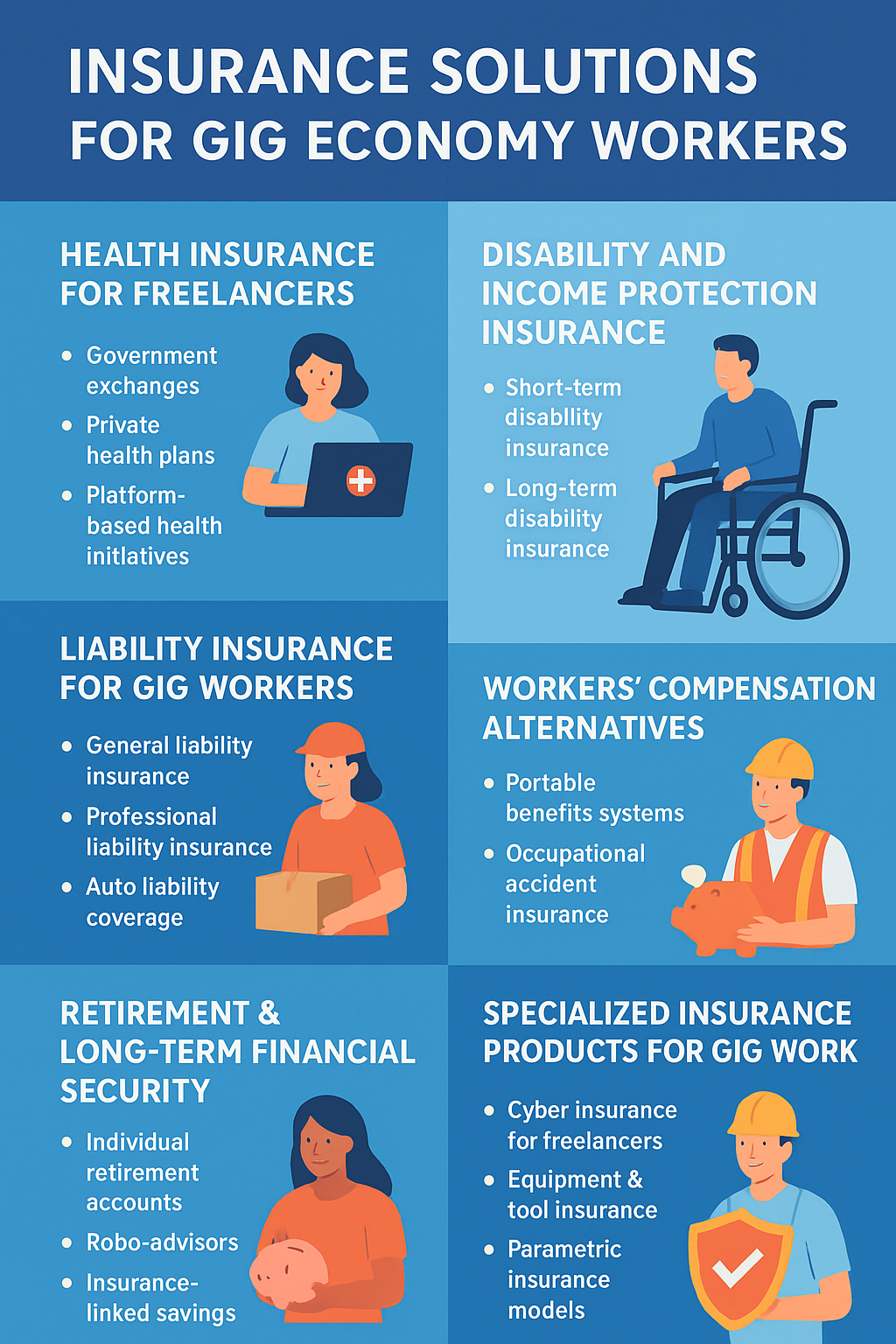
1. Health Insurance for Freelancers and Contractors
Gig workers often turn to:
- Government Exchanges/Marketplaces: Affordable Care Act (ACA) marketplaces in the U.S.
- Private Health Plans: Flexible packages with higher premiums but broader networks.
- Platform-Based Health Initiatives: Some platforms negotiate group health plans for workers.
SEO synonym focus: “health coverage for independent contractors,” “medical insurance for freelancers,” “affordable healthcare for gig workers.”
2. Disability and Income Protection Insurance
Freelancers face income volatility. Disability insurance provides partial wage replacement if they are unable to work due to illness or accidents.
- Short-term disability insurance covers several months.
- Long-term disability insurance provides years of support.
- On-demand micro-insurance policies (activated for specific jobs or shifts) are emerging.
3. Liability Insurance for Gig Workers
Essential for delivery drivers, consultants, and creative professionals. Coverage options include:
- General Liability Insurance – Protects against bodily injury or property damage claims.
- Professional Liability Insurance (Errors & Omissions) – Protects against client disputes or negligence.
- Auto Liability Coverage – Especially critical for rideshare and delivery drivers.
4. Workers’ Compensation Alternatives
While traditional workers’ comp is tied to employment, gig platforms can adopt hybrid solutions such as:
- Portable Benefits Systems: Benefits that move with the worker across gigs.
- Occupational Accident Insurance: Provides medical and disability benefits tied to specific jobs.
5. Retirement & Long-Term Financial Security
Gig workers must self-manage retirement savings. Solutions include:
- Individual Retirement Accounts (IRAs).
- Robo-advisors offering flexible, low-fee savings plans.
- Insurance-linked savings products combining life insurance with retirement planning.
6. Specialized Insurance Products for Gig Work
- Cyber Insurance for Freelancers – Protects against data breaches or online fraud.
- Equipment & Tool Insurance – For creatives, contractors, or tradespeople relying on costly gear.
- Parametric Insurance Models – Trigger-based coverage (e.g., payment for delivery delays due to weather).
The Role of Technology in Gig Worker Insurance
- Insurtech Startups
Innovative startups are creating on-demand, pay-per-use insurance. Workers can activate coverage only when on the job, lowering costs. - AI and Data Analytics
Risk profiles for gig workers are created using ride history, work hours, client ratings, and geolocation, allowing insurers to offer personalized premiums. - Blockchain and Smart Contracts
These ensure transparent claims management and instant payouts, critical for workers relying on daily earnings. - Digital Platforms as Benefit Providers
Gig platforms like Uber, Lyft, and DoorDash are experimenting with group coverage or contributions to worker benefit funds.
Case Studies in Gig Worker Insurance
Case Study 1: Uber and Driver Injury Protection
Uber launched a low-cost insurance program providing medical, disability, and survivor benefits for drivers during trips. This highlights micro-insurance tailored to gig roles.
Case Study 2: Freelance Designers Using Cyber Insurance
Independent designers faced copyright infringement lawsuits. Affordable cyber and professional liability policies helped protect assets and reputation.
Case Study 3: Food Delivery Riders in Europe
A European platform introduced portable accident insurance, allowing riders to remain protected across multiple platforms—a glimpse of the future of gig worker benefits.
Benefits of Insurance Solutions for Gig Workers
- Financial Security: Reduced risk of catastrophic expenses.
- Peace of Mind: Workers can focus on productivity instead of worrying about accidents.
- Talent Retention: Platforms offering insurance attract more reliable workers.
- Social Stability: Reduced burden on public healthcare and welfare systems.
Barriers to Insurance Adoption Among Gig Workers
- Affordability: Premiums often feel high relative to variable gig income.
- Awareness: Many workers are unaware of insurance options available.
- Complexity: Policy jargon discourages uptake.
- Trust Deficit: Workers may distrust insurers or platforms offering partial benefits.
The Future of Insurance in the Gig Economy
- Portable Benefits Frameworks
Governments and platforms may collaborate to create transferable insurance packages. - Pay-Per-Gig Insurance Models
Flexible, instant-activation coverage will dominate the market. - AI-Driven Risk Assessments
More accurate, fair pricing based on real-time behavior. - Integration with Financial Services
Bundled insurance + retirement + tax solutions tailored for freelancers. - Global Expansion
Gig platforms operate across borders, requiring insurance models that work internationally.
Conclusion
The gig economy is no longer a fringe labor market—it is the future of work. Yet its success hinges on creating a robust safety net for workers navigating uncertain income streams and heightened risks.
Insurance providers, policymakers, and gig platforms must collaborate to design affordable, portable, and accessible insurance solutions that match the flexibility of modern work. From health insurance for freelancers to liability coverage for drivers and digital nomads, the opportunities are vast.
By embracing innovative insurance solutions, we can create a labor market where flexibility does not come at the cost of security.