Starting your investment journey doesn’t require thousands of dollars or a finance degree. With $500 and the right approach, you can begin building wealth today while developing habits that will serve you for decades.
Why $500 Is the Perfect Starting Point
Most people wait years before investing, convinced they need more money to begin. This mindset costs them thousands in potential growth. Five hundred dollars might seem modest, but it’s enough to access nearly every major investment platform and establish a diversified portfolio.
Consider this: someone who invested $500 in an S&P 500 index fund in January 2014 would have roughly $1,400 by late 2024. That’s without adding another penny. The real power comes when you continue adding small amounts regularly.
The investment landscape has transformed dramatically. Commission-free trading, fractional shares, and robo-advisors have eliminated traditional barriers. You no longer need $3,000 minimum investments or pay $9.99 per trade. Today’s platforms welcome small investors with open arms.
Understanding Your Investment Timeline and Goals
Before placing your first trade, clarify what you’re working toward. Your timeline shapes every decision you’ll make. Money needed within two years belongs in a high-yield savings account, not the stock market. Investment capital should be funds you won’t touch for at least five years, preferably longer.
Think about specific objectives rather than vague aspirations. “Getting rich” isn’t a goal. “Building a $50,000 portfolio by age 40” gives you something concrete to work toward. Write down your target and calculate backward. How much monthly investment does it require? What return rate do you need?
Risk tolerance goes beyond questionnaires asking if market drops make you nervous. It’s about sleep quality. Can you watch your $500 become $350 during a correction without panicking? If not, you’ll need a conservative approach with more bonds and stable assets. There’s no shame in lower-risk strategies if they keep you invested long-term.
Setting Up Your Investment Foundation
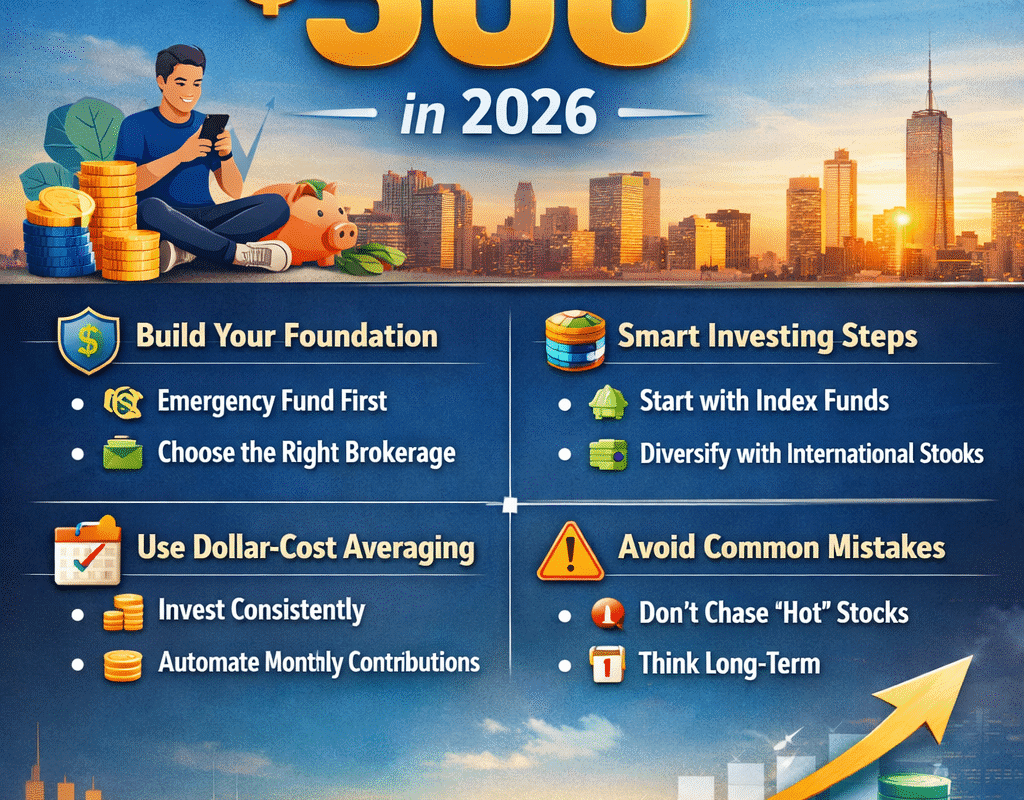
Emergency Fund First
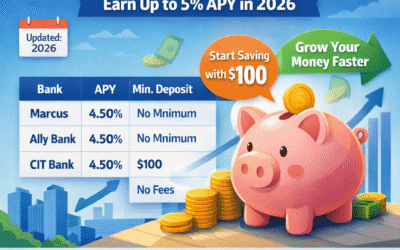
This might surprise you, but your first “investment” should be an emergency fund. Park three months of expenses in a high-yield savings account earning 4-5% annually. Without this buffer, you’ll likely sell investments at the worst possible time when unexpected expenses arise.
Many beginners skip this step, eager to chase returns. Then their car breaks down, and they’re forced to sell investments at a loss, plus pay taxes on any gains. Build your safety net first, even if it means delaying stock purchases by a few months.
Choosing the Right Brokerage Account
The brokerage you select matters less than you think. Major platforms like Vanguard, Fidelity, Charles Schwab, and E*TRADE all offer similar services with zero commissions on stock and ETF trades. Focus on these factors instead:
User interface: Pick a platform you’ll actually use. Complex interfaces discourage regular investing.
Educational resources: Quality learning materials accelerate your progress. Fidelity and Charles Schwab excel here.
Fractional shares: This feature lets you buy partial shares of expensive stocks. Essential for small accounts.
Automatic investing: Set up recurring purchases to build wealth systematically.
Avoid platforms pushing cryptocurrency or options trading to beginners. These complex instruments can destroy your capital before you understand the basics.
Tax-Advantaged Accounts vs. Taxable Accounts
Starting with $500, you face an important choice: open a regular taxable account or use tax-advantaged retirement accounts. Each serves different purposes.
Roth IRA: Contribute after-tax dollars, but withdrawals in retirement are tax-free. You can withdraw contributions (not earnings) anytime without penalty. Perfect for young investors in lower tax brackets.
Traditional IRA: Contributions may reduce current taxes, but you’ll pay taxes on withdrawals in retirement. Better for high earners expecting lower retirement income.
Taxable brokerage account: No tax benefits, but complete flexibility. Access your money anytime for any reason.
For most beginners, starting with a Roth IRA makes sense. The tax-free growth compounds powerfully over decades. You can always add a taxable account later for shorter-term goals.
Building Your First Portfolio
The Index Fund Approach
With $500 to invest, individual stock picking is gambling, not investing. You can’t achieve proper diversification buying three or four stocks. Index funds solve this problem by giving you instant exposure to hundreds or thousands of companies.
Start with a total stock market index fund. These funds hold virtually every publicly traded company in America, weighted by size. Large companies like Apple and Microsoft comprise bigger portions, but you also own thousands of smaller firms. One purchase gives you the entire market.
Popular options include:
- Vanguard Total Stock Market ETF (VTI)
- SPDR S&P 500 ETF (SPY)
- iShares Core S&P Total Market ETF (ITOT)
These funds charge expense ratios under 0.10% annually. That’s $1 per year on a $1,000 investment. Compare that to actively managed funds charging 1% or more.
Target-Date Funds for Complete Beginners
If choosing investments feels overwhelming, target-date funds offer a complete solution. Pick the fund closest to your expected retirement year, and it handles everything else. The fund automatically rebalances between stocks and bonds, becoming more conservative as you approach retirement.
A 25-year-old might choose a 2065 target-date fund, currently holding roughly 90% stocks and 10% bonds. By 2045, it might shift to 70% stocks and 30% bonds. This gradual transition happens automatically, requiring zero effort from you.
Target-date funds typically charge slightly higher fees than basic index funds, but the convenience justifies the cost for beginners. You can always switch to a self-managed approach once you gain confidence.
The Role of International Diversification
American investors often ignore international markets, missing significant opportunities. International stocks comprise over 40% of global market capitalization. Excluding them means ignoring companies like Samsung, Toyota, and Nestlé.
Add international exposure through a total international stock index fund. Allocate 20-30% of your stock holdings here. This provides currency diversification and exposure to faster-growing emerging markets.
Some excellent international funds include:
- Vanguard Total International Stock ETF (VTIAX)
- iShares Core MSCI Total International Stock ETF (IXUS)
Dollar-Cost Averaging Your Way to Wealth
The most powerful investment strategy requires no skill: consistent monthly investing regardless of market conditions. This approach, called dollar-cost averaging, transforms market volatility from enemy to ally.
When markets drop, your fixed dollar amount buys more shares. When markets rise, you buy fewer shares but your existing holdings appreciate. Over time, this pattern reduces your average cost per share while building substantial positions.
Set up automatic monthly transfers from your checking account to your investment account. Start with whatever amount feels comfortable beyond your initial $500. Even $50 monthly makes a difference. Increase the amount whenever you get a raise or pay off debt.
Automation removes emotion from investing. You won’t second-guess purchases during market turmoil or forget to invest during busy periods. The transfers happen automatically, building wealth in the background while you live your life.
Common Mistakes That Destroy Returns
Checking Your Account Daily
New investors obsess over daily fluctuations, celebrating five-dollar gains and panicking over ten-dollar losses. This behavior leads to poor decisions. Markets fluctuate constantly. Daily movements mean nothing for long-term investors.
Check your account monthly at most. Quarterly is even better. Focus on contributing regularly rather than monitoring performance. Your account value matters far less than your investing behavior.
Chasing Hot Stocks and Trends
Every year brings new “can’t miss” investments. Cannabis stocks, SPACs, NFTs, artificial intelligence plays. By the time these trends reach mainstream awareness, smart money has already taken profits. Beginners arriving late become exit liquidity for early investors.
Stick to boring, diversified index funds. They won’t make you rich overnight, but they won’t make you poor either. Building wealth takes time. Accept this reality or prepare for expensive lessons.
Trying to Time the Market
Nobody consistently predicts market movements. Professional fund managers with armies of analysts fail to beat index funds over long periods. Yet beginners convince themselves they can identify tops and bottoms.
Market timing usually means sitting in cash waiting for a crash that never comes. Or selling after a decline and missing the recovery. Time in the market beats timing the market. Invest regularly regardless of headlines.
Overcomplicating Your Strategy
Beginners often create elaborate portfolios with dozen holdings. They buy sector funds, dividend funds, growth funds, value funds, thinking complexity equals sophistication. It doesn’t. These overlapping funds likely hold the same stocks, adding complexity without benefit.
Keep it simple: one domestic stock fund, one international stock fund, maybe one bond fund if you’re conservative. That’s a complete portfolio. You can explore alternatives after mastering the basics.
Realistic Expectations for Your First Year
Your $500 initial investment won’t make you wealthy immediately. Expect significant volatility, especially in your first year. Your account might show -15% or +25%. Both are normal. Neither reflects your long-term prospects.
Focus on process goals rather than performance goals. Aim to:
- Invest a specific amount monthly without fail
- Read one investment book quarterly
- Avoid panic selling during corrections
- Resist FOMO buying during rallies
If you achieve these process goals, performance will follow. Most beginners quit within their first bear market. Surviving your first major decline puts you ahead of 90% of aspiring investors.
Track your contributions separately from investment returns. Seeing your account grow from consistent contributions provides motivation during flat or negative markets. Every dollar invested brings you closer to financial independence.
Scaling Beyond Your First $500
Once you establish your initial portfolio, focus on increasing contributions rather than finding better investments. An extra $100 monthly contribution impacts your wealth more than improving returns by 1% annually.
Look for ways to free up investment capital:
- Cancel unused subscriptions
- Reduce dining out frequency
- Negotiate lower insurance rates
- Take on freelance work
- Sell items you don’t use
Direct every dollar saved toward investments. Small amounts compound into significant sums over time. Someone investing $200 monthly for 30 years at 8% annual returns accumulates over $300,000. Double the monthly amount, double the final balance.
Consider increasing your investment amount annually. If you invest $100 monthly this year, aim for $110 monthly next year. These small increases barely affect your lifestyle but dramatically impact your long-term wealth.
When to Consider Individual Stocks
After mastering index fund investing and building a solid foundation, you might explore individual stock picking. Wait until your portfolio exceeds $10,000 and you’ve invested through a complete market cycle including a significant correction.
If you pursue individual stocks, limit them to 10% of your portfolio initially. Think of this as tuition for real-world education. You’ll make mistakes. Better to make them with small amounts while your core index fund holdings continue growing.
Research companies thoroughly before buying their stock. Read annual reports, understand the business model, analyze competitive advantages. If you can’t explain why you own a stock in one paragraph, you shouldn’t own it.
Frequently Asked Questions
Should I wait for a market crash before starting?
Absolutely not. Markets reach new highs regularly because companies grow and create value. Waiting for crashes means missing years of potential growth. Start now with what you have, adding more during future corrections.
What if I can only invest $50 per month after my initial $500?
Perfect. That’s $600 annually, which compounds significantly over time. Someone starting at 25 and investing $50 monthly could have over $150,000 by retirement assuming historical market returns.
Is it worth investing such small amounts with inflation so high?
Not investing guarantees your money loses purchasing power to inflation. Stocks historically outpace inflation over long periods. Even modest returns beat holding cash during inflationary periods.
Should I pay off debt before investing?
Pay off high-interest debt (credit cards) first. For low-interest debt like federal student loans or mortgages, consider doing both: make minimum payments while investing small amounts. The habit formation matters as much as the math.
What about robo-advisors instead of picking funds myself?
Robo-advisors work well for beginners, automatically creating and managing diversified portfolios. They charge small fees (typically 0.25% annually) but handle rebalancing and tax optimization. Worth considering if you want completely hands-off investing.
Can I invest in cryptocurrency with my $500?
Cryptocurrency remains highly speculative. If you’re interested, limit crypto to 5% of your portfolio maximum. Focus on established assets like Bitcoin or Ethereum through mainstream brokerages, not obscure exchanges.
Taking Your First Step
Knowledge without action achieves nothing. You now understand enough to begin investing intelligently. The perfect time will never arrive. Markets will always feel uncertain. Start anyway.
Open your account this week. Fund it with your $500. Buy your first index fund. Set up automatic monthly contributions. Then get on with your life while your money works in the background.
Five years from now, you’ll thank yourself for starting today rather than waiting for ideal conditions. Your future wealth depends on decisions you make now, not someday when you have more money or knowledge.
Beginning your investment journey with $500 teaches valuable lessons about patience, discipline, and compound growth. These lessons matter more than your initial returns. Master the fundamentals with small amounts, and you’ll handle larger sums confidently later.
The path to financial independence starts with a single step. Take yours today.