
The Rise of Values-Based Finance
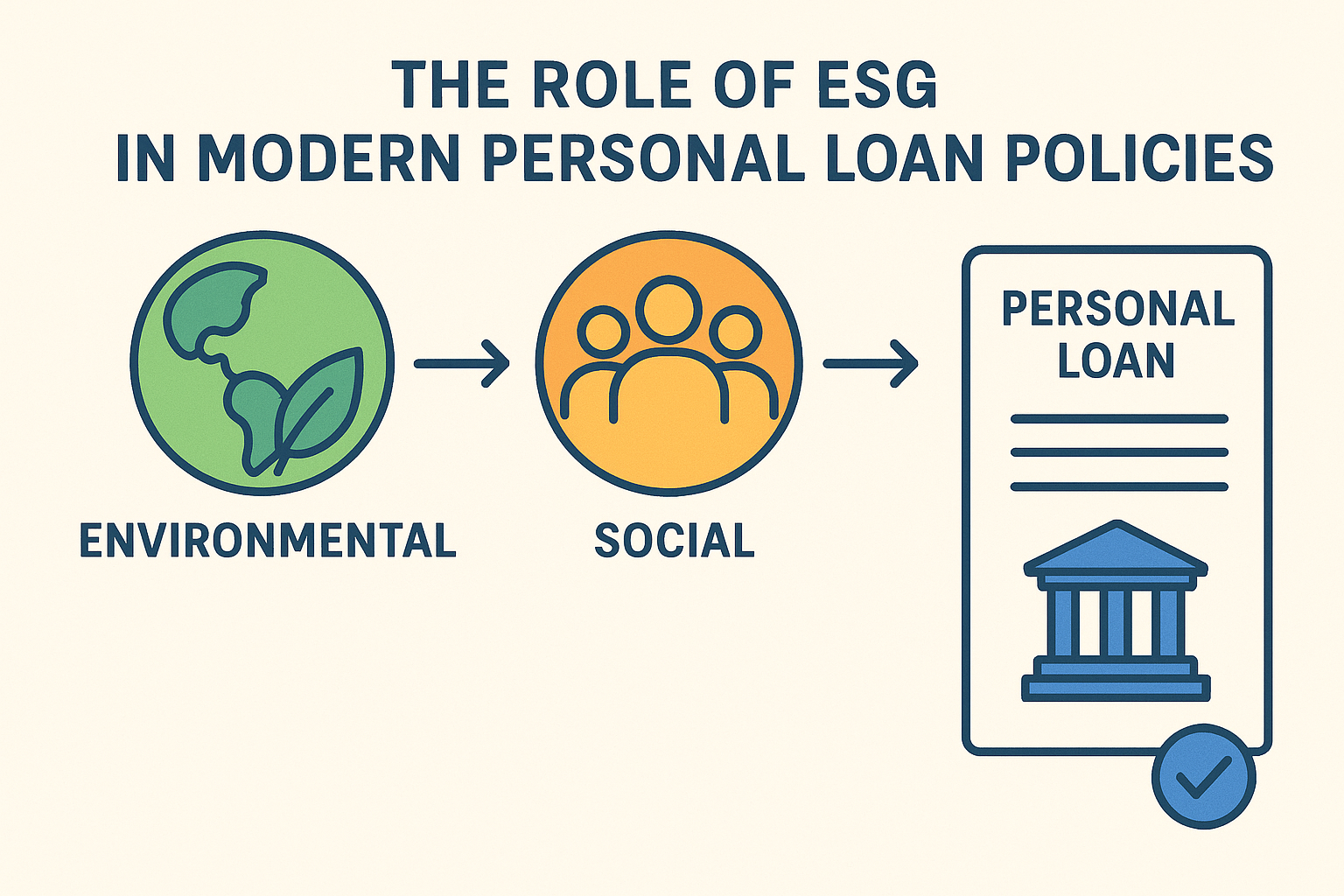
The financial landscape is undergoing a profound transformation. A seismic shift is moving the industry from a singular focus on shareholder profit to a broader commitment to stakeholder value. At the heart of this revolution are Environmental, Social, and Governance (ESG) criteria—a framework once confined to the world of corporate investment that is now fundamentally reshaping retail banking and, more specifically, the realm of personal loans.
No longer a niche concern for ethically-minded investors, sustainable finance has entered the mainstream. A new generation of consumers is demanding that their financial choices reflect their personal values. They are asking: Does my bank invest in fossil fuels? Does my credit card company promote social equity? And crucially, can my personal loan be a force for good?
This article delves deep into the integration of ESG considerations into modern personal loan policies. We will explore how lenders are moving beyond traditional credit scores to incorporate sustainability metrics, how these principles are influencing risk assessment and pricing, and what this means for the future of consumer borrowing. This is not just a trend; it’s a fundamental reimagining of the relationship between individuals, their money, and the world they inhabit.
Chapter 1: Deconstructing ESG in the Consumer Credit Sphere
To understand its impact, we must first define what ESG means in the context of personal lending. It’s a multifaceted approach that evaluates a borrower’s—and a lender’s—broader impact.
1.1 The Environmental (E) Pillar: Financing a Sustainable Lifestyle
This pillar focuses on the ecological footprint of both the lender’s operations and the purpose of the loan itself.
- Green-Linked Loan Products: Financial institutions are increasingly offering preferential terms for loans that fund environmentally beneficial projects. This includes loans for:
- Home energy efficiency upgrades (solar panel installation, triple-glazed windows, high-efficiency HVAC systems).
- Electric and hybrid vehicle purchases.
- Sustainable landscaping and water conservation systems.
- Carbon Footprint of Operations: Lenders are also assessing and minimizing their own environmental impact through paperless processes, energy-efficient data centers, and sustainable corporate practices.
1.2 The Social (S) Pillar: Fostering Inclusion and Community Well-Being
The social component addresses how lending practices affect people and communities.
- Financial Inclusion: Developing loan products and underwriting models that extend credit to underserved populations, including those with thin credit files or those in low-to-moderate income brackets, without engaging in predatory practices.
- Fair and Transparent Treatment: Ensuring ethical debt collection practices, clear communication, and robust data privacy protections for all customers.
- Community Reinvestment: Using loan capital to support community development projects, affordable housing, and small businesses in disadvantaged areas.
1.3 The Governance (G) Pillar: The Framework of Trust
Governance refers to the internal systems, controls, and ethics that guide a lender’s behavior.
- Ethical Underwriting Algorithms: Proactively auditing and mitigating biases in AI and machine learning models used for credit scoring to prevent discrimination.
- Executive Accountability: Linking executive compensation to the achievement of ESG targets, including diversity goals and customer satisfaction metrics.
- Data Security and Transparency: Implementing robust cybersecurity measures and being transparent about how customer data is used.
Chapter 2: The Business Case: Why Lenders Are Embracing Sustainable Principles
The integration of ESG is not merely altruistic; it is a strategically sound business decision driven by several powerful factors.
2.1 Mitigating Long-Term Risk
- Climate Risk: Lenders face physical risks (e.g., properties in flood zones collateralizing loans) and transition risks (e.g., loans for gas-guzzling cars becoming stranded assets in a low-carbon economy). ESG-focused portfolios are inherently more resilient.
- Reputational Risk: Companies associated with socially harmful practices face consumer backlash and regulatory scrutiny. A strong ESG profile acts as a reputational shield.
2.2 Unlocking New Markets and Customer Loyalty
- The Values-Aligned Consumer: Millennials and Gen Z, the heirs to a massive wealth transfer, are profoundly committed to sustainability. Banks that align with these values will capture this lucrative and loyal demographic.
- Product Differentiation: In a crowded market, green personal loans, social impact loans, and other ESG-themed products offer a powerful point of differentiation.
2.3 Enhancing Credit Assessment with Deeper Data
- Alternative Data: ESG considerations often involve analyzing alternative data points. For example, a borrower’s consistent, on-time payments for utilities (a potential environmental indicator) or their stable employment history in a community-focused organization (a social indicator) can provide a more holistic view of creditworthiness, especially for the credit-invisible.
Chapter 3: Mechanisms of Integration: How ESG is Embedded into Loan Policies
The theoretical commitment to ESG is translated into action through specific policy mechanisms and product innovations.
3.1 ESG-Linked Pricing Structures
This is one of the most direct applications. Borrowers can receive financial incentives for meeting certain sustainability criteria.
- Interest Rate Discounts: A lender might offer a 0.5% reduction on a personal loan interest rate if the funds are used for a verified green purpose, like purchasing an EV.
- Donation-Matching: Upon loan approval or successful repayment, the bank makes a donation to a social or environmental charity chosen by the borrower.
3.2 Product-Based Segmentation
Lenders are creating dedicated loan products with built-in ESG criteria.
- Green Personal Loans: Specifically earmarked for eco-friendly purchases. The application process may include verifying the intended use of funds.
- Social Impact Loans: Designed for borrowers working in specific social sectors (non-profits, education, healthcare) or for purposes like funding education or starting a social enterprise.
3.3 Ethical Underwriting and Algorithmic Bias Mitigation
Lenders are scrutinizing their credit models to ensure they do not perpetuate social inequities.
- “Blind” Underwriting Experiments: Some fintechs are testing models that exclude demographic data like zip code to prevent redlining.
- Explainable AI (XAI): Developing AI systems that can explain their denial reasons, ensuring compliance with fair lending laws and building borrower trust.
Chapter 4: The Challenges and Criticisms: Navigating the Pitfalls
The path to integrating ESG is not without its obstacles and detractors.
4.1 The Specter of Greenwashing
The most significant risk is the perception that ESG is a marketing ploy. Lenders must back their claims with tangible actions, transparent reporting, and third-party verification to avoid accusations of insincerity.
4.2 Data Standardization and Measurement
There is no universal standard for measuring a loan’s “greenness” or a borrower’s “social impact.” The lack of consistent, comparable ESG data makes it difficult to benchmark performance and assess true impact.
4.3 The Risk of “ESG Elitism”
There is a valid concern that sustainable finance could become a luxury for the affluent. If green loans are only accessible to those who can afford solar panels or electric vehicles, ESG runs the risk of exacerbating, rather than alleviating, social inequality.
4.4 The Regulatory Minefield
The regulatory environment for ESG is still evolving. Lenders must navigate a complex and sometimes contradictory web of guidelines from different jurisdictions, balancing ESG goals with strict fair lending regulations.
Chapter 5: The Future Trajectory: Where ESG in Lending is Headed
The integration of ESG is set to deepen, driven by technology, regulation, and consumer demand.
- The Rise of the “ESG Score”: Just as we have FICO scores today, we may see the emergence of a universal, individual-level ESG score that lenders use alongside traditional credit data to assess risk and offer personalized terms.
- Blockchain for Transparency: Distributed ledger technology could be used to create an immutable record of a loan’s ESG impact, from origination to fund usage, providing unparalleled transparency and combating greenwashing.
- Mandatory ESG Disclosure: Regulators are likely to move towards mandatory disclosure of climate risks and social impacts for financial institutions, making ESG integration a compliance necessity, not just a competitive advantage.
Conclusion: Redefining the Purpose of Credit
The incorporation of ESG criteria into personal loan policies marks a pivotal moment in the history of finance. It represents a recognition that capital is not neutral; it has consequences. Every loan approved is a vote for a certain kind of future.
For lenders, this is a call to build more resilient, forward-thinking, and customer-centric businesses. For borrowers, it is an unprecedented opportunity to align their financial decisions with their ethical convictions. The personal loan, once a purely utilitarian financial tool, is being re-engineered as an instrument of positive change. The thread of sustainability is being woven into the very fabric of consumer credit, creating a stronger, more inclusive, and more responsible financial system for generations to come.