
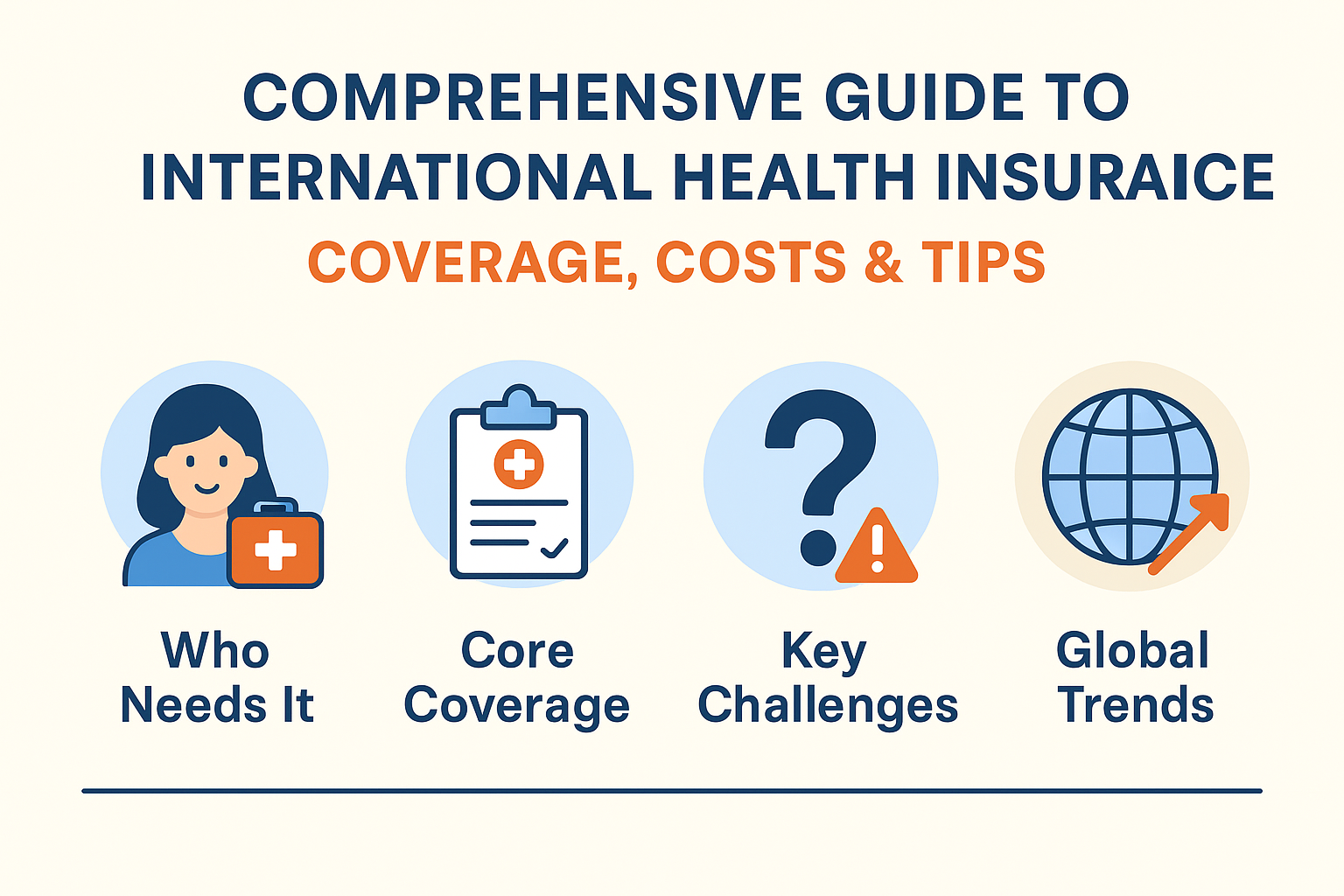
Explore everything you need to know about international health insurance. Learn who needs it, core coverage features, challenges, global trends, and practical tips for expats, students, retirees, and travelers.
In today’s interconnected world, crossing borders has become a routine part of modern life. Whether for work, study, leisure, or long-term relocation, millions of people travel or live abroad every year. While the opportunities for personal and professional growth are immense, one challenge persists: access to reliable international health insurance.
From expatriates and digital nomads to students, retirees, and business travelers, understanding how global health coverage works is no longer optional—it’s essential. Navigating international medical insurance policies can be overwhelming, given the variations in coverage, costs, exclusions, and country-specific regulations. This article provides a comprehensive guide to global health insurance policies, breaking down their importance, structure, benefits, limitations, and the latest industry trends shaping the future of international medical coverage.
1. Why International Health Insurance Matters
Local healthcare systems vary dramatically around the globe. A medical emergency in one country could cost only a few dollars, while in another, it could lead to financial ruin. For example:
- In the United States, a hospital stay can exceed $3,000 per day, not including specialized treatment.
- In Europe, medical care may be partially or fully subsidized, but coverage is often restricted to residents.
- In regions such as Asia, Africa, or Latin America, the quality of care can differ between public and private facilities, with private hospitals demanding upfront payment.
International health insurance bridges this gap by offering:
- Global coverage across multiple countries.
- Emergency evacuation services to the nearest quality hospital.
- Access to international hospital networks without high out-of-pocket expenses.
- Peace of mind for expatriates and frequent travelers.
Without adequate coverage, expats and travelers risk financial instability and restricted access to quality medical services.
2. Who Needs International Health Insurance?
International health insurance is not only for the wealthy or retirees; it caters to diverse groups, including:
- Expatriates: Employees posted abroad by multinational corporations.
- International students: Studying in foreign universities where local insurance may not be valid.
- Digital nomads & freelancers: Working remotely while moving across multiple countries.
- Retirees abroad: Seeking long-term medical stability in another country.
- Business travelers: Frequent international travel exposing them to different healthcare risks.
- NGO workers and volunteers: Deployed in regions with limited medical facilities.
3. Core Features of International Health Insurance Policies
When navigating global health insurance plans, policyholders should pay attention to the following features:
3.1 Geographic Coverage
- Worldwide coverage: Includes the U.S. (higher premiums).
- Worldwide excluding the U.S.: More affordable, ideal for those avoiding expensive American healthcare.
- Regional coverage: Focused on a specific zone (e.g., Europe, Asia-Pacific).
3.2 Inpatient and Outpatient Care
- Hospitalization, surgeries, and specialist visits.
- Diagnostic tests, rehabilitation, and therapies.
3.3 Emergency Evacuation and Repatriation
Critical for people in regions lacking quality medical facilities. Evacuation ensures transfer to a suitable hospital, while repatriation covers return to the home country.
3.4 Preventive and Wellness Care
Vaccinations, health screenings, and annual check-ups encourage long-term health.
3.5 Chronic and Pre-existing Conditions
Coverage varies: some insurers exclude pre-existing illnesses, while others provide partial or full coverage after a waiting period.
3.6 Maternity and Dental Options
Add-ons for family planning, childbirth, orthodontics, and dental surgeries.
4. Key Challenges in Navigating International Policies
Despite their benefits, global health insurance comes with complexities:
- High premiums: Especially for U.S. coverage or comprehensive plans.
- Policy exclusions: Mental health, extreme sports, and pre-existing conditions are often restricted.
- Regulatory differences: Host countries may require mandatory insurance separate from global policies.
- Claim procedures: Bureaucratic delays can frustrate policyholders.
- Exchange rates: Premiums are often paid in strong currencies, which can burden expats in weaker economies.
5. Factors to Consider When Choosing a Policy
To select the right international medical plan, individuals should evaluate:
- Destination country: Cost of healthcare and medical infrastructure.
- Length of stay: Short-term vs. long-term coverage.
- Budget and premium affordability.
- Lifestyle factors: Adventure sports, chronic illnesses, or frequent travel.
- Insurer reputation: Customer service, claim processing, and hospital network.
6. The Role of Technology in International Health Insurance
The digital revolution has transformed global health coverage:
- Telemedicine services connecting patients to doctors remotely.
- AI-driven risk assessments tailoring premiums and coverage.
- Mobile apps for claims, hospital locators, and policy management.
- Blockchain solutions for secure medical record sharing.
These innovations improve efficiency, reduce fraud, and empower policyholders with greater control.
7. Global Trends Shaping the Future
The international health insurance market continues to evolve due to:
- Rising medical tourism: Patients seeking affordable care abroad.
- Aging expatriate populations: Growing demand for chronic illness management.
- Climate change & pandemics: Increasing risk of global health emergencies.
- Employer-sponsored plans: Companies expanding global workforce benefits.
- Sustainability goals: Insurers promoting wellness and preventive healthcare.
8. Case Studies
Case Study 1: An Expat in Singapore
An IT professional relocated from the UK to Singapore. With international coverage, he accessed private hospitals with zero waiting time, unlike local subsidized care which excluded expats.
Case Study 2: Student in the U.S.
A German student studying in Boston benefited from a global student plan, avoiding $15,000 in out-of-pocket emergency surgery costs.
Case Study 3: Retiree in Portugal
A Canadian retiree living in Portugal used her policy’s evacuation benefit during a cardiac emergency, ensuring access to specialized care in Spain.
9. Practical Tips for Policyholders
- Compare multiple insurers before committing.
- Read the fine print carefully—especially exclusions.
- Choose plans with direct billing networks to avoid upfront payments.
- Update coverage regularly as personal and professional circumstances change.
- Use telemedicine to minimize minor medical expenses.
10. Conclusion
Navigating international health insurance policies requires careful planning and informed decision-making. As globalization accelerates, the demand for comprehensive, flexible, and tech-enabled coverage will only grow. Whether you’re a student, digital nomad, retiree, or business traveler, international health insurance is not a luxury—it’s a necessity.
By understanding coverage options, evaluating personal needs, and staying updated on global healthcare trends, individuals can secure the protection they need wherever life takes them.