
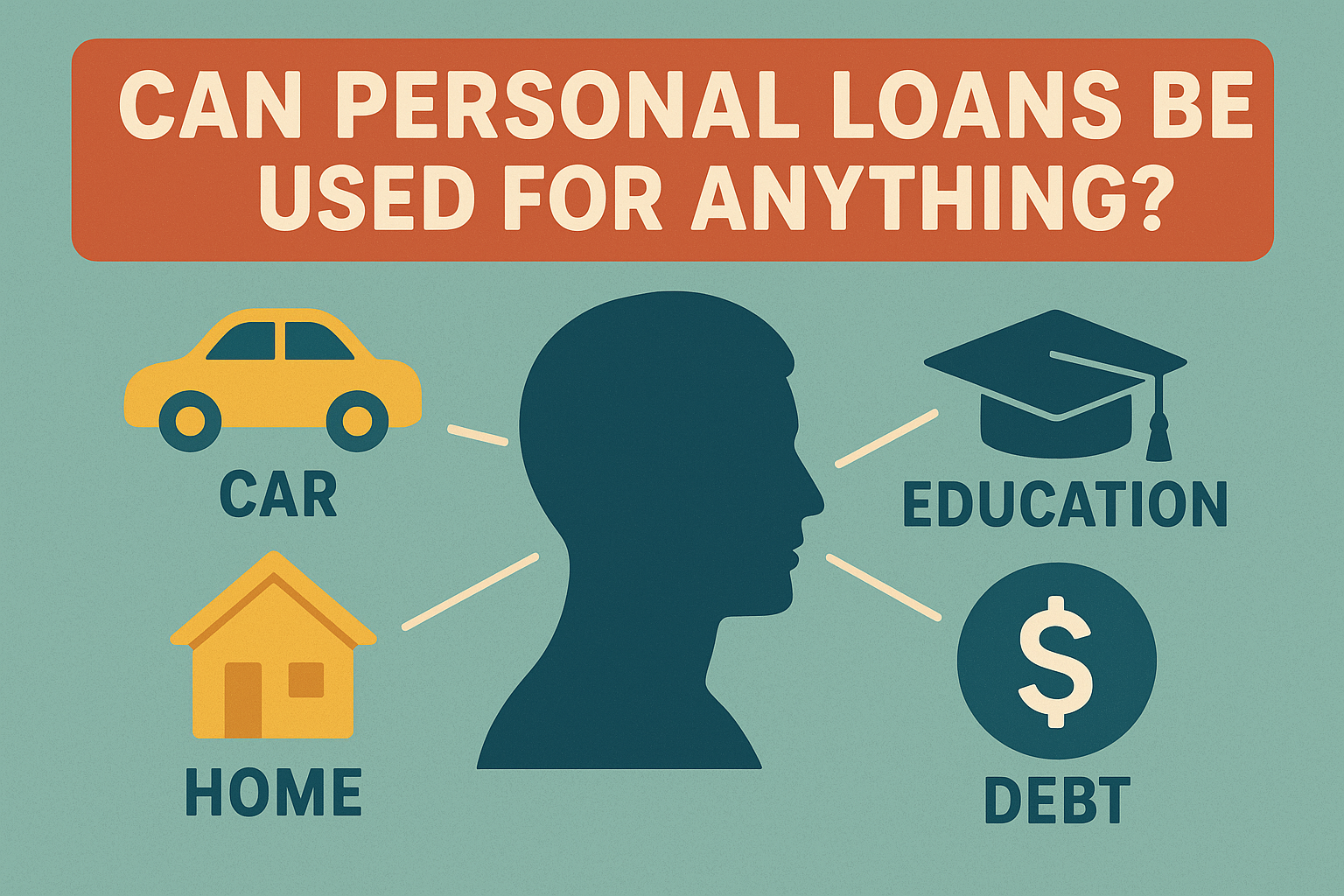
✓ Personal loans offer UNLIMITED uses! From debt to dreams – discover all legal purposes, smart strategies & save $1000s. No restrictions explained!
Understanding the Versatility of Personal Lending
In today’s dynamic financial landscape, consumers frequently seek flexible funding solutions that adapt to their diverse needs and circumstances. Personal loans have emerged as one of the most versatile financial instruments available, offering borrowers remarkable freedom in how they utilize borrowed funds. But this flexibility naturally raises an important question: are there truly no restrictions on how you can use personal loan proceeds?
The answer reveals both the liberating potential and important considerations surrounding personal lending. While these unsecured credit products generally offer extraordinary flexibility compared to purpose-specific financing like mortgages or auto loans, understanding the full scope of possibilities—and limitations—empowers borrowers to make informed decisions that align with their financial goals and legal obligations.
This comprehensive guide explores the remarkable versatility of consumer lending, examining permitted uses, potential restrictions, strategic applications, and important considerations that every borrower should understand. Whether you’re consolidating debt, funding home improvements, or pursuing dreams, this detailed exploration will illuminate how personal financing can serve your unique needs while helping you navigate potential pitfalls and maximize value from borrowed funds.
The Fundamental Nature of Unrestricted Lending
What Makes Personal Loans Unique
Personal loans distinguish themselves from other credit products through their unsecured nature and flexible application. Unlike mortgages tied to property or auto loans secured by vehicles, these financial instruments typically don’t require collateral or restrict fund usage to specific purchases. This fundamental characteristic creates unprecedented borrowing freedom, allowing consumers to address virtually any financial need through a single lending product.
The unrestricted nature of individual financing stems from the risk assessment model lenders employ. Rather than securing loans against specific assets, financial institutions evaluate borrower creditworthiness, income stability, and repayment capacity. This approach shifts focus from controlling fund usage to assessing overall borrower reliability, creating a lending environment where purpose becomes secondary to repayment ability.
Legal Framework and Lender Policies
While personal loans offer remarkable flexibility, the regulatory environment and individual lender policies create a framework within which this freedom operates. Federal and state laws generally don’t restrict how borrowers use legally obtained funds, but lenders may implement their own guidelines or restrictions based on risk management strategies and corporate policies.
Most mainstream financial institutions explicitly market personal loans as multipurpose financing solutions, recognizing that borrowing needs vary dramatically among consumers. However, some lenders may inquire about intended use during the application process, not necessarily to restrict access but to better understand borrower needs and potentially offer more suitable products or terms.
Common and Accepted Uses for Personal Financing
Debt Consolidation and Financial Restructuring
Perhaps the most popular application of consumer credit involves consolidating existing obligations into a single, manageable payment. Borrowers frequently utilize personal loans to combine high-interest credit card balances, medical bills, or multiple smaller loans into one streamlined obligation, potentially reducing overall interest costs and simplifying financial management.
This debt consolidation strategy offers multiple benefits beyond simple convenience. By replacing revolving credit card debt with fixed installment loans, borrowers often improve their credit utilization ratios, potentially boosting credit scores. Additionally, the structured repayment schedule of personal loans provides a clear path to debt freedom, unlike the potentially endless cycle of minimum credit card payments.
Home Improvements and Property Enhancements
Homeowners regularly turn to personal financing for property improvements, repairs, and renovations. Whether updating kitchens, replacing roofs, or adding swimming pools, these loans provide immediate access to funds without the complexity of home equity lending or the risk of placing liens on property.
The flexibility of unsecured lending proves particularly valuable for:
Emergency repairs that can’t wait for lengthy approval processes
Cosmetic updates that might not qualify for home improvement loans
Rental property enhancements where traditional home equity products aren’t available
Pre-sale improvements designed to increase property value before listing
Medical and Healthcare Expenses
Healthcare costs continue rising, and insurance coverage gaps leave many facing substantial out-of-pocket expenses. Personal loans bridge these financial gaps, enabling individuals to access necessary medical care without depleting savings or delaying treatment.
Common medical applications include:
- Elective procedures not covered by insurance
- Dental work and orthodontics
- Fertility treatments and associated costs
- Medical travel and accommodation expenses
- Deductibles and co-payments for major procedures
- Alternative and complementary therapies
Educational Investments and Career Development
While federal student loans remain the primary education financing source, personal loans fill important gaps in educational funding:
Professional development courses and certifications that don’t qualify for traditional student aid
Coding bootcamps and technical training programs
Graduate school expenses beyond federal loan limits
International education opportunities with limited financing options
Career transition costs including training, relocation, and income gaps
Life Events and Milestone Celebrations
Major life events often require substantial financial resources, and personal loans provide the flexibility to fund these important moments:
Weddings and celebrations when savings fall short of dream event costs
Adoption expenses including agency fees, legal costs, and travel
Divorce proceedings covering attorney fees and transition costs
Funeral and memorial services during emotionally difficult times
Religious ceremonies and cultural celebrations requiring significant investment
Business and Entrepreneurial Ventures
Small business owners and aspiring entrepreneurs frequently utilize personal financing to launch or expand ventures:
- Startup capital for new businesses
- Equipment purchases and upgrades
- Marketing and advertising campaigns
- Inventory financing during growth periods
- Bridge funding between business loans
- Franchise fees and initial investments
While dedicated business loans might offer better terms for established companies, personal financing provides speed and flexibility crucial for entrepreneurial opportunities.
Restrictions and Prohibited Uses
Illegal Activities and Substances
Despite the general flexibility of personal loans, using borrowed funds for illegal purposes remains strictly prohibited. This includes:
- Purchasing illegal drugs or controlled substances
- Funding illegal gambling operations
- Supporting criminal enterprises
- Money laundering activities
- Any activity violating federal, state, or local laws
Lenders may require borrowers to certify that funds won’t be used for illegal purposes, and discovery of such use could trigger immediate loan acceleration and legal consequences.
Investment and Speculation Limitations
While not universally prohibited, many lenders discourage or restrict using personal loans for investment purposes:
Stock market investments carry inherent risks that might compromise repayment ability
Cryptocurrency speculation involves extreme volatility incompatible with fixed loan obligations
Real estate speculation might be better served through specialized investment loans
Forex trading and other leveraged investments multiply risk beyond acceptable levels
Some lenders explicitly prohibit investment use in loan agreements, while others simply warn against the practice. Borrowing to invest creates double leverage that can amplify losses catastrophically.
Educational Institution Restrictions
Certain educational expenses might face restrictions despite the general acceptability of education-related borrowing:
Post-secondary tuition at Title IV institutions often requires specialized student loans
Federal student loan payments typically can’t be made with other borrowed funds
Specific scholarship programs might prohibit supplemental borrowing
These restrictions often stem from federal regulations rather than lender preferences, designed to maintain the integrity of educational financing systems.
Strategic Considerations for Multi-Purpose Borrowing
Cost-Benefit Analysis for Different Uses
Not all loan purposes offer equal value propositions. Strategic borrowers evaluate potential returns against borrowing costs:
High-value uses generate returns exceeding loan costs:
- Eliminating 20%+ APR credit card debt with 10% personal loans
- Home improvements increasing property value beyond investment
- Education or training leading to substantial income increases
Questionable value applications require careful consideration:
- Funding vacations or luxury purchases
- Replacing functioning items for aesthetic reasons
- Speculative investments without guaranteed returns
Poor value propositions should generally be avoided:
- Gambling or high-risk speculation
- Consumables offering no lasting value
- Purchases significantly exceeding necessary requirements
Timing and Opportunity Cost Evaluation
The flexibility to use personal loans for various purposes doesn’t mean every timing makes financial sense:
Optimal timing scenarios:
- Interest rates at historical lows
- Credit scores recently improved, qualifying for better terms
- Time-sensitive opportunities with clear value propositions
- Consolidation opportunities during high-interest environments
Suboptimal timing considerations:
- Immediately before major purchases affecting credit capacity
- During income uncertainty or job transitions
- When emergency funds remain inadequate
- Before addressing underlying spending issues
Comparing Personal Loans to Purpose-Specific Alternatives
Personal Loans vs. Credit Cards
For flexible spending needs, both options offer versatility, but key differences affect optimal use:
Personal loans excel for:
- Large, one-time purchases requiring fixed repayment schedules
- Debt consolidation with clear payoff timelines
- Purchases exceeding credit card limits
- Situations where spending discipline requires structured payments
Credit cards prove superior for:
- Ongoing, variable expenses
- Purchases qualifying for rewards programs
- Short-term financing with promotional 0% APR offers
- Emergency access to funds without application processes
Personal Loans vs. Home Equity Products
Homeowners face choices between unsecured personal loans and secured home equity options:
Personal loan advantages:
- No risk to home ownership
- Faster approval and funding processes
- Available to non-homeowners
- No appraisal or extensive documentation requirements
Home equity benefits:
- Lower interest rates due to collateral
- Higher borrowing limits
- Potential tax deductibility for qualified uses
- Longer repayment terms available
Personal Loans vs. Specialized Financing
Purpose-specific loans often provide better terms for their intended uses:
Auto loans typically offer lower rates for vehicle purchases due to collateral value
Student loans provide unique protections and repayment options for education
Medical financing might include promotional periods or provider partnerships
Business loans offer tax advantages and terms aligned with revenue cycles
However, personal loans provide speed and simplicity when specialized options prove cumbersome or unavailable.
Maximizing Value from Flexible Financing
Strategic Loan Structuring
Optimize loan structure based on intended use:
Short-term loans for purposes generating quick returns or savings
Longer terms for major purchases requiring payment flexibility
Variable rates when expecting to repay quickly in declining rate environments
Fixed rates for long-term obligations during rising rate periods
Multiple Use Strategies
Some borrowers strategically combine multiple purposes within single loans:
- Primary objective addressing the most pressing financial need
- Secondary benefits like building emergency funds or making minor improvements
- Credit optimization through strategic debt restructuring
- Opportunity capture for time-sensitive investments or purchases
This approach requires careful planning to ensure all uses provide value exceeding borrowing costs.
Prepayment and Flexibility Preservation
Since personal loans can address unexpected needs, maintaining flexibility proves valuable:
- Choose lenders without prepayment penalties
- Consider lines of credit for ongoing flexible needs
- Maintain some liquidity despite loan availability
- Plan for early repayment when possible to restore borrowing capacity
Risk Management and Responsible Borrowing
Avoiding Debt Cycles
The flexibility of personal loans can become a trap for undisciplined borrowers:
Warning signs of problematic borrowing:
- Taking loans to make payments on other debts
- Borrowing for non-essential consumption repeatedly
- Increasing loan amounts with each refinancing
- Using loans to maintain unsustainable lifestyles
Protective strategies:
- Establish clear borrowing criteria before need arises
- Limit loans to value-generating or necessary purposes
- Address underlying financial issues before borrowing
- Create accountability through financial advisors or trusted friends
Documentation and Record Keeping
While lenders might not restrict usage, maintaining records proves valuable:
- Document actual use of funds for tax purposes
- Track value generated from borrowed funds
- Maintain receipts for major purchases
- Create paper trails for potential disputes
This documentation becomes particularly important for business-related uses or situations with potential tax implications.
Insurance and Protection Considerations
The flexible nature of personal loans means borrowed funds might purchase assets requiring protection:
- Ensure adequate insurance for financed improvements or purchases
- Consider payment protection insurance for large loans
- Maintain emergency funds despite loan availability
- Protect financed assets from damage or loss
Special Situations and Unique Applications
International Uses and Cross-Border Considerations
Personal loans can fund international needs, though additional considerations apply:
Permitted international uses:
- International medical procedures and medical tourism
- Overseas education and study abroad programs
- Immigration and relocation expenses
- International adoption costs
- Foreign property purchases (where legally permitted)
Important considerations:
- Currency exchange risks affecting repayment calculations
- International wire transfer fees and delays
- Legal complexities of international transactions
- Tax implications of foreign investments or purchases
Emergency and Crisis Applications
Personal loans provide crucial flexibility during unexpected crises:
Natural disaster recovery when insurance falls short
Job loss bridge financing during employment transitions
Family emergency support for unexpected caregiving needs
Legal defense funding for necessary representation
Emergency relocations due to safety concerns
The unrestricted nature proves invaluable when traditional emergency funds prove insufficient.
Creative and Unconventional Uses
Innovative borrowers discover unique applications for flexible financing:
- Funding sabbaticals or career breaks
- Pursuing artistic or creative projects
- Supporting charitable causes or community initiatives
- Facilitating lifestyle changes or relocations
- Investing in personal development and wellness
While unconventional, these uses remain valid when aligned with personal values and financial capacity.
Industry Trends and Future Outlook
Technology’s Impact on Loan Flexibility
Digital innovation continues expanding personal loan accessibility and applications:
Instant approval platforms enable real-time funding for immediate needs
AI-driven underwriting considers non-traditional factors, expanding approval rates
Embedded lending integrates financing directly into purchase experiences
Blockchain verification might enable new forms of flexible, decentralized lending
Regulatory Evolution
Changing regulations might affect usage flexibility:
Consumer protection enhancements could restrict predatory lending while maintaining flexibility
Open banking initiatives might enable more personalized, use-specific terms
Cryptocurrency regulations could affect digital asset purchases with borrowed funds
Environmental considerations might incentivize green purpose loans
Market Competition and Innovation
Increasing competition drives lender innovation in flexible financing:
- Hybrid products combining features of different loan types
- Customizable terms based on stated purposes
- Rewards programs for responsible borrowing
- Integration with financial planning tools
- Automated savings features alongside loans
Making Informed Borrowing Decisions
Pre-Borrowing Evaluation Framework
Before utilizing personal loan flexibility, assess:
- Genuine need versus want for intended purpose
- Alternative funding sources available
- Return on investment for borrowed funds
- Repayment confidence regardless of outcome
- Impact on long-term financial goals
Lender Selection Criteria
Choose lenders aligned with your flexibility needs:
- Transparent policies on fund usage
- Competitive rates regardless of stated purpose
- Minimal restrictions or reporting requirements
- Strong customer service for diverse needs
- Positive reviews from borrowers with similar uses
Post-Funding Best Practices
After securing flexible financing:
- Use funds exactly as planned unless circumstances change dramatically
- Monitor spending to ensure alignment with borrowing purpose
- Track outcomes to evaluate decision quality
- Maintain payment discipline regardless of fund utilization success
- Document lessons learned for future borrowing decisions
Common Misconceptions About Loan Usage
Myth: Lenders Always Verify Fund Usage
Reality: Most personal loan lenders don’t monitor or verify how borrowers use funds after disbursement. However, this doesn’t eliminate borrower responsibility for legal and ethical use.
Myth: Stating Purpose Guarantees Approval
Reality: While some purposes might seem more acceptable, approval depends primarily on creditworthiness and repayment capacity rather than intended use.
Myth: All Personal Loans Have Identical Flexibility
Reality: Lender policies vary significantly. Some institutions impose restrictions while others offer complete freedom. Always review specific terms before committing.
Myth: Business Use is Always Prohibited
Reality: Many lenders permit business use of personal loans, though dedicated business loans might offer better terms and protections.
Ethical Considerations and Social Responsibility
Responsible Borrowing Ethics
The freedom to use loans for nearly anything creates ethical obligations:
- Honest disclosure during application processes
- Responsible use aligned with repayment capacity
- Consideration of impacts on family and dependents
- Avoidance of uses harmful to others or society
- Environmental consciousness in funded purchases
Social Impact of Borrowing Decisions
Personal loan usage can create broader impacts:
Positive social applications:
- Supporting local businesses through purchases
- Funding education benefiting communities
- Enabling adoption and family building
- Facilitating charitable giving during capacity
Potentially negative impacts:
- Fueling unsustainable consumption patterns
- Contributing to financial inequality through poor decisions
- Environmental damage from funded activities
Conclusion: Embracing Financial Flexibility Responsibly
The remarkable flexibility of personal loans—their ability to be used for virtually anything legal—represents both an opportunity and a responsibility. This versatility makes them invaluable financial tools capable of addressing diverse needs, from practical debt consolidation to pursuing life dreams. The absence of strict usage restrictions empowers borrowers to shape their financial futures according to personal priorities rather than lender-imposed limitations.
However, this freedom demands wisdom and discipline. The ability to use borrowed funds for nearly any purpose doesn’t mean every use makes financial sense. Strategic borrowers recognize that true financial success comes not from maximizing borrowing but from optimizing the value generated from borrowed funds. Whether consolidating debt, investing in education, handling emergencies, or pursuing opportunities, the key lies in aligning loan usage with broader financial goals and repayment capacity.
The modern lending landscape continues evolving, with technology and competition expanding both access and flexibility. As these trends continue, borrowers will likely enjoy even greater freedom in how they utilize personal financing. This evolution makes understanding the full scope of possibilities—and responsibilities—increasingly important for anyone considering personal loans.
Ultimately, the question isn’t simply whether personal loans can be used for anything, but rather how you can leverage this flexibility to improve your financial situation and achieve your goals. By approaching borrowing decisions strategically, maintaining clear purposes, and ensuring alignment with your repayment ability, you can harness the full power of flexible financing while avoiding the pitfalls that trap unwary borrowers.
The freedom to use personal loans for virtually any legal purpose represents a powerful financial tool in your arsenal. Use it wisely, and it can accelerate your journey toward financial goals. Use it carelessly, and it might become a burden hindering long-term success. The choice—like the flexibility of the loans themselves—remains entirely yours.
Your financial future depends not on the availability of flexible financing but on the wisdom with which you employ it. As you consider personal loans for your diverse needs, remember that true financial freedom comes not from unlimited borrowing capacity but from making informed, strategic decisions that enhance rather than compromise your long-term financial wellbeing.
1 thought on “Can Personal Loans Be Used for Anything? The Complete 2025 Guide to Flexible Financing Freedom”