
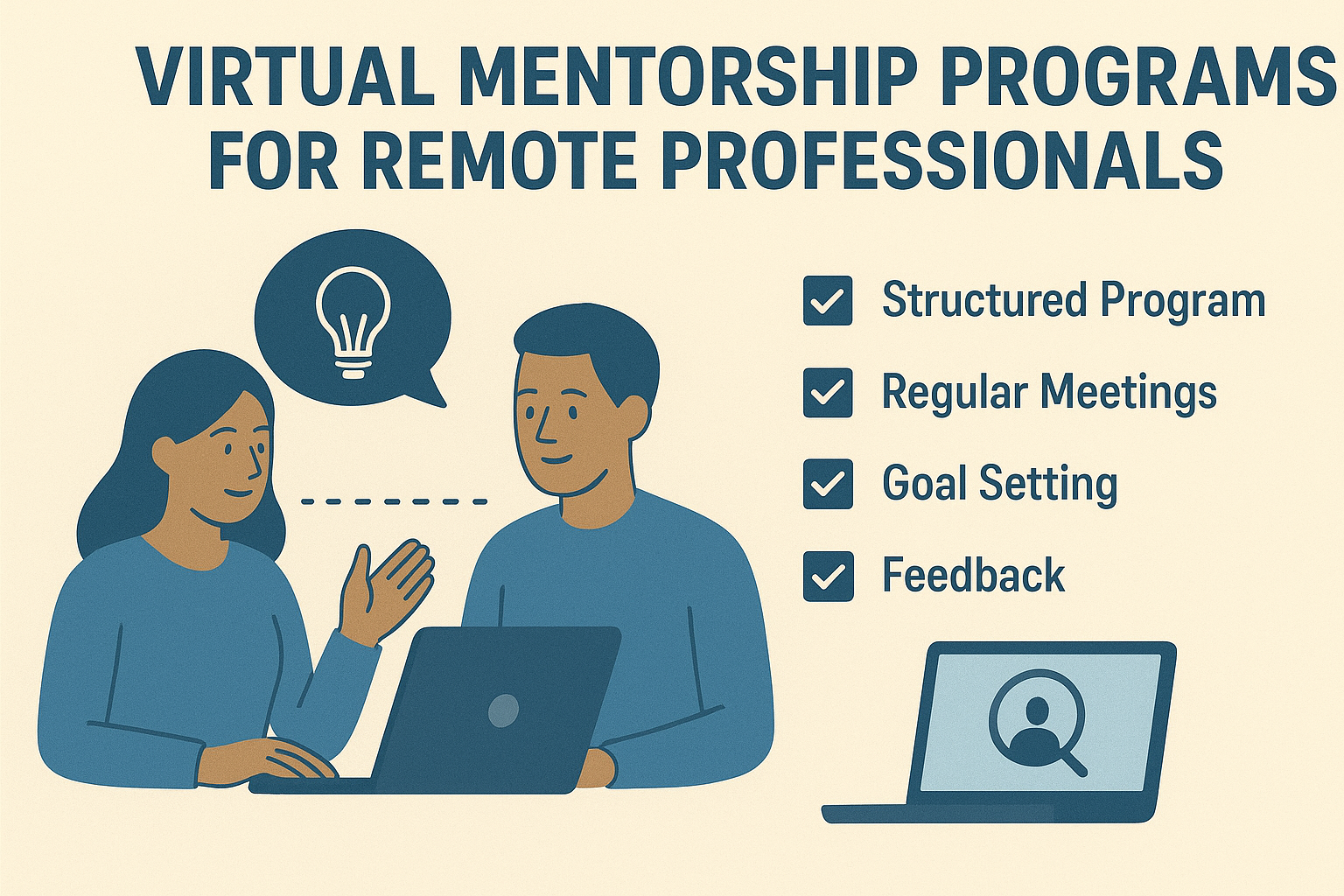
Combat isolation and drive career growth in remote teams. This guide covers how to build a successful virtual mentorship program—from matching strategies and goal-setting to leveraging digital tools and measuring ROI.
The Silent Crisis of Professional Isolation
The remote work revolution has delivered unprecedented flexibility and access to global talent. Yet, it has also created a silent, insidious crisis: the loss of organic, career-defining connections. In a physical office, mentorship often happens spontaneously—a conversation by the coffee machine, an insightful comment overheard in a meeting, or an invitation to lunch with a senior leader.
In a distributed environment, these “accidental” learning moments vanish. What remains is a landscape where professional growth can feel stagnant, company culture becomes abstract, and talented individuals may feel like isolated contributors rather than part of a cohesive whole.
This is the critical void that a strategically designed virtual mentorship program is built to fill. It is not merely a nice-to-have HR initiative; it is a strategic imperative for fostering engagement, retaining top talent, and future-proofing your organization. This article serves as a comprehensive blueprint for moving beyond simple video call pairings to architecting a dynamic, scalable, and deeply human system for guided growth in the digital age.
Section 1: The “Why” – The Multifaceted Value of Digital Guidance
The return on investment for a well-run mentorship scheme extends far beyond individual satisfaction.
1.1 Tangible Business Outcomes
Organizations that implement structured guidance programs see measurable impacts:
- Increased Retention Rates: Employees who feel supported and see a path for growth are significantly less likely to leave. Mentorship is a powerful antidote to turnover.
- Accelerated Onboarding: New hires paired with mentors integrate faster, understand company culture more deeply, and become productive contributors sooner.
- Enhanced Knowledge Transfer: Critical institutional wisdom and tacit knowledge are systematically passed from experienced employees to the next generation, mitigating brain drain.
- Strengthened Company Culture: These initiatives weave a fabric of connection across geographical and departmental silos, making abstract values like “collaboration” and “support” tangible.
1.2 Addressing the Unique Challenges of Remote Work
For the individual remote professional, a dedicated guide provides:
- Combatting Professional Loneliness: A mentor acts as a trusted confidant and a source of encouragement, reducing the sense of isolation.
- Navigating the “Invisible” Organization: They provide context on unspoken norms, power dynamics, and decision-making processes that are hard to discern from a distance.
- Career Path Clarification: In the absence of visible role models, mentors help protégés chart a course for advancement and identify the skills needed to get there.
Section 2: The Foundation – Core Components of a Successful Program
A successful initiative is built on a foundation of clear purpose and structure, not good intentions alone.
2.1 Defining Program Objectives and Scope
Before launching, answer these strategic questions:
- What is the primary goal? Is it for onboarding, leadership development, skills enhancement, or fostering diversity and inclusion?
- Who is it for? Will it be for new hires, high-potential employees, or open to all?
- What is the format? Will it be one-on-one, group-based, or project-based?
- What is the duration? A fixed term (e.g., 6 months) provides structure, while an open-ended model allows for organic relationships.
2.2 The Four-Pillar Framework for Virtual Mentorship
An effective digital program rests on four critical pillars:
Pillar 1: Strategic Matching – Beyond Algorithmic Pairing
The matching process is the most critical factor for success. Move beyond simple department or skill-based algorithms.
- Multi-Dimensional Criteria: Consider career goals, learning objectives, working styles, and even personality types. Use detailed intake surveys from both mentors and mentees.
- The “Choice-Based” Model: Provide mentees with anonymized mentor profiles, allowing them to select their top choices. This fosters immediate buy-in.
- Pilot Matching: Start with a “chemistry call” before formalizing the pair to ensure a good interpersonal fit.
Pillar 2: Structured Cadence and Guided Interactions
Virtual relationships require more scaffolding than in-person ones to thrive.
- Establish a Rhythm: Recommend a meeting frequency (e.g., bi-weekly) and a minimum time commitment to ensure consistency.
- Provide Conversation Frameworks: Equip pairs with discussion guides, goal-setting templates, and resources to prevent meetings from becoming stagnant.
- Define Milestones: Set clear expectations for what the pair should accomplish at the 30, 60, and 90-day marks.
Pillar 3: The Digital Toolbox – Enabling Seamless Connection
Technology should facilitate, not hinder, the relationship.
- Centralized Hub: Use a platform like Together or Mentorloop, or a dedicated channel in Slack or Teams for resources and community.
- Asynchronous Communication: Encourage the use of tools like Loom (video messages) or Voxer (voice notes) for updates and quick questions between formal sessions.
- Shared Workspace: Provide access to a shared Notion or Google Doc for tracking goals, action items, and reflections.
Pillar 4: Ongoing Support and Program Management
A “set it and forget it” approach guarantees failure.
- Dedicated Program Manager: Assign an owner to check in with pairs, gather feedback, and troubleshoot issues.
- Mentor Training: Equip mentors with the skills to coach effectively in a virtual setting, including active listening and providing constructive feedback remotely.
- Community Building: Host virtual events, workshops, and networking sessions for all participants to foster a sense of a larger learning community.
Section 3: A Phased Implementation Blueprint
A successful launch requires careful planning and execution.
Phase 1: Strategy and Design (Weeks 1-4)
- Secure executive sponsorship and define success metrics (e.g., retention, promotion rates, satisfaction scores).
- Develop program guidelines, communication plans, and all necessary templates.
Phase 2: Recruitment and Onboarding (Weeks 5-6)
- Market the program internally and recruit both mentors and mentees.
- Host separate kickoff sessions for mentors and mentees to set expectations.
Phase 3: Matching and Launch (Weeks 7-8)
- Execute the matching process and announce the pairs.
- Host a virtual launch event to generate excitement and officially begin the program.
Phase 4: Sustaining and Measuring (Ongoing)
- The program manager provides continuous support and gathers feedback.
- Conduct mid-point and final surveys to measure impact and inform future iterations.
Section 4: Measuring Success and Demonstrating ROI
To ensure long-term viability, you must prove the program’s value.
- Quantitative Metrics: Track changes in retention rates for participants vs. non-participants, internal promotion rates, and engagement scores (eNPS).
- Qualitative Feedback: Conduct interviews and focus groups to gather powerful stories of growth and connection.
- Program Health Metrics: Monitor participation rates, meeting frequency, and satisfaction scores with the matching process.
Section 5: The Future – Scalable, Personalized, and AI-Enhanced Guidance
The future of virtual mentorship is dynamic and intelligent.
- AI-Powered Matching: Advanced algorithms will analyze work patterns, project history, and communication styles to suggest hyper-relevant connections.
- Micro-Mentorship and “Flash Mentoring”: Short-term, topic-specific guidance for immediate skill development, complementing long-term relationships.
- Integration with Learning Platforms: Mentorship will become seamlessly integrated with LMS, where completing a course triggers a suggestion to connect with a relevant mentor.
Conclusion: Weaving a Tapestry of Connection
In the final analysis, a virtual mentorship program is more than a perk—it is the deliberate creation of human connection in a digital workspace. It is the strategic response to the isolation that can undermine the promise of remote work.
By investing in a structured, supported, and human-centric framework for guided growth, organizations do not just develop skills; they cultivate loyalty, reinforce culture, and build a resilient, interconnected community that can thrive from anywhere. In the geography-agnostic future of work, the strength of your human network will be your ultimate competitive advantage.
1 thought on “Architecting Virtual Mentorship Programs for Best Connection and Growth in Distributed Teams 2025”