
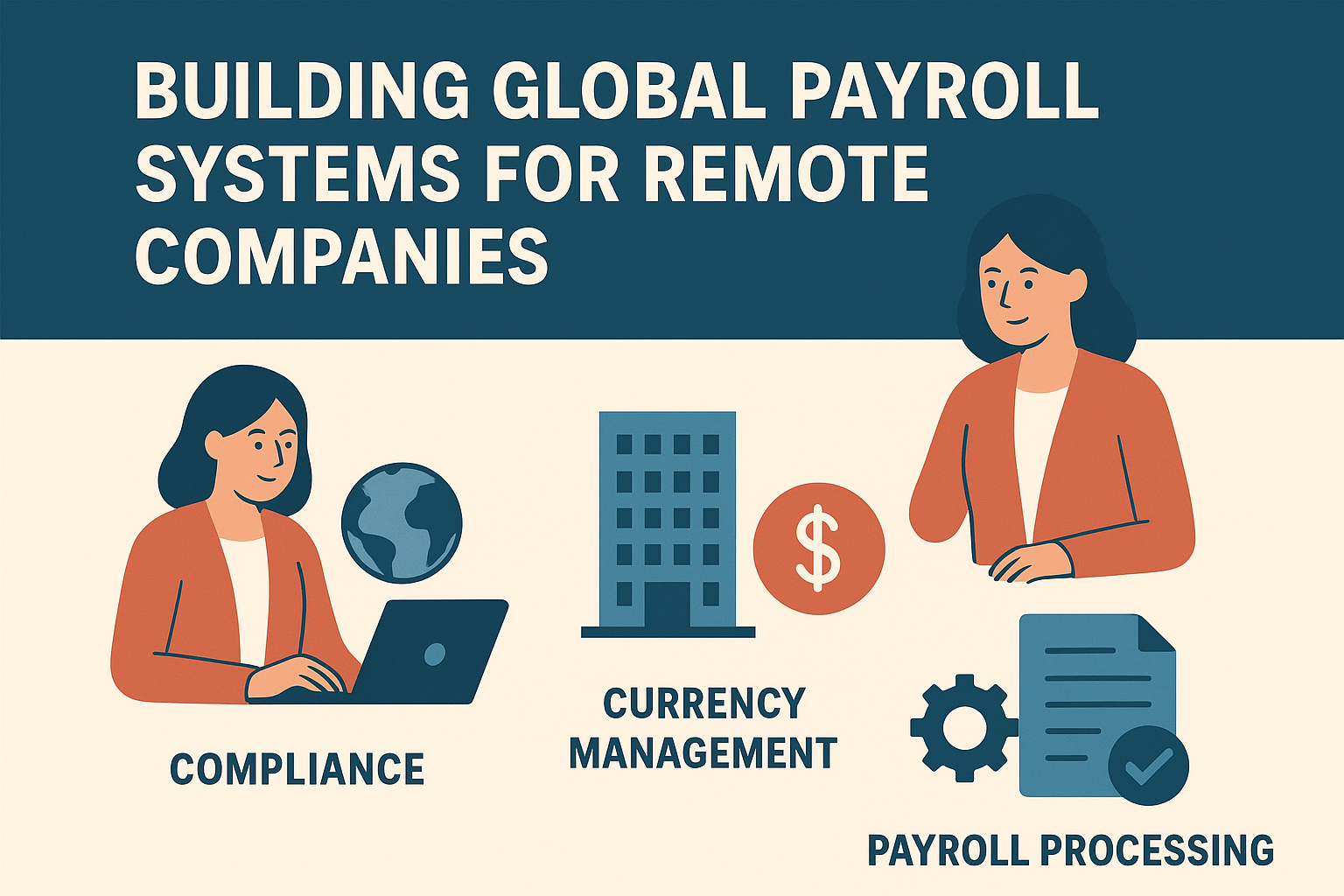
Master the complexities of international payroll for your remote team. This definitive guide covers compliant onboarding, multi-currency payments, tax withholding, and choosing the right model (EOR/PEO vs. DIY) for your global workforce.
The Payroll Paradox of a Borderless Workforce
The dream of a truly global team is now a reality for countless businesses. The ability to hire the best talent, irrespective of location, has become a monumental competitive advantage. Yet, this newfound freedom collides with one of the most rigid and complex facets of business operations: payroll.
What seems simple in a domestic context—paying people for their work—transforms into a labyrinth of international tax codes, local labor laws, currency fluctuations, and banking regulations. A single misstep can lead to severe financial penalties, legal disputes, and reputational damage.
This article is your blueprint for navigating this complexity. We will move beyond the “how-to” and delve into the “how-to-think-about” building a robust, scalable, and compliant global payroll system. This is not just about processing payments; it’s about de-risking your international expansion and building a foundation of trust with your distributed employees.
Section 1: Deconstructing the Challenge – Why Global Payroll is a Beast
Before building a solution, one must understand the problem. Managing compensation across borders introduces a host of unique challenges that domestic providers are ill-equipped to handle.
1.1 The Compliance Labyrinth: More Than Just Taxes
At its core, payroll is a legal function. Every country has its own intricate web of regulations governing employment. Key compliance hurdles include:
- Tax Withholding and Reporting: Income tax, social security, and other statutory deductions vary wildly. Understanding bilateral tax treaties is crucial to avoid double taxation for your employees.
- Statutory Benefits and Contributions: Mandatory benefits like health insurance, pension schemes, unemployment insurance, and vacation pay are non-negotiable and differ by nation.
- Local Labor Laws: Regulations around minimum wage, overtime, termination rules, and probation periods must be strictly adhered to. Misclassifying an employee as a contractor is a common and costly error.
- Data Privacy and Residency Rules: Regulations like GDPR in Europe impose strict rules on how you collect, store, and process employee data.
1.2 The Operational Hurdles: Logistics of a Distributed System
Beyond legality, the day-to-day management presents its own set of obstacles:
- Multi-Currency Management: Fluctuating exchange rates can impact your budget and the employee’s take-home pay. You must decide who bears the currency risk and factor in transfer fees.
- Payment Methods and Timings: Ensuring payments arrive on time, every time, using methods that are reliable and cost-effective in the employee’s location (e.g., SWIFT, TransferWise, local bank transfers).
- Unified Reporting and Visibility: How do you get a consolidated view of your global payroll spend? Siloed data in different systems makes forecasting and financial planning a nightmare.
Section 2: The Foundational Pillars of a Global Payroll Framework
A successful international payroll system is built on four core pillars. Neglecting any one of them will compromise the entire structure.
Pillar 1: Legal Compliance and Entity Management
This is the non-negotiable foundation. Your approach here defines your entire strategy.
- Establishing a Legal Entity: The most direct, but most expensive and time-consuming, path. It involves setting up a subsidiary or branch office in the target country. This is only viable for countries where you have a critical mass of employees.
- Utilizing an Employer of Record (EOR): The EOR acts as the legal employer on paper for your team members in countries where you lack an entity. They handle all compliance, payroll, and HR administration, while you maintain day-to-day operational control. This is the fastest way to hire internationally.
- Engaging a Global PEO (Professional Employer Organization): Similar to an EOR, a PEO often co-employs workers, sharing employer liabilities. The distinction can be subtle, but both models offer a compliant path to hiring without an entity.
- Properly Classifying Independent Contractors: For short-term engagements, this can work, but the rules are strict. Audits are common, and misclassification can result in back taxes, penalties, and lawsuits.
Pillar 2: Technology and Process Integration
Your payroll system cannot exist in a vacuum. It must integrate seamlessly with your other business systems.
- The Role of a Global Payroll Platform: Centralized platforms like Deel, Remote, Rippling, or Papaya Global provide a unified dashboard to manage payroll, compliance, and benefits across multiple countries, often aggregating various local providers or EOR services.
- HRIS and Payroll Integration: Your Human Resources Information System (HRIS) must feed accurate data (hires, terminations, salary changes) into your payroll system. This integration eliminates manual data entry and reduces errors.
- Accounting and Finance System Sync: Payroll data must flow into your general ledger for accurate financial reporting. The chart of accounts must be configured to handle multi-currency transactions.
Pillar 3: Financial Management and Currency Strategy
This pillar is about fiscal control and optimization.
- Developing a Currency Risk Management Policy: Will you pay in the employee’s local currency or your base currency? Will you use hedging strategies to protect against adverse exchange rate movements?
- Understanding the Total Cost of Employment: The base salary is just the beginning. You must budget for employer-side taxes, statutory benefits, EOR/PEO fees, and bank transfer costs.
- Consolidating and Auditing Payroll Runs: Implementing a process for reviewing and approving payroll for all locations before execution, ensuring accuracy and consistency.
Pillar 4: The Human Element – Employee Experience
Payroll is the most tangible touchpoint of the employer-employee relationship. A negative experience can destroy trust.
- Transparency and Clarity: Employees should understand their pay stubs, know how much they will be paid, and in what currency. Provide clear documentation.
- Reliability and Timeliness: Payments must be 100% reliable. Late payments are a cardinal sin in a remote setup and signal operational incompetence.
- Access to Support: When employees have questions about their pay, they need easy access to a knowledgeable support team (yours or your provider’s).
Section 3: A Step-by-Step Implementation Blueprint
Building a global payroll system is a project that requires careful planning.
- Audit and Assess: Map your current workforce. Where is everyone located? What is their employment status (employee vs. contractor)?
- Define Your Strategic Model: Based on your audit, decide on your primary model: EOR/PEO, local entities, or a hybrid approach. Consider your growth trajectory.
- Vet and Select Technology Partners: Create a shortlist of global payroll platforms and EOR providers. Evaluate them based on country coverage, cost, technology, user experience, and customer support.
- Pilot the System: Roll out the new system with a small, pilot group of employees in one or two countries. Work out the kinks before a global rollout.
- Develop a Communication Plan: Clearly communicate the change to your team. Explain the “why,” the “how,” and the “when.” Provide training and resources.
- Go-Live and Continuously Optimize: Launch the system, monitor it closely for the first few cycles, and gather feedback. Continuously look for ways to improve efficiency and the employee experience.
Section 4: The Future of Global Payroll – Trends and Predictions
The landscape is evolving rapidly. Staying ahead of these trends will be key.
- The Rise of Real-Time Payments and On-Demand Pay: Employees will increasingly expect faster, more flexible access to their earned wages.
- Blockchain and Cryptocurrency for Payroll: While still nascent, the use of digital currencies for cross-border payments could dramatically reduce fees and transfer times.
- Hyper-Automation and AI: AI will be used to predict payroll errors, automate compliance updates, and provide predictive analytics on labor costs.
- Increased Global Regulatory Scrutiny: As remote work grows, governments will intensify their efforts to ensure compliance and collect taxes, making robust systems even more critical.
Conclusion: From Administrative Burden to Strategic Advantage
Building a global payroll system is undeniably complex. It requires a shift in mindset from viewing payroll as a back-office administrative task to recognizing it as a core strategic function.
A well-architected system does more than just pay people correctly. It mitigates legal risk, provides invaluable financial intelligence, and, most importantly, fosters a culture of trust and reliability that is the lifeblood of any successful distributed company. By investing in a robust framework built on the pillars of compliance, technology, finance, and human experience, you transform a potential liability into a tangible competitive edge that empowers your global growth.