
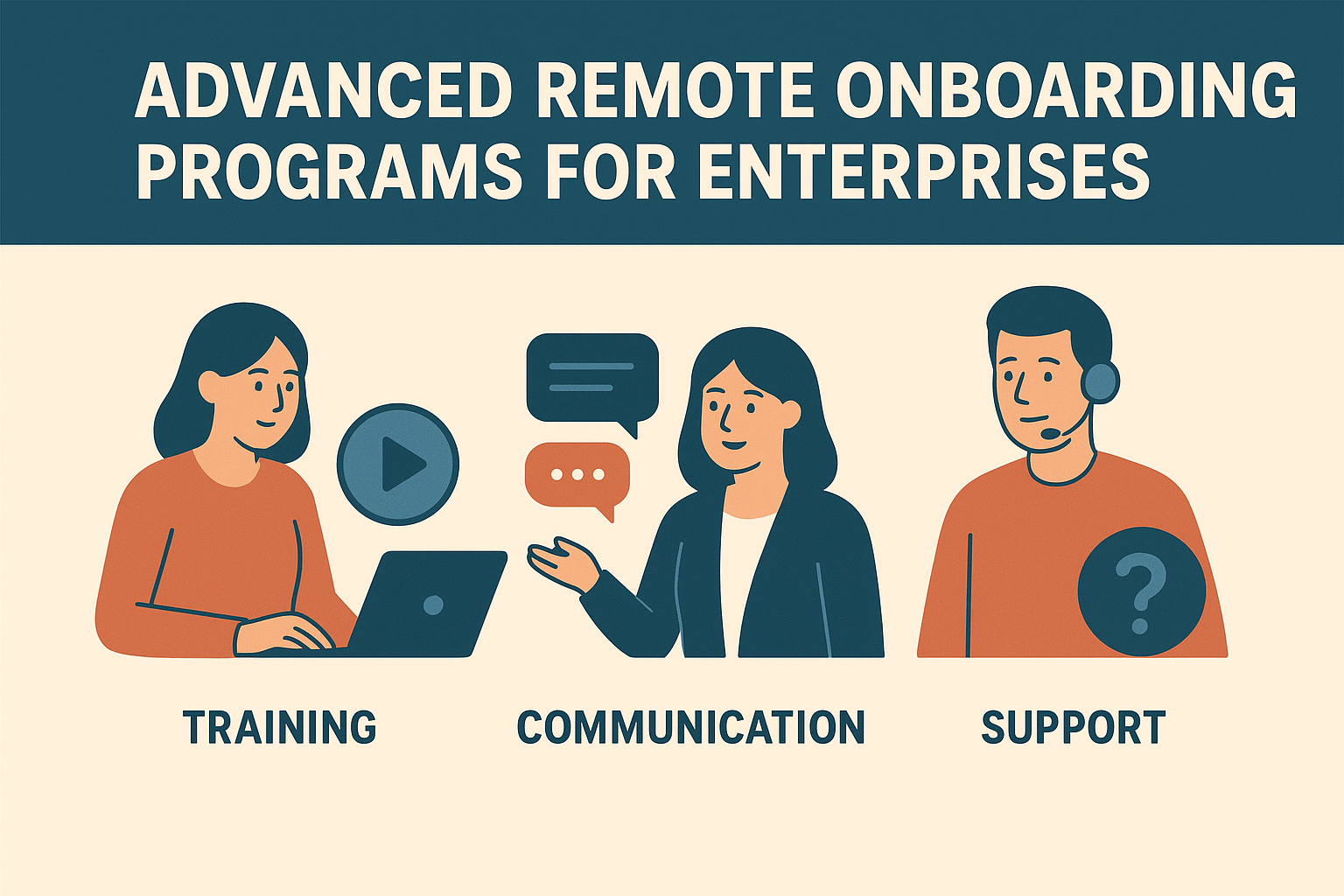
Move beyond basic orientation. This guide explores how to build a strategic, human-centric remote onboarding program for enterprises that boosts retention, accelerates productivity, and fosters genuine connection in a distributed workforce.
The Onboarding Imperative in a Distributed World
The shift to remote and hybrid work is not a temporary experiment; it is a fundamental restructuring of the enterprise operating model. In this new landscape, an employee’s first experience with your company is no longer defined by a physical office, a handshake, or a welcome lunch. It is defined by a digital process—the remote onboarding program.
For many enterprises, this process remains a transactional, compliance-driven checklist: send the laptop, sign the forms, provide the login credentials. This approach is a costly strategic error. In a remote environment, onboarding is not merely an administrative task; it is the primary mechanism for embedding culture, building trust, and unlocking long-term value from your most important investment: your people.
A sophisticated, human-centric onboarding journey is the single most powerful lever for improving retention, accelerating time-to-productivity, and strengthening employer branding. This article is a deep dive into the art and science of building an advanced remote onboarding framework for large, complex organizations. We will explore the psychological principles, technological enablers, and strategic frameworks that transform a disjointed virtual orientation into a seamless, engaging, and profoundly effective integration experience.
Section 1: The High Stakes of Virtual Integration – Why “Good Enough” Isn’t
The data is unequivocal: effective onboarding directly impacts the bottom line. In a remote context, the stakes are exponentially higher.
1.1 Quantifying the Impact: The ROI of Strategic Onboarding
Organizations with a structured onboarding process experience:
- 82% higher new-hire retention (Brandon Hall Group).
- 70% increase in productivity for new employees (SHRM).
- A significant reduction in time-to-competency, getting new hires contributing to strategic goals faster.
The cost of not investing is staggering. The turnover of an employee can cost from 50% to 200% of their annual salary, factoring in recruitment fees, lost productivity, and institutional knowledge loss.
1.2 The Unique Psychological Challenges of Remote Onboarding
New hires in a distributed setting face distinct hurdles that a physical office naturally mitigates:
- Digital Loneliness and Isolation: The absence of casual, water-cooler interactions can hinder social integration and a sense of belonging.
- The “Invisible” Culture: Understanding unspoken norms, communication styles, and decision-making processes is challenging without observational learning.
- Information Overload and Paralysis: A firehose of digital documents and links, without context or curation, leads to cognitive overload and anxiety.
- Strained Relationship Building: Forming authentic connections with colleagues and managers requires intentional effort without shared physical space.
An advanced program is designed specifically to counteract these challenges, transforming them into opportunities for deeper connection.
Section 2: The Four-Pillar Framework for Advanced Remote Onboarding
A world-class virtual integration program is built on four interconnected pillars, moving sequentially from the individual to the organizational.
Pillar 1: The Pre-Boarding Bridge – From Offer to Day One
The period between signing the contract and the first official day is a critical, often neglected, phase. This is your opportunity to build excitement and reduce anxiety.
- The “Welcome to the Team” Kit: Go beyond the standard contract. Send a branded swag box, a high-quality notebook, and a personalized welcome note from their future manager and team.
- Digital Pre-Arrival Portal: Provide access to a secure portal with:
- A personalized onboarding timeline.
- Team introductions with photos and fun facts.
- High-level company culture videos and manifestos.
- A guide to the tech stack they’ll be using.
- Logistical Flawlessness: Ensure the laptop, access credentials, and all necessary accounts are shipped, configured, and ready to go on day one. Nothing says “disorganized” like a login failure on the first morning.
Pillar 2: The Foundational Phase – Clarity, Compliance, and Connection (Week 1)
The first week should focus on human connection and cultural immersion, not just paperwork.
- Day One: A Celebration, Not an Audit: The first day must be meticulously planned and highly interactive. Avoid a full day of solo video lectures. Key activities include:
- A personal welcome call with the direct manager.
- A virtual team lunch or coffee chat.
- An engaging, live welcome session from leadership, not a pre-recorded video.
- Structured Social Integration: Facilitate connections through:
- Assigned “Onboarding Buddies”: A peer, outside the direct reporting line, who serves as a go-to resource for informal questions.
- Virtual “Coffee Roulette”: Use tools like Donut for Slack to randomly pair the new hire with colleagues across the organization.
- Team-Building Activities: Facilitate short, fun, non-work-related virtual activities for the immediate team.
- Micro-Learning for Compliance: Break down mandatory training (security, HR policies) into short, digestible modules. Use interactive quizzes and scenarios to reinforce learning, rather than death-by-PowerPoint.
Pillar 3: The Functional Integration Phase – Role-Specific Mastery (Weeks 2-6)
This phase shifts focus from “who we are” to “how you succeed in your role.”
- Clarity on Goals and Expectations: The manager and new hire should co-create a 30-60-90 day plan. This document outlines clear objectives, key projects, and measurable success metrics for the first three months.
- Structured Learning Paths: Create role-specific learning journeys in your LMS (Learning Management System). This could include:
- Recorded sessions from subject matter experts.
- Access to key documents and past project repositories.
- Certifications for specific tools or processes.
- “Shadowing” in a Digital World: Facilitate virtual observation of key meetings, sales calls, or design sprints. Use co-working sessions on Zoom where the new hire can watch a colleague work and ask real-time questions.
Pillar 4: The Strategic Assimilation Phase – Fostering Ownership and Network (Months 2-3+)
The final pillar ensures the new hire transitions from a passive learner to an active, embedded contributor.
- Cross-Functional Project Exposure: Involve them in a small, low-risk project that requires collaboration with other departments. This builds their internal network and understanding of the business.
- Mentorship Program Introduction: Connect them with a senior leader in a formal mentorship program to discuss career growth and organizational navigation.
- Pulse Surveys and Feedback Loops: Regularly solicit feedback on their onboarding experience. Use short, anonymous surveys to ask: “What’s one thing that could have made your onboarding better?” This data is gold for continuous improvement.
- The “Onboarding Graduation”: Formalize the end of the structured program with a certificate, a recognition message from leadership, and a transition into ongoing development programs.
Section 3: The Technology Stack – Enabling a Seamless Digital Experience
Technology is the skeleton of your remote onboarding program. The right stack creates cohesion; the wrong one creates friction.
- The Onboarding & HRIS Platform: Tools like Sapling, BambooHR, or Lattice centralize tasks, automate workflows, and provide visibility for the new hire, manager, and HR.
- The Video Conferencing & Collaboration Hub: Zoom, Microsoft Teams, or Google Meet for live sessions. Slack or Teams for ongoing, asynchronous communication and community building.
- The Learning Management System (LMS): Platforms like Docebo, Cornerstone, or LearnUpon to host and track all training content and progress.
- The Engagement & Feedback Tools: Use Culture Amp or Officevibe to run pulse surveys and measure the effectiveness of your program through metrics like the Net Promoter Score (eNPS).
Section 4: Measuring Success – Beyond the Completion Rate
A completion rate tells you nothing about quality. Advanced programs track a balanced scorecard of metrics:
- Engagement Metrics: Onboarding task completion rate, LMS course completion, participation in social events.
- Experience Metrics: New Hire Satisfaction (NHS) scores, Pulse Survey feedback, eNPS.
- Performance Metrics: Time-to-Productivity (measured against the 30-60-90 day plan), first-quarter performance review scores, quality of work.
- Business Outcomes: 90-day and 1-year retention rates for new hires, manager satisfaction scores.
Section 5: The Future of Onboarding – Personalization and Predictive Integration
The next frontier is hyper-personalization. Using AI and data analytics, future programs will:
- Create dynamic onboarding pathways based on role, location, and learning style.
- Use predictive analytics to flag at-risk new hires who are not engaging with the program, allowing for proactive intervention.
- Incorporate immersive technologies like VR for virtual office tours or complex simulation training.
Conclusion: Onboarding as a Strategic Catalyst
In the era of distributed work, the onboarding experience is your culture. It is your employer brand in action. By moving beyond a transactional checklist and architecting a strategic, human-centric, and multi-phased journey, enterprises can turn the challenge of remote integration into a powerful competitive advantage.
Investing in an advanced remote onboarding program is not an HR initiative; it is a business imperative that pays dividends in retention, productivity, and the long-term health of your organization. It signals to every new hire that they are valued, connected, and set up for success from their very first day—wherever they are.