
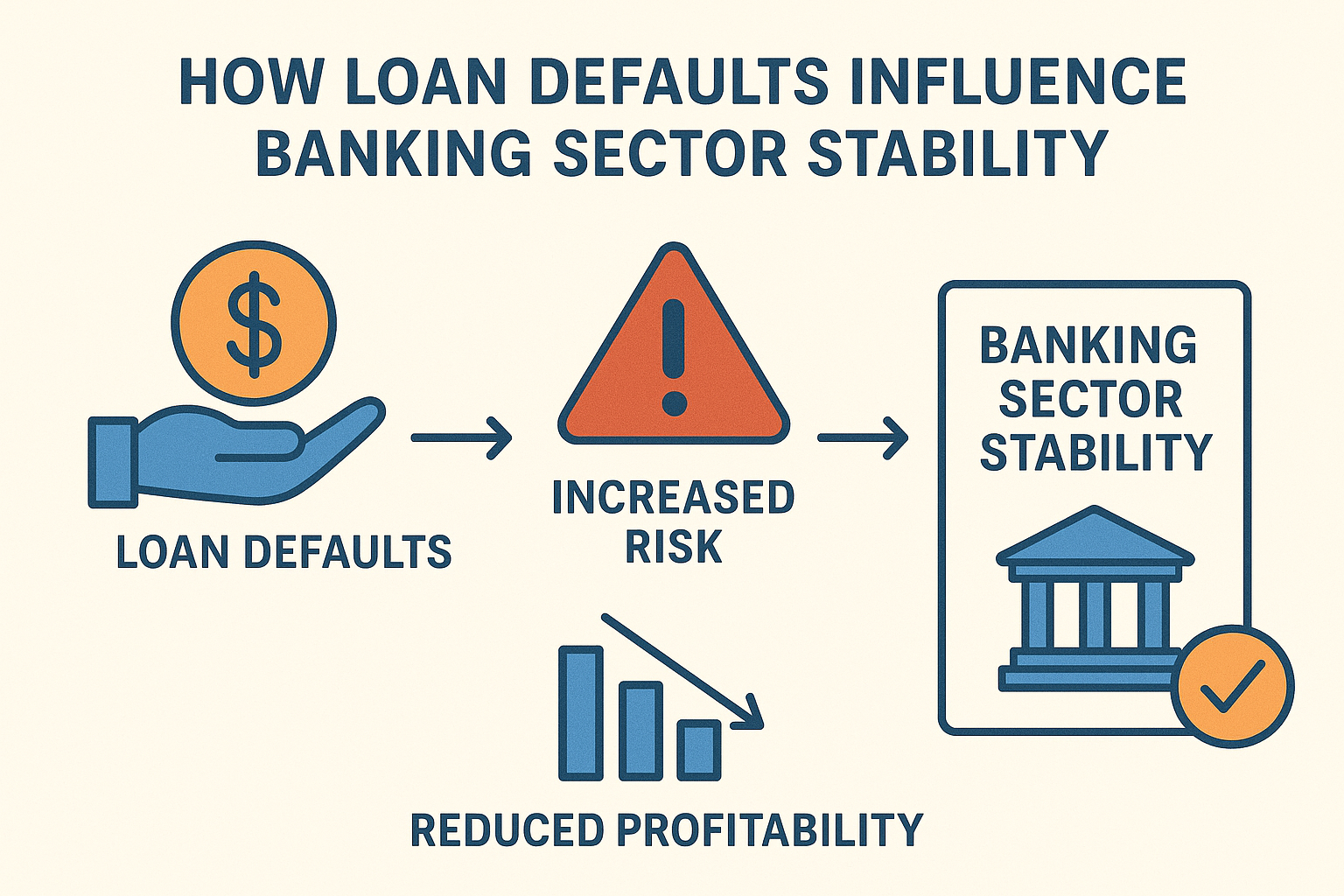
The Silent Fault Line in the Financial System
The global banking sector operates as the circulatory system of the modern economy, channeling capital from savers to borrowers to fuel growth, innovation, and prosperity. Yet, this vital system rests on a foundation of trust and a critical assumption: that the vast majority of loans it extends will be repaid. When this assumption is challenged by a rising tide of loan defaults, the entire edifice of financial stability begins to tremble.
The relationship between non-performing loans (NPLs) and banking sector health is not merely linear; it is symbiotic, complex, and often precipitous. A spike in defaults is not just a problem for individual financial institutions; it is a potent contagion that can trigger a cascade of failures, erode public confidence, and culminate in full-blown economic crises. From the savings and loan crisis of the 1980s to the 2008 global financial meltdown and the recent pressures induced by the COVID-19 pandemic, the story is consistently punctuated by the central role of credit deterioration.
This definitive guide delves into the intricate mechanics of how borrower defaults translate into systemic fragility. We will dissect the direct and indirect channels of transmission, examine the regulatory safeguards designed to contain the damage, and extract crucial lessons from historical precedents. For policymakers, financial professionals, and engaged citizens alike, understanding this dynamic is essential for navigating the precarious landscape of modern finance.
Chapter 1: Deconstructing the Default – Beyond a Single Bad Loan
To grasp the systemic impact, we must first understand what constitutes a default and the scale at which it becomes dangerous.
1.1 The Anatomy of a Non-Performing Loan (NPL)
A loan is typically classified as non-performing when payments of interest or principal are past due by 90 days or more, or when the lender no longer reasonably expects to receive full repayment. This is not a binary event but a process of deterioration.
1.2 From Micro-Problem to Macro-Threat: The Tipping Point
An isolated default is a cost of doing business. The systemic risk emerges when defaults become widespread, driven by common macroeconomic shocks:
- Economic Recessions: Widespread unemployment and falling incomes impair the repayment capacity of households and corporations.
- Asset Price Collapses: A sharp decline in real estate prices, often held as collateral, erodes the value of a bank’s security and triggers defaults among speculators.
- Rapid Interest Rate Hikes: Central bank tightening can dramatically increase debt servicing costs for variable-rate loans, pushing many borrowers into distress.
- Sector-Specific Downturns: A crisis in a dominant industry (e.g., oil and gas, tourism) can create a concentrated wave of defaults for banks over-exposed to that sector.
Chapter 2: The Transmission Mechanisms – How Defaults Cripple Banks
The impact of loan defaults radiates through a bank’s operations and the broader financial system via several powerful channels.
2.1 The Direct Channel: Erosion of Capital and Profitability
A bank’s capital is its loss-absorbing buffer. Loan defaults strike directly at this foundation.
- Provisions and Write-Offs: When a loan defaults, the bank must set aside capital reserves (provisions) to cover the expected loss. If the loan is deemed unrecoverable, it must be written off entirely, directly reducing the bank’s equity capital.
- The Capital Adequacy Ratio (CAR): Regulators mandate a minimum CAR (capital as a percentage of risk-weighted assets). As defaults increase, provisions rise, capital shrinks, and the CAR falls. A bank breaching this minimum faces severe regulatory action and a crisis of confidence.
- Profitability Squeeze: Reduced interest income from non-performing assets and increased provisioning costs crush a bank’s net income, limiting its ability to generate capital organically.
2.2 The Indirect Channel: The Liquidity Death Spiral
Solvency (having more assets than liabilities) and liquidity (having enough cash to meet immediate obligations) are intertwined. A solvency problem quickly morphs into a liquidity crisis.
- Loss of Market Confidence: As news of high NPLs spreads, depositors may fear for their savings and initiate a bank run. Wholesale lenders (other banks, money markets) may refuse to roll over short-term funding.
- The Fire Sale Dynamic: To raise cash, the distressed bank may be forced to sell its performing assets quickly, often at “fire-sale” prices. This can depress asset values across the market, inflicting losses on other institutions and creating a vicious cycle.
2.3 The Contagion Channel: Spillover Effects and Systemic Risk
The failure of one institution can trigger a chain reaction.
- Interconnectedness: Banks are deeply interconnected through interbank lending, payment systems, and derivative contracts. The collapse of one major player can create a web of losses for its counterparts.
- Correlated Exposures: Multiple banks often have similar exposure to the same troubled asset classes or geographic regions. A shock in one area simultaneously weakens many institutions.
- The Credit Crunch: To preserve capital and reduce risk, even healthy banks will sharply curtail new lending. This credit contraction starves businesses of working capital and households of mortgages, deepening the economic downturn and, in a feedback loop, generating even more defaults.
Chapter 3: The Regulatory Arsenal: Defenses Against the Default Tsunami
In response to past crises, a sophisticated global regulatory framework has been erected to bolster the banking system’s resilience.
3.1 Basel Accords: The International Rulebook
The Basel Committee on Banking Supervision has developed a series of accords (Basel I, II, III, and now IV) that form the cornerstone of modern bank regulation.
- Higher Capital Requirements: Basel III significantly increased the quantity and quality of capital banks must hold, ensuring a larger buffer to absorb losses from defaults.
- Liquidity Coverage Ratio (LCR) and Net Stable Funding Ratio (NSFR): These rules require banks to hold sufficient high-quality liquid assets to survive a 30-day stress scenario and to fund their activities with more stable sources, reducing vulnerability to bank runs.
- Countercyclical Capital Buffers: Regulators can require banks to build up extra capital during economic booms, which can be drawn down during downturns to absorb losses without triggering a credit crunch.
3.2 Stress Testing: Simulating the Unthinkable
Regulators now mandate rigorous stress tests. These exercises simulate how a bank’s capital would fare under severe but plausible adverse economic scenarios, including dramatic spikes in unemployment and sharp declines in property prices. This forces banks to be prepared for worst-case default cycles.
3.3 Asset Management Companies (AMCs) / “Bad Banks”
To tackle existing NPLs, many countries have established AMCs. These entities purchase distressed loans from banks at a discount, allowing the banks to clean up their balance sheets and resume normal lending, while the AMC specializes in the long-term recovery of the debts.
Chapter 4: Lessons from the Front Lines – Historical Case Studies
History provides stark illustrations of these dynamics in action.
- The 2008 Global Financial Crisis: The proximate cause was the collapse of the U.S. subprime mortgage market. Widespread defaults on these loans, which had been packaged into complex securities, revealed massive undercapitalization and interconnectedness in the global banking system, leading to the failure of Lehman Brothers and a worldwide credit freeze.
- The Japanese Banking Crisis (1990s): Following the burst of its asset price bubble, Japanese banks were saddled with enormous NPLs. A policy of “forbearance”—delaying the recognition of losses—led to a “zombie” banking sector that was unable to lend effectively, contributing to decades of economic stagnation.
- The European Sovereign Debt Crisis (2010s): High sovereign debt in countries like Greece, Ireland, and Spain raised fears of government default. This spilled over to their banking systems, which held large amounts of this sovereign debt, creating a vicious cycle between bank fragility and national solvency.
Chapter 5: The Future Landscape – Emerging Risks and Evolving Defenses
The nature of credit risk is continually evolving, presenting new challenges.
- The Rise of Shadow Banking: Non-bank financial institutions (e.g., hedge funds, private credit funds) now originate a significant share of credit. While they diversify the lending landscape, they are often less regulated and could become a new epicenter of systemic risk in a downturn.
- Climate-Related Credit Risk: Physical risks (e.g., floods damaging collateral) and transition risks (e.g., policies devaluing fossil fuel assets) are creating a new class of systemic defaults that banks are only beginning to quantify.
- The Role of FinTech and AI: Machine learning models are improving default prediction, but they also introduce new risks, including model opacity and potential pro-cyclicality, where algorithms simultaneously tighten lending standards in a downturn.
Conclusion: Vigilance in an Interconnected World
The stability of the banking sector is inextricably linked to the performance of its loan book. Loan defaults are not merely entries in a ledger; they are the triggers of a complex chain reaction that can destabilize the global economy. The defenses built since the last major crisis—stricter capital rules, liquidity requirements, and stress testing—have undoubtedly made the system more robust.
However, as the financial system evolves, so too do the sources of risk. Maintaining stability requires eternal vigilance from regulators, prudent risk management from bankers, and a deep-seated understanding that in our interconnected world, the failure of a single borrower, when multiplied on a grand scale, can still shake the foundations of global finance. The domino effect is a perpetual threat, and the only antidote is relentless preparation.
1 thought on “A Deep Dive into How Loan Defaults Govern Banking Sector Stability”