
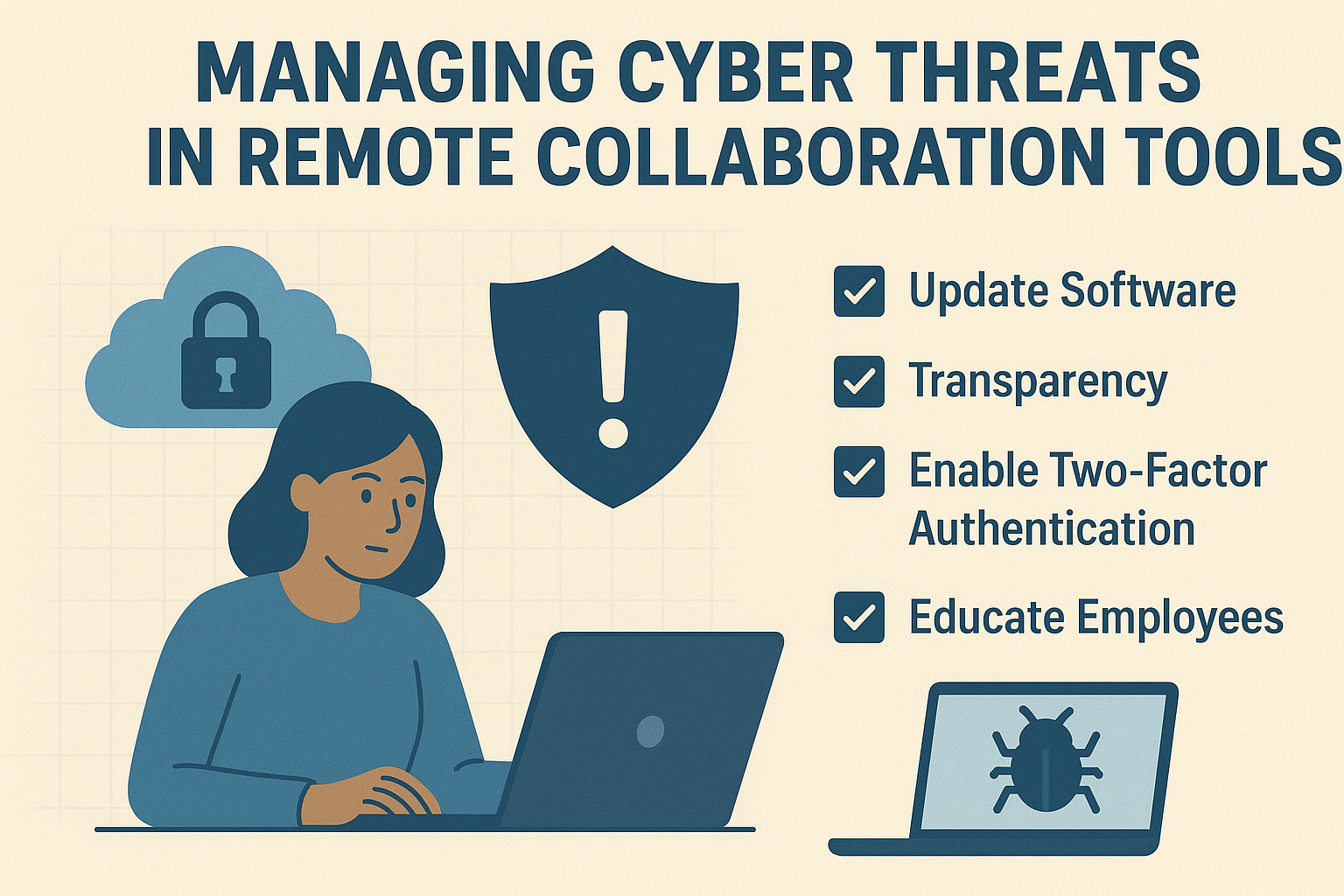
Protect your distributed workforce. This guide delves into advanced strategies for securing platforms like Slack, Microsoft Teams, and Zoom against data breaches, phishing, and insider threats. Build a human-centric security framework.
The Expanded Attack Surface of the Modern Workplace
The unprecedented shift to distributed work has transformed digital collaboration platforms from convenient utilities into mission-critical infrastructure. Tools like Slack, Microsoft Teams, Zoom, and Asana have become the central nervous system of the modern enterprise, facilitating everything from casual conversations to the exchange of highly sensitive intellectual property.
This reliance, however, has created a target-rich environment for malicious actors. The perimeter has dissolved; the home network is the new corporate network, and the collaboration suite is the new corporate headquarters. This paradigm shift demands an equally profound evolution in cybersecurity strategy. Organizations can no longer rely on fortress-like network perimeters. Instead, they must build a resilient, human-centric security posture that assumes breach and focuses on protecting data wherever it resides.
This article provides a deep dive into the evolving threat landscape targeting remote collaboration tools. We will move beyond basic security settings and explore a holistic framework encompassing technology, process, and—most critically—human behavior. Our goal is to equip you with the knowledge to transform your collaboration ecosystem from a vulnerability to a bastion of secure productivity.
Section 1: The Threat Landscape – Deconstructing Vulnerabilities in Collaboration Platforms
To defend effectively, one must first understand the adversary’s playbook. The attack vectors against collaboration tools are diverse and increasingly sophisticated.
1.1 Platform-Level Vulnerabilities and Configuration Risks
The foundational security of any collaboration environment begins with its configuration. Common missteps include:
- Excessive Data Permissions: Overly permissive access controls that allow users to view or download data from channels or teams they do not need to access. This violates the principle of least privilege.
- Unmanaged Third-Party Application Integrations: Every connected app (e.g., a GIF generator, a project management tool) represents a potential OAuth token hijacking risk or a data exfiltration channel.
- Inadequate Data Retention Policies: Failure to automatically archive or delete old data creates a massive repository of sensitive information that could be compromised in a breach.
- Weak Authentication Gateways: Relying solely on username and password without multi-factor authentication (MFA) is an open invitation for credential-stuffing attacks.
1.2 Human-Centric Attack Vectors: The Social Engineering Onslaught
Technology is only one part of the equation; the human element is often the weakest link.
- Phishing and Impersonation in Chat: Attackers create fake profiles mimicking executives or colleagues, sending urgent messages like “I need you to buy gift cards” or “Click this link to review a document.”
- File-Based Threats: Employees share files through collaboration tools, believing them to be safe. These files can contain macros, malware, or links to malicious sites.
- Conversation Hijacking: Attackers who gain access to a user’s account can lurk in channels, learning the communication style and then impersonating the user to launch targeted attacks on their contacts.
- Credential Theft via Fake Login Pages: Phishing campaigns specifically designed to mimic the login pages of popular collaboration tools, tricking users into surrendering their credentials.
1.3 The Insider Threat – Accidental and Malicious
The insider threat takes on new dimensions in a remote setting.
- The Accidental Insider: An employee who mistakenly shares a sensitive file in a public channel, sends confidential information to the wrong person, or falls for a phishing scam.
- The Malicious Insider: A disgruntled employee who, with authorized access, deliberately exfiltrates data—such as customer lists, source code, or strategic plans—using the very collaboration tools designed for productivity.
Section 2: The Four-Pillar Defense Framework for Collaboration Security
A robust defense requires a layered approach. We propose a framework built on four interdependent pillars.
Pillar 1: Foundational Hardening – Securing the Platform Itself
This pillar focuses on the technical configuration and governance of your collaboration tools.
- Implement Strict Access Controls and Governance:
- Enforce the principle of least privilege across all teams, channels, and files.
- Conduct regular access reviews to de-provision access for departed employees or role-changed staff.
- Utilize data loss prevention (DLP) policies to prevent the sharing of sensitive data like credit card numbers or source code.
- Mandate Multi-Factor Authentication (MFA): MFA should be non-negotiable for every user. It is the single most effective control against credential theft.
- Manage the API and Application Ecosystem:
- Create an approved app registry and block unauthorized integrations.
- Regularly audit OAuth tokens and connected applications, revoking those that are unused or no longer approved.
- Enforce Data Retention and Archiving Policies: Configure automated policies to delete old messages and files, reducing the attack surface and complying with data privacy regulations.
Pillar 2: The Human Firewall – Cultivating a Culture of Security Awareness
Technology cannot compensate for uninformed users. This pillar is about empowering your people.
- Develop Contextual and Continuous Security Training: Move beyond annual compliance videos. Use micro-learning modules that simulate real-world threats specific to collaboration tools, such as identifying a phishing attempt in a direct message.
- Promote Strong Password and Credential Hygiene: Encourage the use of password managers and educate users on the dangers of password reuse.
- Establish Clear “Channels of Trust”: Define and communicate official channels for specific types of communication (e.g., “#announcements” for official news, never direct messages for urgent security requests from IT).
Pillar 3: Proactive Monitoring and Threat Detection
A passive defense is a weak defense. Organizations must actively hunt for threats.
- Leverage Cloud Access Security Brokers (CASB): A CASB sits between your users and the cloud services they use, providing visibility into shadow IT, enforcing security policies, and detecting anomalous activity.
- Implement User and Entity Behavior Analytics (UEBA): Use AI-driven tools to establish a baseline of normal behavior for each user. Flag anomalies, such as a user logging in from two geographically impossible locations in a short time frame or downloading an unusual volume of data.
- Conduct Regular Security Audits and Penetration Testing: Hire ethical hackers to test the security of your collaboration tool configurations and simulate attacks to find weaknesses before malicious actors do.
Pillar 4: Incident Response and Recovery Planning
Assume a breach will occur. Your ability to respond quickly is paramount.
- Develop a Collaboration-Specific Incident Response Plan: This plan should outline clear steps for containing a breach within a collaboration platform—e.g., how to revoke a compromised user’s access, delete malicious messages, and notify affected parties.
- Ensure Comprehensive Logging and Visibility: Maintain detailed logs of user activity, file access, and administrative changes to facilitate forensic analysis after an incident.
- Practice Your Response: Run tabletop exercises that simulate a security incident originating in a collaboration tool to ensure your team is prepared to act swiftly and effectively.
Section 3: A Strategic Implementation Roadmap
Securing your collaboration environment is a journey, not a one-time project.
- Discovery and Assessment (Week 1-2): Inventory all collaboration tools in use (official and “shadow IT”). Conduct a security audit to identify misconfigurations and excessive permissions.
- Hardening and Control Implementation (Week 3-6): Enforce MFA, tighten access controls, deploy DLP policies, and lock down the app ecosystem.
- Training and Communication Rollout (Week 7-10): Launch the new security awareness program and clearly communicate the updated policies and procedures to all employees.
- Deploy Advanced Monitoring (Week 11-14): Implement CASB and UEBA solutions to gain proactive threat detection capabilities.
- Test and Iterate (Ongoing): Conduct penetration tests and tabletop exercises. Use the findings to continuously refine your security posture.
Section 4: The Future – Evolving Threats and Defenses
The landscape will continue to change. Key future trends include:
- AI-Powered Social Engineering: Attackers will use generative AI to create highly personalized and convincing phishing messages at scale.
- Supply Chain Attacks via Integrations: A breach in a popular third-party app could compromise all the organizations that use it within their collaboration platform.
- The Rise of Zero-Trust Architecture: The future of security is a “never trust, always verify” model, which will be deeply integrated into collaboration tools, requiring continuous authentication and authorization for every access request.
Conclusion: From Vulnerability to Strategic Advantage
In the era of distributed work, the security of your collaboration tools is inextricably linked to the security of your entire organization. A reactive, checkbox-compliance approach is a recipe for disaster.
By adopting the holistic, four-pillar framework outlined here—combining robust technical controls, a empowered and aware workforce, proactive monitoring, and a prepared incident response team—you can do more than just mitigate risk. You can build a culture of security that enables safe collaboration, protects your most valuable assets, and turns your digital workspace into a durable competitive advantage.