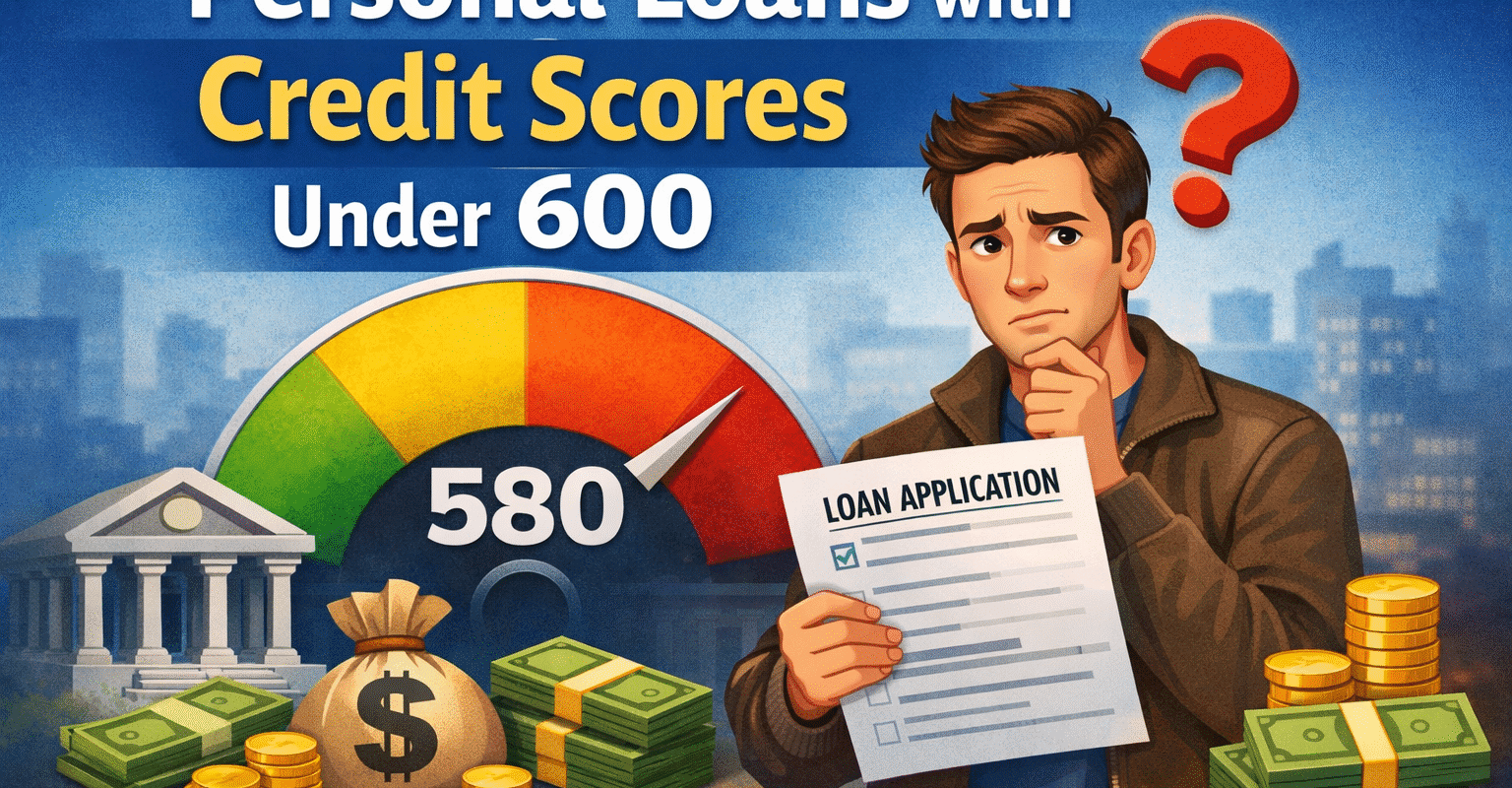
Finding financing with a score below 600 feels like trying to open a locked door without a key. Traditional banks turn you away, online applications get rejected in seconds, and the few approvals you find come with interest rates that make your eyes water. But here’s what most people don’t realize: the lending landscape has transformed dramatically, and options exist specifically designed for borrowers in your exact situation.
Why Credit Scores Below 600 Create Lending Obstacles
A credit score under 600 places you in what lenders call the “subprime” category. This classification isn’t a personal judgment—it’s a statistical indicator that tells lenders you’ve experienced significant credit challenges. Maybe you missed payments during a medical emergency, went through a divorce that wrecked your finances, or made some decisions in your twenties that still haunt your credit file.
Lenders view scores in this range as high-risk. Their algorithms predict higher default rates, which means they need to protect their investment. This reality explains why you’ll encounter higher interest rates, stricter terms, and more verification requirements than borrowers with pristine credit.
The traditional banking system wasn’t built for people rebuilding their financial lives. It was designed to serve those who already have strong credit—which creates a frustrating catch-22 for anyone trying to climb out of a credit hole.
How Lending Standards Shifted By 2026
The personal loan marketplace looks nothing like it did five years ago. Technology disrupted everything. Alternative data analysis changed how lenders evaluate risk, and competition forced companies to serve markets that traditional banks ignored.
Fintech companies now examine factors beyond your three-digit score. They look at your income consistency, employment history, bank account activity, and even your education level. Some use machine learning models that identify patterns invisible to traditional credit scoring systems.
Regulatory changes also pushed lenders toward more transparent practices. Rate caps in several states limited how much companies could charge subprime borrowers, forcing the industry to develop more sustainable lending models rather than relying on predatory fee structures.
The result? More legitimate options for borrowers with challenged credit, though you still need to navigate carefully to avoid the predatory lenders that absolutely still exist.
Types of Lenders That Work With Scores Under 600
Online Installment Loan Providers
These platforms dominate the subprime lending space. Companies like Avant, OppLoans, and Upgrade built their entire business models around serving borrowers traditional banks reject. They operate with lower overhead costs than brick-and-mortar institutions, allowing them to take more risk and still remain profitable.
The application process happens entirely online. You’ll typically get a decision within minutes and funding within one to three business days. Interest rates range dramatically—anywhere from 18% to 35.99% depending on the lender and your specific financial profile.
These companies verify your income through bank account access or paystub uploads. They’ll run a credit check, but they’re looking at the bigger picture rather than fixating solely on your score.
Credit Union Personal Loans
Credit unions operate as nonprofit cooperatives, which fundamentally changes their lending approach. They exist to serve their members, not to maximize shareholder profits. This structure allows them to take chances on borrowers with imperfect credit.
Many credit unions offer “credit builder loans” or “fresh start loans” specifically designed for members working to improve their credit. These products typically come with lower rates than online lenders—sometimes as low as 12% to 18% even with a score below 600.
The catch? You need to become a member, which usually requires living in a specific area, working for certain employers, or having family members who are already members. The application process also moves slower than online lenders, and you’ll likely need to visit a branch or have a phone conversation.
Peer-to-Peer Lending Platforms
Platforms like Prosper and LendingClub connect individual investors with borrowers. You create a listing explaining why you need the loan, and investors choose whether to fund your request based on your credit profile and story.
These platforms generally require scores of at least 580-600, putting you right on the borderline. The advantage is that human investors might see potential in your application that automated systems would reject. The disadvantage is that the process can take longer, and there’s no guarantee your loan will get fully funded.
Interest rates typically range from 15% to 30% for borrowers in your score range. The platforms make money through origination fees and servicing fees rather than interest, which can sometimes result in better overall deals than traditional subprime lenders.
What to Expect During the Application Process
Applying for a loan with challenged credit requires more documentation than borrowers with good credit provide. Lenders need to verify that you have stable income and can afford the monthly payment despite your credit history suggesting otherwise.
You’ll need to provide proof of identity—usually a driver’s license or state ID. Income verification comes next, through recent paystubs, tax returns, or bank statements showing consistent deposits. Some lenders want to see three months of bank activity; others request just the most recent 30 days.
Employment verification happens through different methods. Some lenders call your employer directly. Others accept paystubs or W-2 forms. If you’re self-employed, expect to provide more extensive documentation, possibly including profit and loss statements or complete tax returns.
Many lenders now use “soft pulls” for initial qualification, which don’t impact your credit score. Only when you formally accept a loan offer does the “hard pull” occur. This innovation lets you shop around without damaging your score further—something that wasn’t possible just a few years ago.
Response time varies dramatically by lender. Online platforms using automated underwriting might approve you in 60 seconds. Credit unions might take three to five business days. Peer-to-peer platforms could need a week or more for your listing to get fully funded.
Interest Rates and Terms You’ll Actually Encounter
Let’s talk real numbers, because the advertised rates you see in commercials rarely match what borrowers with scores under 600 actually receive.
Expect APRs between 20% and 36%. The federal government caps rates at 36% for active military members, and several states impose similar caps on all borrowers. This ceiling prevents the triple-digit rates that payday lenders charge, but the rates still feel painful if you’re used to the single-digit rates that prime borrowers enjoy.
A $5,000 loan at 28% APR with a three-year term costs about $192 per month and $1,900 in total interest. The same loan at 35% APR costs $208 monthly and $2,488 in interest. Those percentage points matter significantly over the life of the loan.
Loan amounts for subprime borrowers typically range from $1,000 to $15,000, though some lenders go as high as $25,000 for borrowers with compensating factors like high income or long job tenure. Terms usually span two to five years, with three years being the most common.
Origination fees add another cost layer. These one-time charges range from 1% to 8% of the loan amount and get deducted from your funding. A $5,000 loan with a 5% origination fee means you receive $4,750 but owe $5,000 plus interest. Always calculate the actual amount you’ll receive after fees.
Which Lenders Actually Approve Scores Below 600
Avant
Avant explicitly serves borrowers with scores as low as 580. Their approval process considers your income and employment along with your credit history. Loan amounts range from $2,000 to $35,000 with terms of two to five years.
Interest rates typically fall between 9.95% and 35.99%, with most subprime borrowers landing in the 22% to 32% range. Origination fees run up to 4.75%. Funding usually happens the next business day after approval.
The platform offers a straightforward online experience with clear terms disclosed upfront. No surprises or hidden fees lurk in the fine print. Their customer service receives mixed reviews, but their lending terms are among the more reasonable in the subprime space.
OppLoans
OppLoans positions itself as an alternative to payday loans, offering installment loans with no origination fees or prepayment penalties. They work with borrowers who have scores as low as 600 or even slightly below in some cases.
The trade-off for accessibility is higher rates—typically between 59% and 160% APR. Yes, those numbers are jarring, but they’re actually lower than payday loans and allow you to build credit through on-time payments. Loan amounts range from $500 to $4,000 with terms of nine to 18 months.
This option makes sense only for small emergency loans when you have literally no other choice. The high rates mean you should pay off the balance as quickly as possible to minimize interest charges.
Upstart
Upstart uses artificial intelligence to evaluate applications, considering factors like education and job history that traditional models ignore. Their minimum score requirement is officially 580, though approval depends on your overall profile.
Loan amounts span $1,000 to $50,000 with three or five-year terms. APRs range from 6.4% to 35.99%, with most subprime borrowers seeing rates between 24% and 32%. Origination fees can reach 12%, which is higher than many competitors.
The AI evaluation means you might get approved when other lenders reject you, especially if you have a degree from a reputable university or work in a stable profession. Young professionals with limited credit history but strong earning potential often find success here.
LendingPoint
LendingPoint serves borrowers with scores as low as 580 and focuses on people rebuilding their credit. Loan amounts range from $2,000 to $36,500 with two to five-year terms.
Rates fall between 9.99% and 35.99%, with origination fees up to 6%. They report payments to all three credit bureaus, giving you opportunity to rebuild your score through consistent on-time payments.
The application process takes about 24 hours, and funding typically arrives within one business day of final approval. They require bank account verification and proof of income but don’t verify employment in most cases.
Credit Unions Worth Checking
Navy Federal Credit Union serves military members, veterans, and their families. They offer personal loans starting at $250 with rates as low as 10.29% even for members with challenged credit. You need military affiliation to join, but the membership requirements extend to a surprisingly broad group including some civilian Department of Defense employees.
Alliant Credit Union accepts members nationwide through a $5 donation to a partner charity. Their credit builder loans specifically target members improving their credit, with rates typically between 12% and 18%. The application process is more thorough than online lenders, but the lower rates make the extra effort worthwhile.
Local community credit unions often have the most flexibility. A small credit union serving your county might approve your application based on a conversation with a loan officer who understands your situation, even if their algorithm initially flags your score. These relationships matter more at credit unions than at automated online platforms.
Alternative Strategies When Traditional Loans Won’t Work
Secured Personal Loans
Offering collateral dramatically changes your risk profile. A loan secured by your car, savings account, or other valuable asset gives the lender something to recover if you default. This security allows them to offer better rates—sometimes 10 to 15 percentage points lower than unsecured loans.
The obvious risk is losing whatever you pledge as collateral. If you default on a loan secured by your car, the lender repossesses it. If you secure the loan with a savings account, they freeze and eventually seize those funds.
Several online lenders and most credit unions offer secured options. Oportun specializes in secured loans for borrowers with limited credit history, though their rates still run high—typically 25% to 35%.
Co-Signed Loans
A co-signer with good credit fundamentally changes your application. The lender evaluates both credit profiles and bases approval and rates on the stronger score. This approach can unlock lower rates and higher loan amounts than you’d qualify for independently.
The challenge is finding someone willing to co-sign. Your co-signer becomes legally responsible for the debt if you can’t pay. This obligation appears on their credit report and affects their ability to qualify for their own loans. Most financial advisors tell people never to co-sign loans, which makes finding a willing partner difficult.
Family members represent the most likely co-signers, but mixing family and money creates its own complications. Make absolutely certain you can afford the payments before putting someone you care about at financial risk.
Home Equity Options
If you own a home with equity, a Home Equity Line of Credit (HELOC) or home equity loan might offer rates far below personal loans. Because your home secures the debt, lenders care less about your credit score and more about your equity position.
HELOCs currently offer rates between 7% and 12%, compared to 25% to 35% for subprime personal loans. The dramatic rate difference can save thousands in interest charges.
The enormous risk is foreclosure. Defaulting on a personal loan damages your credit; defaulting on a home equity loan costs you your house. Only consider this option if you have absolute confidence in your ability to repay.
Red Flags That Signal Predatory Lenders
Not every company willing to lend to you has your best interests in mind. Predatory lenders specifically target desperate borrowers, trapping them in debt cycles through deceptive practices.
Upfront fees before loan approval signal a scam. Legitimate lenders deduct origination fees from your funding or add them to your loan balance. They never demand payment before approving your application.
Guaranteed approval regardless of credit is mathematically impossible. Every lender has some borrowers they can’t profitably serve. Anyone promising approval without evaluating your finances is either lying or charging rates so high they profit even with massive default rates.
Pressure to decide immediately indicates bad faith. Legitimate lenders want you to read the terms and make informed decisions. Scammers rush you before you notice the predatory terms buried in the contract.
Unsolicited contact should raise suspicion. Reputable lenders don’t call you out of the blue offering loans. If someone contacts you first, especially if they already “know” you need money, you’re likely dealing with a scam.
Requests to wire money or send gift cards are automatic disqualifiers. No legitimate lender accepts these payment methods. This tactic is pure fraud designed to steal your money with no recourse.
How to Improve Your Approval Chances
Even when working with subprime lenders, you can take steps that increase approval likelihood and improve your rate.
Pay down existing debt before applying. Your debt-to-income ratio matters enormously. If you’re carrying high credit card balances, even a small payment reduces your ratio and strengthens your application.
Verify your credit reports for errors. Mistakes appear more often than you’d expect. Disputes take time to resolve, but removing an erroneous collection account or correcting a wrongly reported late payment could push you above a key threshold.
Wait until payday to apply if possible. Some lenders check your bank balance as part of their evaluation. Applying when your account shows $2,000 looks better than applying when it shows $47, even if the difference is just a matter of days.
Apply for smaller amounts than you think you need. A $3,000 request gets approved more easily than a $10,000 request. You can always apply for more later, but rejection hurts your credit and limits your options.
Provide thorough documentation proactively. Don’t wait for the lender to request pay stubs or bank statements. Upload everything upfront to speed the process and demonstrate you have nothing to hide.
Consider the timing of your application. Avoid applying right after major negative credit events. If you just had a collection account added or missed a payment, wait 30 to 60 days if possible. The further in the past your credit problems appear, the better.
How These Loans Actually Affect Your Credit Score
Taking out a personal loan with bad credit creates both opportunities and risks for your score.
The initial hard inquiry drops your score by 3 to 5 points temporarily. This impact fades within a few months and disappears entirely after a year. Don’t let fear of hard inquiries prevent you from applying—the long-term benefits of an installment loan far outweigh this small temporary dip.
Opening a new credit account briefly lowers your average account age, especially if you have limited credit history. This factor matters less than payment history but contributes to your overall score.
The positive impacts emerge over time through consistent payments. Payment history comprises 35% of your FICO score—the largest single factor. Every on-time monthly payment builds evidence that you’re managing credit responsibly. After six months of perfect payments, you’ll typically see your score begin climbing.
Installment loans also diversify your credit mix, which accounts for 10% of your score. If you only have credit cards, adding an installment loan demonstrates you can handle different types of credit.
The crucial point: you must make every payment on time. One late payment can drop your score by 50 to 100 points when you’re already in subprime territory. Set up automatic payments if possible to eliminate the risk of forgetting.
What Happens If You Can’t Make Payments
Life happens. Job losses, medical emergencies, and unexpected expenses can derail even the best repayment plans. Understanding your options before missing a payment gives you better alternatives than simply defaulting.
Contact your lender immediately when you anticipate problems. Many companies offer hardship programs that temporarily reduce payments, defer a payment, or modify terms. These accommodations aren’t advertised, but they exist because lenders prefer working with you over sending your account to collections.
Modification options vary by lender. Some allow you to skip one payment per year, adding it to the end of the loan. Others might extend your term to reduce monthly payments. Credit unions typically offer the most flexible workout options.
If modification isn’t available, prioritize this payment over less critical expenses. Defaulting on a personal loan creates cascading problems: damaged credit, collection calls, potential lawsuits, and wage garnishment. Unlike federal student loans, personal loans don’t offer income-driven repayment or forgiveness programs.
Defaulted personal loans are often sold to collection agencies for pennies on the dollar. These agencies then pursue you aggressively, and the collection account devastates your already-challenged credit score. The original lender reports the default, then the collection agency reports it again—hitting your credit twice.
Some lenders might sue you for the balance. If they win a judgment, they can garnish your wages (taking money directly from your paycheck) or levy your bank account (freezing and seizing funds). State laws limit garnishment amounts, but the process is financially and emotionally draining.
Common Questions About Subprime Personal Loans
Can I get approved with a 550 credit score?
Approval with a 550 is possible but challenging. Your best options are lenders specifically serving deep subprime borrowers like OppLoans or secured loans where collateral reduces the lender’s risk. Credit unions might also work with you if you have a strong banking relationship and stable income. Expect rates at the high end of the legal range and smaller loan amounts.
Do all lenders check my credit?
Nearly all legitimate lenders check credit, but they differ in how heavily they weight your score. Many now offer prequalification with soft pulls that don’t impact your score. These soft inquiries let you see potential rates before the formal hard pull happens when you accept an offer. A lender claiming they don’t check credit at all is either charging astronomical rates or running a scam.
How fast can I get funded?
Online lenders typically fund within one to three business days after final approval. Some offer same-day or next-day funding for an additional fee. Credit unions move slower—expect three to five business days. Peer-to-peer platforms take the longest since your listing needs time to get fully funded by investors. Emergency situations require choosing speed over rate, but avoid that trade-off if you have any flexibility on timing.
Will getting denied hurt my credit further?
Denial itself doesn’t hurt your credit beyond the initial hard inquiry. The inquiry causes a small temporary drop whether you’re approved or denied. The real damage comes from applying repeatedly with multiple lenders in a short period, creating multiple hard inquiries. Rate shopping for personal loans doesn’t receive the same protections as mortgage or auto loan shopping, so each application counts separately.
Should I use a loan to consolidate credit card debt?
Consolidation makes sense mathematically if the personal loan rate is lower than your credit card rates. A 28% personal loan beats 32% credit card debt. The danger is psychological—paying off cards creates available credit, and some people immediately rack up new balances. You end up with the personal loan payment plus new credit card debt, worsening your financial situation. Consolidation only works if you have the discipline to stop using the cards.
Can I pay off the loan early?
Most modern personal loans have no prepayment penalty, meaning you can pay extra or pay off the balance early without fees. Always verify this before accepting a loan. Paying even $50 extra monthly can shave months off your term and save hundreds in interest. Some predatory lenders still include prepayment penalties, particularly in states without laws prohibiting them—one more reason to read every clause in your agreement.
Building a Strategy Beyond Just Getting Approved
Getting approved solves your immediate problem, but thinking long-term separates people who use subprime loans as stepping stones from those who remain trapped in high-interest debt cycles.
Treat this loan as credit rehabilitation. Your primary goal isn’t the money itself—it’s proving you can manage debt responsibly. Set up automatic payments to guarantee you’re never late. Consider paying more than the minimum to demonstrate strong payment behavior and reduce interest charges.
Track your credit score monthly. Free services like Credit Karma or your credit card company’s app let you monitor your progress. Watching your score climb after six months of perfect payments provides motivation and validates your efforts.
Address the issues that damaged your credit originally. If medical debt crushed your score, research payment plans or charity care programs for outstanding balances. If credit card overspending caused your problems, create a budget that prevents repeat mistakes. If inconsistent income created chaos, build an emergency fund even if it starts with just $500.
Avoid taking additional debt while repaying this loan. Every dollar you earn beyond basic expenses should either go toward your emergency fund or extra loan payments. New debt resets your progress and signals to future lenders that you haven’t addressed your spending patterns.
Plan your next credit move before you need it. As your score improves into the low 600s, you’ll qualify for better products. Research credit cards for fair credit or credit builder loans you’ll use next. Having a roadmap prevents desperate, expensive decisions during emergencies.
The Reality Check Nobody Wants to Hear
Personal loans for bad credit are expensive. There’s no getting around this fact. You’ll pay significantly more than someone with excellent credit, and that reality feels unfair when you’re already struggling financially.
But expensive doesn’t always mean wrong. If you need $3,000 to fix your car so you can keep getting to work, a 30% personal loan might be your best option. The alternative—losing your job—costs far more than the interest charges.
The key is understanding what you’re paying for and making the decision consciously rather than desperately. Too many people focus solely on getting approved without calculating the true cost of the money.
Run the numbers brutally honestly. Use loan calculators to see your total repayment amount. Compare that cost to alternatives—could you work extra hours? Sell something? Borrow from family? Sometimes the high-interest loan still wins, but at least you made an informed choice.
Remember that your goal is graduating from subprime lending. This isn’t your permanent category. Six months of perfect payments, combined with paying down other debts and disputing credit report errors, can push you into the fair credit range where dramatically better products become available.
Think of your current loan as tuition in the school of credit rehabilitation. You’re paying for the opportunity to prove yourself and access better terms in the future. That framing doesn’t make the payments smaller, but it makes them purposeful rather than just painful.
Finding Your Path Forward
Your credit score doesn’t define your worth or predict your future. It’s a snapshot of your past financial behavior, and snapshots change. The fact that you’re researching your options methodically rather than jumping at the first approval shows you’re approaching this situation differently than whatever circumstances damaged your credit originally.
The lenders discussed here represent legitimate pathways to needed funds while rebuilding your credit profile. Some charge rates that feel exploitative, but they’re still better than payday loans, title loans, or the informal high-interest lending that traps desperate borrowers.
Your specific situation determines your best option. Someone with stable income and military affiliation should absolutely explore Navy Federal. Someone with high income but recent credit disasters might find Upstart’s AI evaluation more favorable. Someone with absolutely no other options might need to swallow hard and use OppLoans despite the high rates.
Whatever path you choose, treat it as a deliberate step in your financial recovery rather than just a solution to this month’s crisis. The money you borrow today comes with an opportunity to build tomorrow’s better credit score—but only if you approach it strategically and make every single payment exactly on time.
The lending landscape will continue evolving. Technology creates new possibilities, and competition drives innovation in underwriting. The options available in 2026 already surpass what existed just five years ago. But the fundamental truth remains: your payment behavior over the next six to twelve months will determine whether your credit score is still below 600 or climbing toward 700.
Choose your lender carefully, understand exactly what you’re agreeing to, and commit to using this loan as the tool that helps you climb out of bad credit territory rather than sinking deeper into it.