
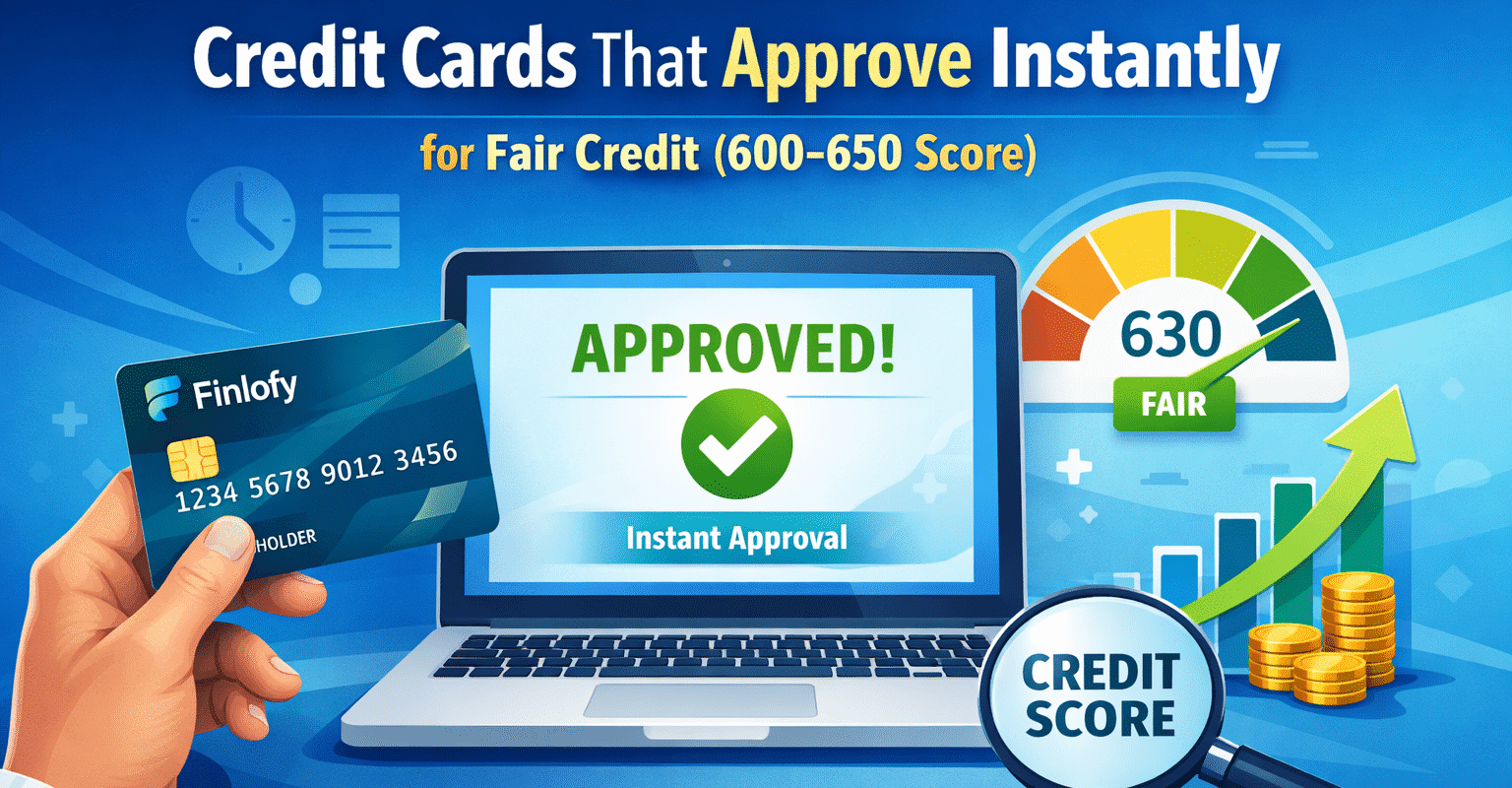
Getting approved for a credit card when your score sits between 600 and 650 can feel like walking a tightrope. You’re not in the bad credit zone, but you’re not exactly getting premium offers either. The good news? Several issuers now offer instant approval decisions specifically designed for people in your situation.
Understanding Instant Approval with Fair Credit
When banks talk about instant approval, they mean you’ll know within seconds or minutes whether you’re approved—not days or weeks. This technology relies on automated underwriting systems that quickly analyze your creditworthiness based on predetermined criteria.
For those with scores in the 600-650 range, instant decisions work differently than they do for excellent credit applicants. The system evaluates additional factors beyond just your number. Your income stability, current debt obligations, and recent payment history carry significant weight. Banks have become more sophisticated in identifying responsible borrowers who might have faced temporary setbacks.
The approval algorithm considers your entire financial picture. Someone with a 620 score who earns $75,000 annually and has steady employment might get approved instantly, while another person with the same score but irregular income might not. These nuanced evaluations happen in milliseconds, giving you answers faster than ever before.
Top Cards Offering Quick Decisions for Mid-Range Scores
Several major issuers have developed products specifically targeting the fair credit market with rapid approval processes. Each comes with its own strengths and considerations.
Capital One Platinum Card
Capital One has built its reputation on serving customers across the credit spectrum. Their Platinum card frequently approves applicants in the 600-650 range within 60 seconds of application submission. The card starts with modest limits—often between $300 and $1,000—but offers automatic credit line increases after five months of on-time payments.
What makes this option particularly attractive is the lack of annual fees and the straightforward qualification process. Capital One pre-qualifies applicants without hard pulls, letting you check your odds before officially applying. They also report to all three bureaus, helping rebuild your payment history across the board.
Credit One Bank Platinum Visa
Credit One specifically markets to fair credit consumers and provides instant decisions on most applications. Their approval rates for scores between 600 and 650 tend to be higher than traditional banks, though this accessibility comes with trade-offs.
The card typically charges an annual fee ranging from $39 to $99, determined after approval based on your creditworthiness. Interest rates start higher than prime cards, but for many rebuilding their financial standing, the opportunity to establish positive payment patterns outweighs these costs. Credit One also offers 1% cash back on eligible purchases, unusual for cards targeting this score range.
Discover it Secured Card
While technically a secured card, Discover’s offering deserves mention because of its instant approval process and graduation potential. You’ll know immediately if approved, and after eight months of responsible use, Discover automatically reviews your account for graduation to an unsecured line.
The required deposit starts at $200, which becomes your credit limit. Unlike many secured options, this card earns rewards—2% cash back at gas stations and restaurants up to $1,000 quarterly, plus 1% on everything else. Discover matches all cash back earned in your first year, effectively doubling your rewards.
Petal 2 “Cash Back, No Fees” Visa
Petal takes a different approach by considering factors beyond traditional credit scores. Their instant decision process analyzes banking history and cash flow patterns, often approving people whose scores alone might not qualify them elsewhere.
For fair credit applicants who maintain healthy bank accounts, Petal 2 offers compelling terms: no annual fee, 1% cash back immediately that increases to 1.5% after 12 on-time payments, and limits between $300 and $10,000. The approval algorithm looks at income and spending patterns, not just past credit mistakes.
The Application Process: What Happens Behind the Scenes
Understanding how instant approval works helps set realistic expectations and improves your chances of success. When you hit submit on an application, several things happen simultaneously.
First, the system pulls your credit report and score from one or more bureaus. This happens through automated APIs that retrieve your information in fractions of a second. The algorithm then compares your profile against the card’s approval matrix—a complex set of rules determining who qualifies.
Your application data gets cross-referenced with public records, employment databases, and sometimes banking information if you’ve authorized it. Income verification might occur through services like The Work Number, which maintains employment and income data for millions of Americans. All these checks happen nearly instantaneously through interconnected systems.
The decision engine assigns risk scores based on hundreds of variables. Modern machine learning models can identify patterns that human underwriters might miss. For instance, someone with a 615 score who’s never missed a payment in two years might score better than someone with 640 who recently opened multiple accounts.
Maximizing Your Approval Odds
Timing Your Application Strategically
Your approval chances fluctuate based on recent credit activity. If you’ve just paid down significant balances, wait for those payments to report before applying. Most creditors report to bureaus monthly, so timing matters.
Avoid applying during or immediately after major financial changes. Job transitions, address changes, or recent credit inquiries can trigger additional review processes that delay or deny instant approvals. Stability looks good to automated systems.
Optimizing Your Credit Profile First
Before submitting any application, review your credit reports for errors. Disputes can improve your score quickly if inaccuracies exist. Even small corrections might push you into a better approval tier with higher limits or lower rates.
Pay down existing balances below 30% utilization if possible. This ratio significantly impacts both your score and approval odds. Someone at 625 with low utilization often gets better offers than someone at 640 carrying high balances.
Choosing the Right Card for Your Situation
Match your application to cards designed for your credit tier. Applying for premium rewards cards with fair credit wastes hard inquiries and guarantees rejection. Research pre-qualification tools that show your approval odds without affecting your score.
Consider your primary goal: rebuilding credit, earning rewards, or consolidating debt. Different cards excel at different purposes. A secured card might offer the best path to improvement, while a balance transfer card could save money if you qualify.
Managing Your New Card Wisely
Building Positive Payment History
Once approved, your priority should be establishing flawless payment history. Set up automatic payments for at least the minimum amount due. Even one late payment can devastate a recovering credit profile and eliminate chances for limit increases or better cards later.
Use the card regularly but lightly. Charging small amounts and paying in full each month demonstrates responsible usage without risking debt accumulation. Many issuers look for this pattern when considering credit line increases.
Understanding Your Terms and Avoiding Pitfalls
Read your cardmember agreement thoroughly. Fair credit cards often include fees and terms that differ from prime offerings. Know your interest rate, grace period, and any fees for cash advances, balance transfers, or foreign transactions.
Watch for penalty APR triggers. Missing payments or exceeding limits can cause your rate to jump dramatically, sometimes permanently. These penalty rates often exceed 29%, making balances extremely expensive to carry.
Common Mistakes to Avoid
Applying for multiple cards simultaneously hoping one approves is counterproductive. Each application generates a hard inquiry, lowering your score and making subsequent approvals less likely. Space applications at least three months apart unless you’re rate shopping for a specific loan type.
Don’t close old accounts after getting approved for new ones. Length of credit history comprises 15% of your score. Keep older accounts open even if unused, as they help your average account age and available credit.
Avoid cash advances except in true emergencies. These transactions typically charge higher interest rates, start accruing interest immediately, and often include additional fees. The same money accessed differently costs significantly less.
Rebuilding Strategies Beyond the First Card
Your instant approval card serves as a stepping stone, not a destination. Use it strategically to qualify for better products within 6-12 months. Many people successfully move from secured to unsecured, then to rewards cards within two years of focused effort.
Consider becoming an authorized user on someone else’s well-managed account. This can boost your score without requiring approval, though not all issuers report authorized user accounts. Verify reporting policies before pursuing this strategy.
Product change opportunities often arise before you qualify for entirely new cards. Many issuers allow upgrading to better versions of their cards without new applications. Ask about these options annually.
What if You’re Denied Instant Approval?
Rejection doesn’t mean permanent denial. Some applications require manual review despite advertising instant decisions. You might receive a pending status that resolves within 7-10 business days.
If denied, request reconsideration by calling the issuer directly. Sometimes explaining circumstances or providing additional documentation changes the outcome. Automated systems can’t consider context the way human underwriters can.
The adverse action letter you’ll receive explains denial reasons. Address these specific issues before reapplying. If high balances caused rejection, paying them down and waiting for updated reporting might change the result.
Frequently Asked Questions About Instant Approval
How accurate are pre-qualification tools for fair credit applicants?
Pre-qualification tools provide reasonable estimates but aren’t guarantees. They perform soft credit pulls that don’t affect your score while giving you a general idea of approval likelihood. For fair credit applicants, these tools prove especially valuable since approval isn’t certain. Most major issuers offer them, and checking multiple options helps identify your best chances.
Will applying for instant approval cards hurt my credit score?
Each application typically causes a hard inquiry, dropping your score by 5-10 points temporarily. These inquiries affect your score less over time and stop counting entirely after one year. The impact is usually worth it if approved, as the new account and increased available credit can improve your score long-term. Just avoid applying for multiple cards within a short timeframe.
Can I get instant approval with a recent bankruptcy?
While challenging, it’s not impossible. Some secured cards offer instant approval even with recent bankruptcies. Chapter 7 filers might have better luck than Chapter 13, as the debt has been discharged. Your approval odds improve significantly after one year post-discharge, and by two years, several unsecured options become available.
What credit limit should I expect with a fair credit score?
Initial limits for instant approval cards typically range from $200 to $2,000 for fair credit applicants. Your income, existing debt, and specific score within the range influence the amount. Many issuers review accounts after 5-6 months for increases, so starting limits often grow with responsible use.
Are instant approval decisions really final?
Usually, but not always. Some approvals come with conditions, like income verification or identity confirmation. Occasionally, issuers reverse decisions if they discover discrepancies during verification. However, most instant approvals stand as issued, especially from major banks with sophisticated underwriting systems.
Moving Forward with Confidence
Instant approval credit cards for fair credit offer genuine opportunities to rebuild your financial standing. While terms might not match premium cards, they provide essential tools for establishing positive payment history and improving your creditworthiness over time.
Success comes from choosing appropriate cards, using them responsibly, and maintaining perspective on your longer-term goals. Your current score doesn’t define your financial future—it’s simply your starting point. With strategic card use and consistent payments, many people move from fair to good credit within 12-18 months.
Remember that instant approval technology continues evolving, with more issuers recognizing the value of serving fair credit customers. Options that didn’t exist two years ago are now mainstream, and this trend will likely continue. Stay informed about new products and periodically reassess your options as your credit improves.


[…] 580 credit score places you in the “poor” credit category, sitting just below the threshold many mainstream lenders use for approvals. This […]